

U.S. seeks strategic flexibility against rising China
U.S. seeks strategic flexibility against rising China
Posted June. 06, 2025 07:15,
Updated June. 06, 2025 07:15
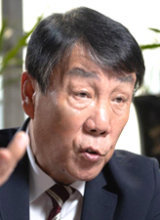
The United States believes it may be running out of time to contain China’s rise, prompting the Biden administration and potentially a second Trump administration to renew focus on strategic flexibility for U.S. Forces Korea, retired Gen. Lim Ho-young said. Lim, former deputy commander of the ROK-U.S. Combined Forces Command and current chairman of the Korea-U.S. Alliance Foundation, spoke in a recent interview with The Dong-A Ilbo.
“The U.S. sees this as a critical moment. If Washington fails to check China now, it could soon become impossible,” Lim said. “That is how serious the Chinese challenge has become. The renewed emphasis on USFK’s strategic flexibility should be seen in this context.”
Discussions on adjusting USFK’s role began in 2003 with the Future of the ROK-U.S. Alliance Policy Initiative. At that year’s Security Consultative Meeting, both Seoul and Washington reaffirmed that strategic flexibility was essential. They agreed that USFK should not be limited to deterring North Korea but should also operate as a mobile force capable of acting across Northeast Asia.
However, Lim noted that although the allies have agreed on the need for strategic flexibility in principle, they have yet to decide how to apply it throughout the broader Indo-Pacific region.
“Washington’s current push shows that now, at the height of U.S.-China rivalry, is the time to turn that concept into reality,” he said.
Lim added that if expanding USFK’s strategic flexibility is unavoidable, the South Korean government should use this moment to reframe the alliance into a sustainable and balanced partnership.
“Since the 1953 Mutual Defense Treaty, the alliance has largely functioned in one direction with U.S. forces providing deterrence and South Korea on the receiving end,” he said. “Now that South Korea ranks among the world’s top five military powers, it should take a more proactive role.”
This includes accepting U.S. requests for increased cost sharing and cooperation in countering China. In return, Seoul should demand stronger commitments from Washington such as enhanced extended deterrence against North Korea’s nuclear and missile threats. “It is time to reset the alliance as a genuine mutual defense pact that works for both countries,” he said.
Hyo-Ju Son hjson@donga.com








 About Dong-A Ilbo