

ACOT, 'Enhancing the battery Industry with particle coating technology'
ACOT, 'Enhancing the battery Industry with particle coating technology'
Posted February. 20, 2025 18:09,
Updated April. 11, 2025 08:01
The global industry is focusing on electric vehicles as promising technologies for the future. This is due to their potential as high value-added and eco-friendly alternatives to internal combustion engine vehicles. As a result, the electric vehicle industry has experienced rapid growth over the past decade. However, the pace of growth has somewhat slowed recently. Experts identify battery issues as a significant factor among various causes.
The battery of an electric vehicle is a consumable item. Poor management or repeated charging and discharging can shorten its lifespan, and replacement can be very costly. Damage to the internal or external components of the battery due to defects or accidents can also lead to serious incidents. In response, the electric vehicle and battery industries are collaborating to research and develop technologies to address these shortcomings.
Numerous ideas are emerging, and ACOT, a startup growing in collaboration with Korea University's Crimson Startup Support Foundation, has introduced a distinctly innovative concept and brought it to fruition. This involves enhancing durability, operational efficiency, and safety by precisely coating the battery materials.
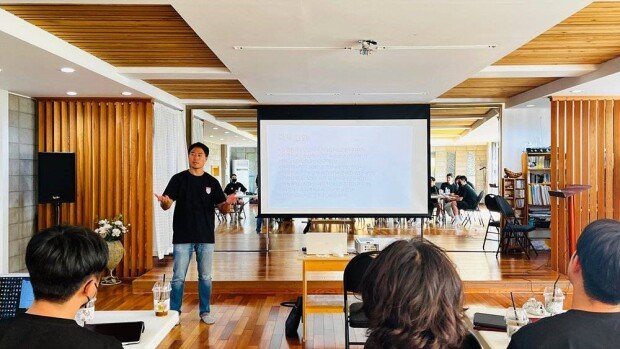
Joon Hyung Shim, the founder of ACOT, is a professor researching hydrogen, electrochemistry, thin film materials, and synthesis technologies. He has extensively studied the development of energy materials such as battery electrodes, separators, and hydrogen catalysts, as well as the mass production processes. Each year, he pays close attention to the experimental results of researchers in the field of battery materials worldwide. Among these, he has observed technologies that could address the challenges faced by the battery industry. However, he finds it puzzling that most of these technologies remain confined to the laboratory and have not been adopted by the industry.
To apply specific technologies in the industry, it is essential to consider realization and mass production from the early stages of research. In other words, researchers must possess not only the design capabilities of the technology but also the production capacity. To demonstrate this in the specialized battery industry, Shim gathered researchers who have expertise in mass production processes and equipment manufacturing. The objective is to apply technologies developed in the laboratory to the industry and to introduce scientifically created new materials to the world, guiding their active implementation across various sectors.
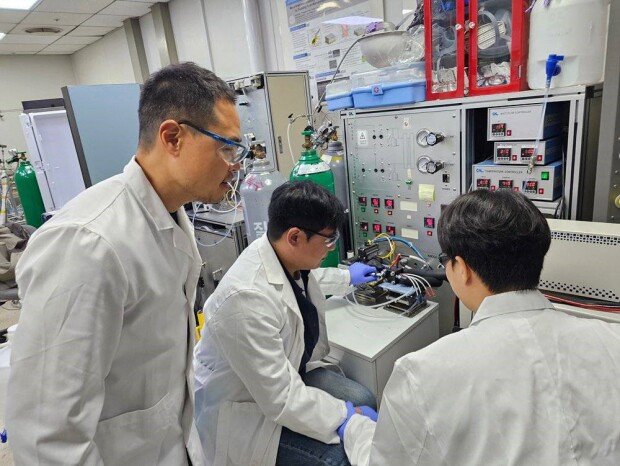
He gathered researchers, then established ACOT and demonstrated a technology that simultaneously enhances the operational efficiency and safety of batteries. To achieve this, it is essential to first understand the principles of battery operation and the factors that contribute to a reduced lifespan.
For example, the most used battery, the lithium-ion battery, uses lithium ions as its electrode material. It undergoes a repeated process of discharging and charging with the positive electrode. During this process, the battery expands and contracts, which leads to a decline in durability. Its lifespan is also reduced. It is easy to understand this concept by imagining a rubber band that weakens and eventually breaks when it is repeatedly stretched and released.
Consequently, ACOT devised the idea of applying a coating to the surface of the battery's material particles. This helps the battery maintain its original elasticity over time, even as it undergoes repeated expansion and contraction. After extensive research and experimentation, they have also identified ceramic materials that exhibit excellent stability and mass production capabilities for use as coating materials.
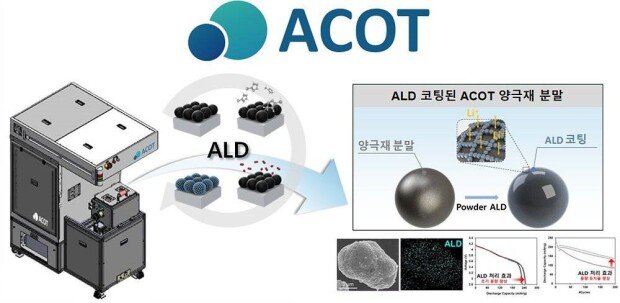
Shim emphasizes that their coating technology can theoretically be applied to all types of batteries. He also said that it is a valuable technology for achieving durability, operational efficiency, and enhanced performance, which are key concerns in the battery industry. Additionally, by utilizing battery coating technology, they have developed processing technology for noble metal catalysts required for water electrolysis-based hydrogen generation.
After founding ACOT in 2022, he continued to research and firmly strengthened particle coating technology. The goal is to apply this technology to dozens to thousand tons of battery materials per year, and to enhance its utility by applying uniform coating to numerous particles. There is also a goal to bring coating technology to the actual battery industry beyond the laboratory and make changes.
Shim expressed his determination to achieve these goals, drawing on the research capabilities of himself and his employees, as well as the support of co-growth partner, Korea University. Korea University Holdings provided office space to them and facilitated seed investment and TIPS program recommendations. It also assisted in supporting national projects and linking investments. The Crimson Startup Support Foundation at Korea University aids ACOT growth through initial startup package programs, mentoring, and networking across various fields.
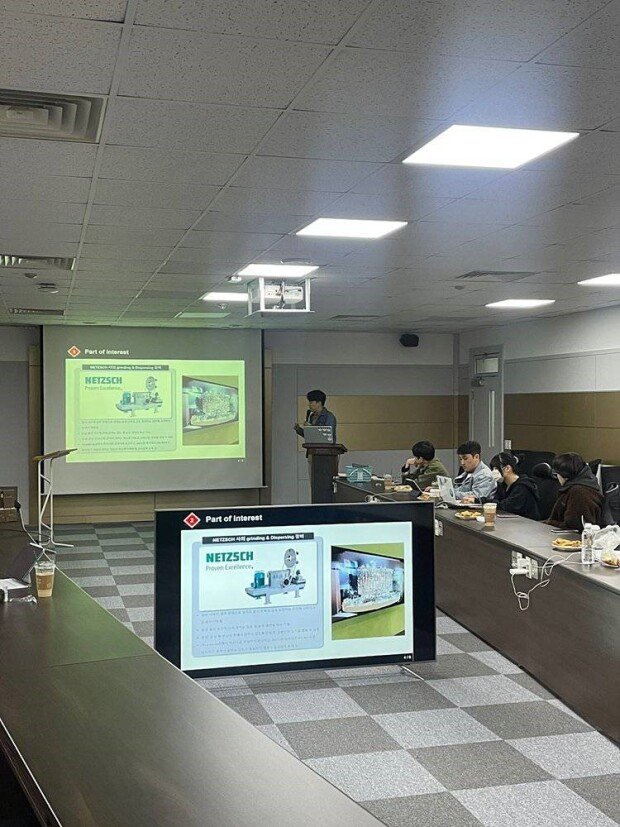 < ACOT showcases their technology at international exhibitions / source = ACOT)>
ACOT has completed and launched Powder ALD 10, a machine designed for powder coating battery materials valued at 10L, based on their extensive research and support. This machine is capable of powder coating approximately 10 tons of battery material annually. They have set a new goal to enhance Powder ALD 10, aiming to achieve a powder coating capacity of around 1,000 tons per year, as demanded by the battery industry.
On the one hand, they will continue to develop flat-panel powder coating machines that will play a significant role in the semiconductor and display industries. They aim to mass-produce these powder coating machines and attract investment to meet the diverse needs of various industries. ACOT has secured pre-Series A investment close to its target with Powder ALD 10. Building on this, they plan to raise Series A investment in the second half of 2025 to enhance their technology, mass production capabilities, and talent pool.
Shim stated, "We are already collaborating with famous universities and battery manufacturers in the United States. We will soon establish a U.S. branch office to attract investment and commercialize our technology. We will enhance world-class battery material technology with unique price competitiveness and maintenance capabilities of Korean companies. Building on this, we will focus on entering the global market to ensure both the operational efficiency and safety of batteries."
By Joo Kyung Cha. (racingcar@itdonga.com)
The battery of an electric vehicle is a consumable item. Poor management or repeated charging and discharging can shorten its lifespan, and replacement can be very costly. Damage to the internal or external components of the battery due to defects or accidents can also lead to serious incidents. In response, the electric vehicle and battery industries are collaborating to research and develop technologies to address these shortcomings.
Numerous ideas are emerging, and ACOT, a startup growing in collaboration with Korea University's Crimson Startup Support Foundation, has introduced a distinctly innovative concept and brought it to fruition. This involves enhancing durability, operational efficiency, and safety by precisely coating the battery materials.
Joon Hyung Shim, the founder of ACOT, describes their distinctive technology
Joon Hyung Shim, the founder of ACOT, is a professor researching hydrogen, electrochemistry, thin film materials, and synthesis technologies. He has extensively studied the development of energy materials such as battery electrodes, separators, and hydrogen catalysts, as well as the mass production processes. Each year, he pays close attention to the experimental results of researchers in the field of battery materials worldwide. Among these, he has observed technologies that could address the challenges faced by the battery industry. However, he finds it puzzling that most of these technologies remain confined to the laboratory and have not been adopted by the industry.
To apply specific technologies in the industry, it is essential to consider realization and mass production from the early stages of research. In other words, researchers must possess not only the design capabilities of the technology but also the production capacity. To demonstrate this in the specialized battery industry, Shim gathered researchers who have expertise in mass production processes and equipment manufacturing. The objective is to apply technologies developed in the laboratory to the industry and to introduce scientifically created new materials to the world, guiding their active implementation across various sectors.
ACOT staffs in research and development
He gathered researchers, then established ACOT and demonstrated a technology that simultaneously enhances the operational efficiency and safety of batteries. To achieve this, it is essential to first understand the principles of battery operation and the factors that contribute to a reduced lifespan.
For example, the most used battery, the lithium-ion battery, uses lithium ions as its electrode material. It undergoes a repeated process of discharging and charging with the positive electrode. During this process, the battery expands and contracts, which leads to a decline in durability. Its lifespan is also reduced. It is easy to understand this concept by imagining a rubber band that weakens and eventually breaks when it is repeatedly stretched and released.
Consequently, ACOT devised the idea of applying a coating to the surface of the battery's material particles. This helps the battery maintain its original elasticity over time, even as it undergoes repeated expansion and contraction. After extensive research and experimentation, they have also identified ceramic materials that exhibit excellent stability and mass production capabilities for use as coating materials.
ACOT's ALD Coating Technology
Shim emphasizes that their coating technology can theoretically be applied to all types of batteries. He also said that it is a valuable technology for achieving durability, operational efficiency, and enhanced performance, which are key concerns in the battery industry. Additionally, by utilizing battery coating technology, they have developed processing technology for noble metal catalysts required for water electrolysis-based hydrogen generation.
After founding ACOT in 2022, he continued to research and firmly strengthened particle coating technology. The goal is to apply this technology to dozens to thousand tons of battery materials per year, and to enhance its utility by applying uniform coating to numerous particles. There is also a goal to bring coating technology to the actual battery industry beyond the laboratory and make changes.
Shim expressed his determination to achieve these goals, drawing on the research capabilities of himself and his employees, as well as the support of co-growth partner, Korea University. Korea University Holdings provided office space to them and facilitated seed investment and TIPS program recommendations. It also assisted in supporting national projects and linking investments. The Crimson Startup Support Foundation at Korea University aids ACOT growth through initial startup package programs, mentoring, and networking across various fields.
ACOT showcases their technology at international exhibitions
ACOT has completed and launched Powder ALD 10, a machine designed for powder coating battery materials valued at 10L, based on their extensive research and support. This machine is capable of powder coating approximately 10 tons of battery material annually. They have set a new goal to enhance Powder ALD 10, aiming to achieve a powder coating capacity of around 1,000 tons per year, as demanded by the battery industry.
On the one hand, they will continue to develop flat-panel powder coating machines that will play a significant role in the semiconductor and display industries. They aim to mass-produce these powder coating machines and attract investment to meet the diverse needs of various industries. ACOT has secured pre-Series A investment close to its target with Powder ALD 10. Building on this, they plan to raise Series A investment in the second half of 2025 to enhance their technology, mass production capabilities, and talent pool.
Shim stated, "We are already collaborating with famous universities and battery manufacturers in the United States. We will soon establish a U.S. branch office to attract investment and commercialize our technology. We will enhance world-class battery material technology with unique price competitiveness and maintenance capabilities of Korean companies. Building on this, we will focus on entering the global market to ensure both the operational efficiency and safety of batteries."
By Joo Kyung Cha. (racingcar@itdonga.com)








 About Dong-A Ilbo