

The first comet lander Philae goes into ‘eternal hibernation’
The first comet lander Philae goes into ‘eternal hibernation’
Posted February. 16, 2016 08:30,
Updated February. 16, 2016 08:37
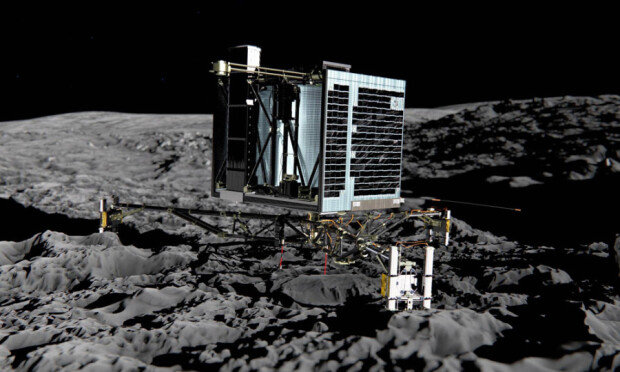
Philae, the first comet lander launched by the European Space Agency (ESA) in 2014, will go into "eternal hibernation." The German Aerospace Center (DLR) announced on Friday through its website that they will “no longer be sending any commands” to the comet lander, saying, "It is now time to say good bye to Philae.” The ESA also admitted on the same day that the operation will no longer be carried out.
Philae was launched in March 2004 as part of ESA’s Rosetta mission, flying 640 million kilometers for a decade and finally landing on the Comet 67P/Churyumov-Gerasimenko on Nov. 12, 2014. However, unfortunately, its harpoon system stopped working, which forced it to crash land on the comet and bounce into a shadowy area where it could not adequately recharge its solar batteries. As a result, it was operational for just 64 hours before its batteries died.
It resumed contact with the ESA in June 13 last year as the comet’s orbit got closer to the sun, but the revival did not last long. The probe sent signals of 2 minutes length for eight times, but scientists have failed to reach it since July 9, last year.
The ESA said that the craft has already accomplished 80 percent of goals of the mission even though it went to rest earlier than scheduled. ESA’s senior science adviser Mark McCaughrean emphasized that it will take years to analyze the data collected by Philae, and that they will be greatly helpful for research on the evolution of the solar system.
송경은동아사이언스기자 kyungeun@donga.com








 About Dong-A Ilbo