

Names of Japanese youth: From Sun in 1955 to Satori in 2015
Names of Japanese youth: From Sun in 1955 to Satori in 2015
Posted June. 13, 2015 07:14,
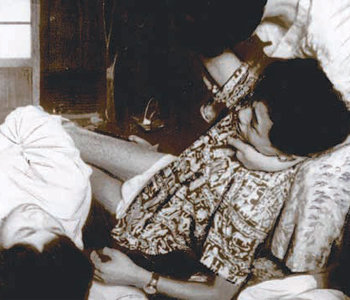
Portraits of Japanese youth has been changing as time passes. A generation obeyed rules and customs of the age while the other broke down a frame made by the older generations. In his book titled "The Happy Youth of a Desperate Country," Japanese socialist Noritoshi Furuichi introduced histories of Japanese young generations starting with "Sun," a postwar generation.
Former Tokyo governor Ishihara Shintaro, one of the extreme-right politicians in Japan, wrote a novel called Season of the Sun in 1955 at the age of 23. The novel depicts rebellious mentality of the young generation at the beginning of rapid growth era. Characters in the book behave without regard to the existing order. Many young people imitated the novel characters, which gave a birth to the Sun generation. Sun generation went around the city streets wearing sunglasses and clothes like beach outfits. Young boys and girls freely slept around and sexual promiscuity was rampant among the youth.
Around in 1964, the "Miyuki" generation was reported by the press. Miyuki generations distinctive feature was wearing a long skirt and going around carrying a big rice bag. At that time, carrying a rice bag was regarded as cool. The term was created as the youth frequently gathered on the Miyuki Street in Ginza. Police usually arrested young people of the Miyuki generation on Saturday afternoon and released them after receiving a statement to promise that they would never stay around the entertainment district in Ginza.
Since the 1960s, Japan started achieving rapid economic growth with an annual average growth rate over 10%. Radios and TVs became a household necessity. New type of young generation has emerged while rebellious youth has disappeared. The book titled "A Culture of Copy Experience" written by Hideaki Hirano and Osamu Nakano in 1975 coined a term "Capsule human." The term referred to a young generation who lived a lonely life in a personal space surrounded by electronic devices such as radios or vinyl records. It had been a typical portrait of young Japanese people in the 1970s and the 1980s.
In the 1990s, such terms to refer to a young generation were no longer created and some people even said, "The young generation analysis theory came to an end." "Consumption hatred generation," which does not buy high-priced articles such as a car, appeared in the beginning of the new millennium. Another term that has emerged in 2000s is "Satori (Enlightened)" generation, which gives up a desire for materials or success. Most recently, Depression generation makes up the majority of young Japanese people, who have experienced depression only without having experienced an economic boom.
lovesong@donga.com








 About Dong-A Ilbo