

3 Kingdoms
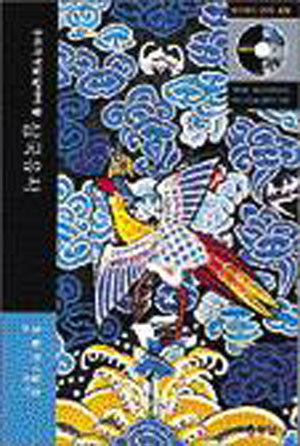
The Story of Three Korean Kingdoms that Korean People Must Know, by Goh Un-gi
The author starts the book by comparing Kim Bu-sik and Il Yeon, both authors of historical records on three Korean kingdoms. As Kim and Il lived at the same period, the two would have been able to look at many of the same historical documents. However, as Kim was officially backed by the royal court, he could have easier access to related documents.
Their perspectives on Korean history were, however, quite different. Kim starts his book of the three kingdoms, Samguk Sagi, with Shilla and then Goguryeo and Baekje. However, Il starts his book with the Dangun Myth before mentioning any of the three countries. If we compare the stories of the two books as building a house, Kims perspective on the Korean history can be said that each of the three people built a house of their own regardless of others. Then later, the strongest one took the other two houses by force.
However, according to the Samguk Yusa of Il, the three houses were built under a common large roof and that is the Dangun myth. And three houses were built one by one in harmony and balance. Only with the story of Il, the term unification of three kingdoms makes sense because unification signifies a process by which once separated countries join together to become one country. If the three countries, which happened to be coincidently existing at the same period of time in the Korean peninsula without any connection to each other, joined together, it is annexation not unification. We believe we are a single people because of the Dangun myth, and this is why we are still working toward the unification of the North and South.
Yusa means lost facts or left facts. As Kim compiled the Samguk Sagi upon the Kings request with a vast amount of formal documents, he did not have to look at the history with other perspectives. However, Il was not satisfied with Kims book. There were too many historical details removed, which Il thought crucial, just because Kim did not like them. For those deserted details reflected the thoughts of ancestors of the three kingdoms and their thoughts were left in their myths, like the Dangun myth and the myth of King Dongmyeong.
Where would Il were able to find those details for his book? Jinjeon Temple where he cut all of his hair, and Mount Biseul, Oeo Temple, Inheung Temple, Mount Ingak where he stayed as a monk are some of the places he collected historical records. Although he started to compile the Samguk Yusa when he was over 70, he devoted his entire life to collecting historical facts. In the Samguk Yusa, many quotes of oral or written literature of the temples he visited are often mentioned. Those literatures would have been disappeared if it were not for the efforts of Il.
Widang Jeong In-bo, who wrote the song for National Foundation Day, said in his first phrase of the song, Water if we are, a spring there must be. A tree if we are, the root there must be. In addition, as also mentioned in first phrase of the Yongbi Eocheon Ga, With a deep fountain, a draught can be overcome and a beautiful summer with full blossoms will follow, Il is the one who believed that the Dangun myth that has been the root and fountain that have allowed us to enjoy the fruits and flowers that we are having now.
Poet Goh Un-gi and photographer Yangjin took spent past 20 years searching for the historical spots of the Samguk Yusa and the pictures they took in those spots are included in the book. They found the lost facts that we have been neglecting even though we are living at the same era. Thats why the book is named, The Story of Three Korean Kingdoms that Korean People Must Know. I would like to call them this eras Il Yeon for doing their precious work and for including a DVD for free.

![‘무인 공중급유기’ 시험비행 성공…美 “모든 항모에 76대 배치”[청계천 옆 사진관]](https://dimg.donga.com/c/138/175/90/1/wps/NEWS/IMAGE/2026/04/28/133828053.1.jpg)






 About Dong-A Ilbo