

A better way to set minimum wages
A better way to set minimum wages
Posted July. 16, 2026 08:30,
Updated July. 16, 2026 08:30
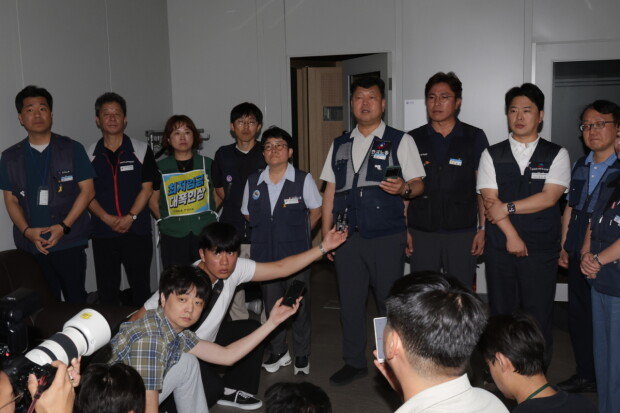
South Korea's minimum wage will rise to 10,700 won ($7.70) an hour next year, up 380 won, or 3.7 percent, from this year's 10,320 won. Based on a 40-hour workweek, the monthly equivalent will be 2.2363 million won. It marks the first time the annual increase has exceeded 3 percent since the 2023 wage decision. For many small businesses and self-employed workers already struggling with weak domestic demand, however, the higher wage will add to mounting financial pressure.
This year's negotiations followed the familiar pattern of previous disputes. Labor and business representatives on the Minimum Wage Commission failed to reach an agreement, extending deliberations more than two weeks beyond the statutory deadline. Late Tuesday, the commission settled the matter through a vote on the final proposals from both sides, adopting the employers' proposal.
Since the commission was established in 1987, only nine of its 40 annual decisions have been completed by the legal deadline, and only eight have been reached through an agreement between labor and management. Neither side welcomed the outcome. The Federation of Korean Trade Unions said the increase amounted to a virtual freeze after accounting for inflation, while business groups argued it would place an additional burden on small business owners.
The recurring disputes are largely a result of a system that is not designed to produce consensus. The commission has 27 members, with nine each representing labor, business and public interest groups. In practice, labor and management present competing data and economic indicators that support their own positions, while government-appointed public interest members often hold the deciding votes. Without a transparent formula based on objective data, the process becomes a political negotiation rather than a reasoned economic assessment, making it difficult for either side to accept the outcome.
Unlike South Korea, many advanced economies set minimum wages through independent analysis rather than prolonged labor-management battles. In France, an independent expert panel recommends annual adjustments based on inflation, purchasing power and other economic factors. In the United Kingdom, the Low Pay Commission conducts research into labor market conditions before advising the government on minimum wage levels. South Korea should consider adopting a more predictable, expert-driven system. It should also take a closer look at industry-specific minimum wages, a model already used in many advanced economies.
The minimum wage serves as the benchmark for the labor market. It also sets the level for 43 government programs, including unemployment benefits. Labor groups are right that the minimum wage must ensure a basic standard of living for low-income workers. But increases that exceed employers' ability to pay can place additional pressure on small businesses and, in turn, threaten jobs for vulnerable workers.
A policy with such far-reaching consequences for the economy and people's livelihoods cannot be decided through an annual political standoff. After four decades, South Korea needs to move beyond the current system and build a wage-setting framework that is transparent, predictable and firmly based on economic evidence.







 About Dong-A Ilbo