

War drives up South Korea power costs
War drives up South Korea power costs
Posted July. 16, 2026 08:29,
Updated July. 16, 2026 08:29
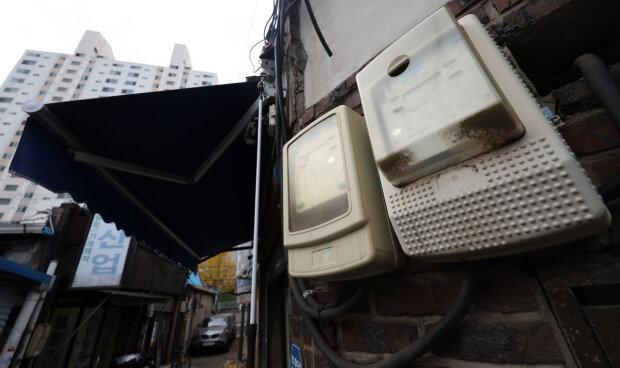
South Korean manufacturers are increasingly concerned that prolonged fighting between the United States and Iran could eventually lead to higher electricity bills. The surge in energy prices that followed the outbreak of the conflict in late February is now making its way into power generation costs and wholesale electricity prices.
Data released Wednesday by Korea Gas Corp. showed that the price of natural gas supplied to power producers rose to 20,522.58 won per gigajoule in July, up 20.3 percent from a year earlier. Although natural gas prices began climbing sharply after the war broke out in late February, the higher costs are only now feeding through to power generation because of the time required to purchase, ship and deliver liquefied natural gas. Further increases cannot be ruled out in the months ahead.
Higher fuel costs are also driving up the system marginal price, or SMP, the wholesale electricity price paid to power generators. According to the Korea Power Exchange, the mainland SMP averaged 139.3 won per kilowatt-hour on Wednesday and has remained above 130 won since July 6. It reached 140.2 won on Tuesday, the highest daily level recorded over the past two years. The monthly average stood at 120.4 won in July 2025 and 110.0 won in March 2026. Because the SMP is determined by the most expensive generating source needed to meet demand, soaring natural gas prices have become the primary driver of the recent increase.
That does not mean businesses will immediately face higher electricity bills. Industrial electricity rates are set by the government rather than Korea Electric Power Corp., and officials have so far shown little appetite for raising them. Climate, Energy and Environment Minister Kim Sung-hwan said early last month that the current SMP level "does not yet warrant an increase in electricity rates."
How long Korea Electric Power Corp. can continue absorbing higher fuel costs remains uncertain. During the Russia-Ukraine war in 2022, the state-run utility absorbed the initial increase and posted an operating loss of about 33 trillion won for the year. Industrial electricity rates were later raised in stages and are now about 60 percent higher than before.
Brokerages expect Korea Electric Power Corp. to face even greater earnings pressure in the fourth quarter than in the third as higher fuel costs continue to filter through. According to financial data provider FnGuide, domestic securities firms forecast the utility will post a 114.4 billion won net loss in the October-December quarter, returning to the red.
"The war drove up power procurement costs by about 700 billion won in the second quarter alone, while electricity rates remained frozen," said Jeong Hye-jeong, an analyst at KB Securities. "That has led us to lower our earnings forecasts."
박현익 기자 beepark@donga.com







 About Dong-A Ilbo