

AI fears reshape South Korea's IT workforce
AI fears reshape South Korea's IT workforce
Posted July. 15, 2026 08:20,
Updated July. 15, 2026 08:20
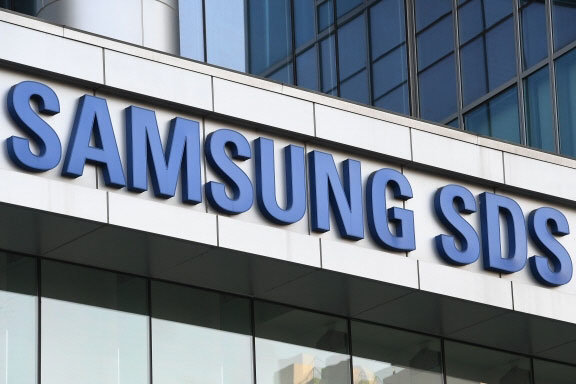
Samsung SDS has formed its first labor union, 41 years after the company was founded. Two days later, Shinsegae I&C, the IT services unit of Shinsegae Group, and Hyundai AutoEver of Hyundai Motor Group followed with unions of their own. The rapid succession marks a turning point for South Korea's IT industry, where skilled workers have traditionally improved their pay and working conditions by switching employers rather than organizing collectively. Although disputes over bonuses and personnel policies triggered the union drives, industry officials say a deeper concern is taking hold as AI reshapes the workplace and raises new questions about job security.
Early this year, Samsung SDS employees filled the company's anonymous online message board with images of people lying flat on the floor, protesting reduced performance bonuses despite improved earnings. The discontent intensified about five months later when the company proposed replacing cash bonuses with stock-based compensation. The frustration ultimately led to the launch of a labor union. By the day after its July 6 debut, the union had enrolled 5,650 members, enough to secure majority-union status.
Shinsegae I&C formally launched its union on July 8, calling for stronger job security, a fairer compensation system and greater transparency in management's decision-making. Hyundai AutoEver also began union activities that day. Labor unions have long been uncommon in South Korea's system integration sector, where developers frequently change jobs and many employees work under relatively flexible arrangements. That makes this month's developments notable, with three major conglomerate-backed IT service companies establishing their first unions since their founding.
Compensation, personnel policies and corporate restructuring may have sparked the organizing efforts, but many in the industry believe AI is the real catalyst. As companies move faster to adopt AI, employees are becoming increasingly uneasy about how their roles will change and whether those jobs will still exist. AI is already taking over tasks once handled by software developers and systems engineers, including writing code, identifying programming errors and handling customer inquiries. For companies, the technology offers a way to accomplish more with fewer employees. For workers, it raises the prospect of shrinking roles and faster workforce restructuring.
"IT workers used to respond to dissatisfaction simply by finding another job," said Kwon Oh-kyung, head of the Samsung SDS union. "That option is becoming less realistic as AI transforms the industry. Companies are under pressure to use labor more efficiently, while employees are increasingly worried about job security. Those concerns helped drive the creation of the union."
Instead of leaving when they become dissatisfied with working conditions or organizational changes, more employees are choosing to stay and press their case through collective bargaining.
The spread of labor unions does not mean employees oppose AI investment. Instead, many want a say in how AI changes their jobs and how the productivity gains it delivers will be shared. Future negotiations are expected to focus on retraining opportunities, career transition programs and how much companies disclose about restructuring plans and outsourcing.
"AI-driven job insecurity is changing not only how companies operate but also how employees bargain with management," said Chung Yeon-seung, a business professor at Dankook University. "Negotiations that once centered on pay raises and bonuses are likely to expand to include job security, career transitions and the distribution of productivity gains from AI."
전혜진 sunrise@donga.com

![[오늘의 운세/7월 17일]](https://dimg.donga.com/c/138/175/90/1/wps/NEWS/IMAGE/2026/07/16/134309046.1.jpg)

![[단독]“원희룡, 김건희 일가에 이익 주려 노선 변경 공모”](https://dimg.donga.com/c/138/175/90/1/wps/NEWS/IMAGE/2026/07/16/134315429.1.jpg)


 About Dong-A Ilbo