

Top taxpayers pay 87% of property tax
Top taxpayers pay 87% of property tax
Posted July. 08, 2026 08:32,
Updated July. 08, 2026 08:32
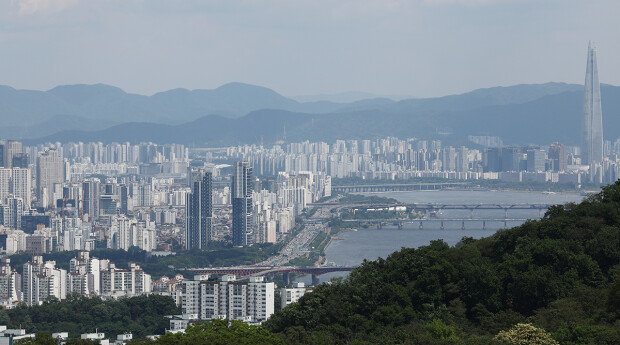
South Korea's top 10% of comprehensive real estate holding tax payers accounted for 87.3% of the total tax collected last year, underscoring how heavily the levy is concentrated among the country's largest property owners. More than half of individual taxpayers subject to the tax were aged 60 or older, paying an average of 2.64 million won each, a reflection of the concentration of retirement wealth in real estate.
According to the National Tax Service's tax statistics portal, assessed comprehensive real estate holding tax liabilities on land and housing totaled 4.8565 trillion won last year, including both individuals and corporations. The top 10% of taxpayers paid 4.242 trillion won, accounting for 87.3% of the total. The tax is structured with progressive rates, meaning the burden rises as the value of property holdings increases.
Among individual taxpayers, 548,177 people were subject to the comprehensive real estate holding tax last year, with total assessed liabilities of 1.3195 trillion won. Older taxpayers accounted for the largest share.
A total of 284,950 taxpayers aged 60 or older, or 52% of all individual taxpayers, were subject to the levy. Those in their 60s numbered 153,543, or 28%, while taxpayers aged 70 and older totaled 131,407, or 24%. Together they paid 753 billion won, representing 57.1% of all comprehensive real estate holding tax assessed on individuals. Their average tax bill came to 2.64 million won per person. The figures suggest that the tax burden is concentrated among older homeowners, whose wealth is often tied up in real estate after retirement.
Among taxpayers in their 20s, 1,926 people paid a combined 4.9 billion won, averaging about 2.57 million won each. Another 363 taxpayers under the age of 20 paid a combined 700 million won, or roughly 1.93 million won per person.
The Ministry of Economy and Finance is expected to unveil a broader package of tax revisions later this month, including changes to property taxes. The government says it aims to foster a housing market centered on owner-occupiers and is considering measures that would increase the tax burden on residential property ownership, including raising the fair market value ratio used to calculate the comprehensive real estate holding tax and scaling back long-term ownership tax deductions for non-owner occupants.
세종=김수연 syeon@donga.com




 About Dong-A Ilbo