

Time to rethink party leader system
Time to rethink party leader system
Posted June. 26, 2026 09:01,
Updated June. 26, 2026 09:01
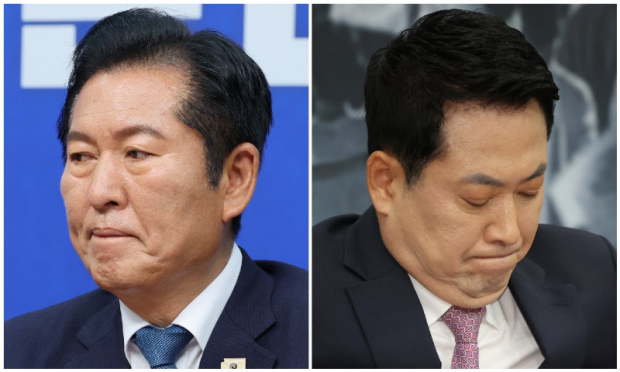
Seoul Mayor Oh Se-hoon on June 24 raised an uncomfortable question: Does South Korea still need party leaders? He argued that a political system that rewards confrontation, elevates the most combative figures and extends their political longevity is hardly a healthy one. In his view, leader-centered party politics has encouraged ideological polarization and deepened partisan conflict. Recent experience offers ample evidence for that argument. Former Democratic Party of Korea leader Jeong Cheong-rae and People Power Party leader Jang Dong-hyeok have each built and maintained influence by appealing to their parties' most hard-line supporters and sharpening divisions with political opponents.
Both continue to place considerable weight on the views of those supporters. Despite demands within the Democratic Party of Korea that he take responsibility for disappointing local election results, Jeong has sought another term, presenting himself as the candidate of party members. Jang has responded to calls from lawmakers for his resignation by arguing that only party members should decide his future. Yet party leaders are expected to speak for their entire organizations, not just their most enthusiastic supporters. Political parties exist to write laws, review budgets and govern through elected representatives. The decisions made in those processes directly affect citizens' daily lives. A party leader's role therefore cannot be confined to appealing to a loyal base through ever sharper ideological positioning.
Jeong, however, has repeatedly embraced rhetoric designed to energize supporters, including his assertion that it could take a decade to eliminate the legacy of what he calls an insurrection. Last September, he reversed an agreement on a special counsel investigation reached by ruling and opposition floor leaders after objections from hard-line party members. Jang has shown a similar tendency. Although lawmakers broadly agreed that calls for a nationwide rerun of the June 3 election were unrealistic, he repeated the demand immediately after leaving the hospital on June 24. He had previously echoed conspiracy theories circulated by fringe YouTubers claiming that identical vote totals received by some candidates pointed to election irregularities.
Yet neither man held a single formal meeting with his counterpart over the past 10 months to help break the political impasse. Even when bipartisan cooperation was needed on issues such as special legislation related to investment in the United States and a supplementary budget addressing the war in the Middle East, it was the ruling and opposition floor leaders, not the party chiefs, who negotiated agreements and moved legislation forward.
Party leaders retain enormous influence largely because they play a central role in the nomination of parliamentary candidates. That influence can become problematic when political incentives favor confrontation over compromise. South Korea has long struggled with a cycle in which rival parties benefit from conflict while meaningful dialogue becomes increasingly difficult. The United States operates without an equivalent party-leader structure, relying instead on congressional leadership. South Korea has debated similar reforms since the early 2000s, including proposals to reduce the power of centralized party organizations and strengthen the role of lawmakers. At a time when political hostility routinely overwhelms dialogue, that discussion deserves renewed attention.

![[단독]‘사채지옥’ 갇힌 20대 여성… 3년간 1.5억 뜯기고 성착취 영상까지](https://dimg.donga.com/c/138/175/90/1/wps/NEWS/IMAGE/2026/06/26/134186010.1.jpg)





 About Dong-A Ilbo