

Audit uncovers widespread child meal card abuse
Audit uncovers widespread child meal card abuse
Posted June. 25, 2026 08:22,
Updated June. 25, 2026 08:22
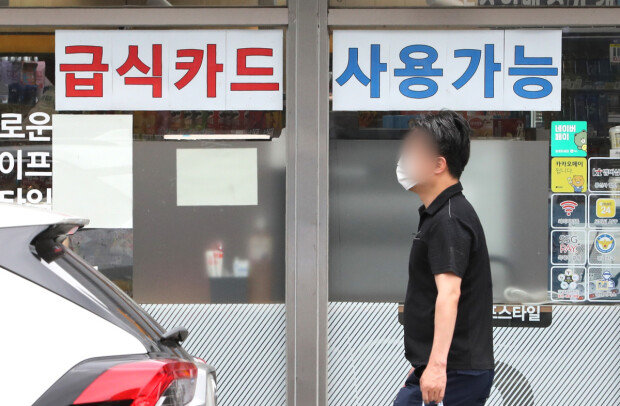
South Korean authorities have uncovered widespread abuse of meal cards issued to low-income children, finding that some parents used the government-funded benefit to buy alcohol and cigarettes. In several cases, the cards continued to be used even after the child had died.
The Office for Government Policy Coordination and the Ministry of Health and Welfare announced the findings of an investigation into the meal card program on June 24. The cards are provided to children under 18 from low-income and other disadvantaged families, including single-parent households, to help cover meal costs at designated restaurants, convenience stores and other approved businesses. Each recipient receives 300,000 won a month. About 150,000 of the roughly 273,000 eligible children used the cards last year.
The government reviewed transaction records from January through August last year in one city, county or district from each of South Korea's 17 metropolitan cities and provinces. Investigators found cases in 13 regions, excluding Seoul, Incheon, Busan and Gwangju, where cards were used to buy alcohol, cigarettes and other items unrelated to meals.
In one case, a parent used a meal card issued to a middle school student to ring up daily charges of 30,000 won at a snack restaurant the parent operated, diverting 12.95 million won over four years. Authorities identified 55 people involved in similar schemes. Another 1.25 billion won was spent at businesses with little connection to food purchases, including bars, private academies and PC gaming cafes. Transactions made between 10 p.m. and 6 a.m. totaled 9.3 billion won.
Investigators also found numerous cases in which cards remained available because records were not updated after children entered care facilities, graduated from school or died. In some instances, parents continued using the cards after children had been removed from their homes because of abuse and placed in protective care. In others, the cards were used even after the child's death.
Unused balances that expired at the end of 2024 totaled 17.1 billion won, or 7.8% of the program's total funding of 220.7 billion won. Authorities believe many children avoided using the cards because they felt self-conscious, while others were unaware of where the cards could be used.
To curb abuse, the government plans to expand restrictions on purchases of prohibited items such as alcohol and tobacco beyond convenience stores to include supermarkets. It also plans to bar businesses unrelated to meal purchases from participating in the program. Local governments will also be notified immediately when a child's circumstances change in ways that affect eligibility.
조유라 기자 jyr0101@donga.com







 About Dong-A Ilbo