

Sorokdo nurses’ tools gain heritage status
Sorokdo nurses’ tools gain heritage status
Posted June. 05, 2026 08:40,
Updated June. 05, 2026 08:40
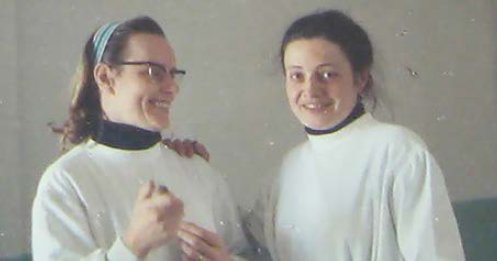
“Sorokdo was Margaret’s life. Even after returning to Austria and moving into a nursing home, she loved talking about the island. Had she known that the tools she used to care for patients had been designated as preliminary cultural heritage items in South Korea, she would have responded as she always did, with quiet humility and kindness.”
Norbert Pisarek, 85, the younger brother of Margaret Pisarek (1935-2023), spoke to The Dong-A Ilbo on June 1 about his late sister. Last November, the Korea Heritage Service designated the treatment and caregiving tools used by Austrian nurses Margaret Pisarek and Marianne Stöger, 92, as preliminary cultural heritage items. The two spent more than four decades caring for Hansen’s disease patients on Sorokdo, an island off Goheung County in South Jeolla Province. Last month, the Marianne and Margaret Foundation delivered certificates marking the designation to Marianne and Margaret’s family members.
Among the items recognized under the title “Treatment and Caregiving Tools of Marianne and Margaret of Sorokdo” were a baking mold and a powdered milk container. The two nurses baked Gugelhopf, a traditional celebratory cake from their homeland, for patients' birthdays. Because of its distinctive shape with a hole in the center, patients affectionately nicknamed it “chamber pot bread.” According to Kim Yeon-jun, chairman of the committee promoting the legacy of Marianne and Margaret, Marianne recalled after receiving the certificate last month: “We made Gugelhopf so we could place candles on it and celebrate birthdays together. Seeing the patients happy made me feel even more love and gratitude.”
The German-made baking mold features somewhat makeshift handles attached to both sides. The nurses added them themselves for convenience because they baked Gugelhopf so frequently. According to the Korea Heritage Service’s Modern and Contemporary Heritage Division, “Although housing for Hansen’s disease patients and hospital staff residences were strictly separated at the time, Marianne and Margaret invited patients into their home, shared Gugelhopf and celebrated birthdays together.”
The designation also covers 68 treatment and caregiving items, including washbasins, nail clippers and syringes. Most were used in a children's treatment room known as the “M Clinic,” named after the first initials of Marianne and Margaret. According to the book "Marianne and Margaret of Sorokdo" by Sung Ki-young, the two nurses started their days before dawn, heating powdered milk in kettles and carrying it from ward to ward. They also soaked patients’ hands and feet in washbasins before trimming their nails. The Korea Heritage Service said the collection illustrates a form of patient care that upheld human dignity despite poor medical conditions and entrenched social prejudice.
The designated items will be preserved and managed at sites including the Marianne and Margaret Memorial Hall in Goheung. Replicas are scheduled to be exhibited in October at the Korean Cultural Center in Vienna and the Catholic Women’s Association of Innsbruck. The preliminary cultural heritage program identifies and preserves cultural assets less than 50 years old that hold particular significance in modern and contemporary Korean history and culture. Ten items were selected in the program’s inaugural round last year, and a second list is expected later this year.
이지윤 기자 leemail@donga.com

![[속보]트럼프 “이란과 14일 합의 서명”…혁명수비대 “절대 없을 것”](https://dimg.donga.com/c/138/175/90/1/wps/NEWS/IMAGE/2026/06/14/134105551.1.jpg)



 About Dong-A Ilbo