

Starbucks controversy exposes oversight failures
Starbucks controversy exposes oversight failures
Posted May. 27, 2026 08:28,
Updated May. 27, 2026 08:28
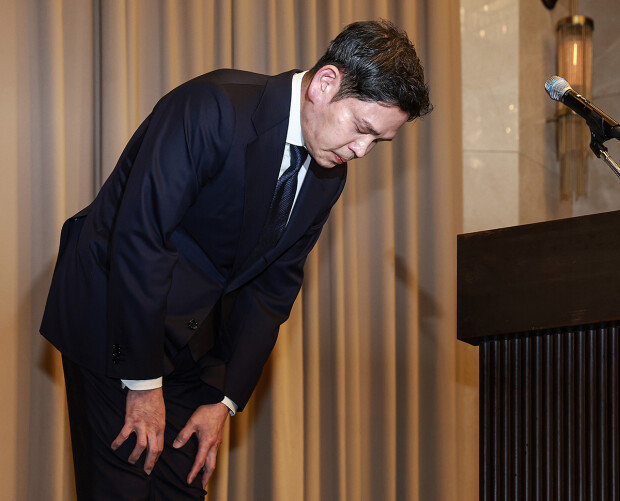
Shinsegae Group Chairman Chung Yong-jin has publicly apologized for the controversy surrounding Starbucks Korea’s “Tank Day” promotion, saying he bears full responsibility for the incident. It was his second apology in a week. After issuing a written statement shortly after the controversy erupted, Chung appeared in person to bow his head and ask for the public’s forgiveness.
The backlash stemmed from a promotional event launched by Starbucks Korea on May 18, the anniversary of the Gwangju Democratic Uprising. The campaign used the phrase “Tank Day” and the slogan “Thud on the Desk,” drawing fierce criticism for allegedly mocking both the pro-democracy movement and the memory of the late student activist Park Jong-chul, whose death under torture became a symbol of South Korea’s democratization movement.
Shinsegae responded by dismissing Starbucks Korea’s chief executive and the executive responsible for the campaign. The company also issued an apology. Yet public criticism persisted, ultimately prompting the group chairman himself to step forward and apologize again.
The apology, however, has not resolved the questions surrounding the incident. The responsibility attached to such a serious corporate misstep is considerable.
According to the company’s internal investigation, it was unable to determine whether the employees involved intentionally incorporated the controversial references. Three employees, including the individual who proposed the “Tank Day” name, reportedly refused to surrender their mobile phones. Internal messenger records had been retained for only one week, making it difficult to reconstruct what occurred during the planning process. Those unanswered questions will now have to be addressed through the ongoing police investigation.
The company’s approval system also exposed serious weaknesses. The campaign passed through four layers of review, including a team leader, a manager, a division head and the chief executive. No one raised objections. Some of the seven employees involved reportedly approved the campaign without even opening the attached design files. The legal department was never asked to review the materials. The company’s review process failed at every level.
The fallout quickly spread beyond Starbucks itself. International media outlets reported on the controversy. President Lee Jae-myung publicly criticized the campaign. The issue also became a source of political conflict ahead of the June 3 local elections, while calls for boycotts emerged within parts of the public sector.
Now that the group chairman has apologized and Starbucks’ U.S. headquarters has acknowledged that the incident should never have occurred, determining what happened and ensuring it does not happen again should take precedence. Further government intervention or excessive political attacks on the company could deepen confusion and risk turning a corporate failure into a prolonged political dispute. Such responses require caution.
The broader lesson extends beyond a single marketing campaign. Political controversies involving corporate advertising and branding continue to recur with troubling frequency. Modern corporations are judged by more than their ability to create jobs and pay taxes. They are expected to understand how their decisions affect consumers, employees, shareholders and the communities in which they operate.
Preventing a repeat will require fundamental changes in both corporate culture and internal controls. Employees and executives alike must recognize the broader social consequences of their decisions, while companies must establish review systems capable of identifying obvious risks before they become public scandals. Only by addressing those shortcomings can businesses restore public trust and demonstrate that the lessons of this controversy have truly been learned.







 About Dong-A Ilbo