

Trump weighs military options as Iran tensions deepen
Trump weighs military options as Iran tensions deepen
Posted May. 21, 2026 08:23,
Updated May. 21, 2026 08:23
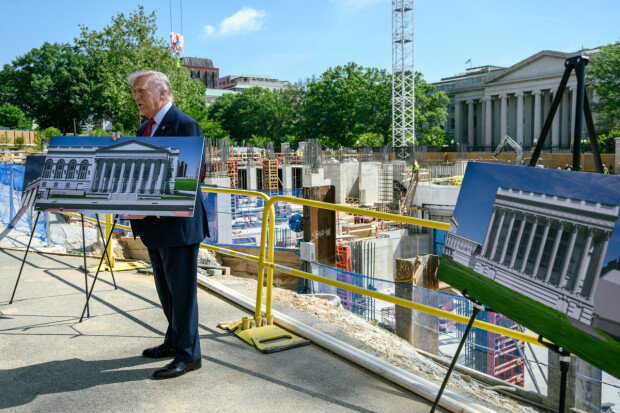
U.S. President Donald Trump convened his national security team after calling off a planned strike on Iran, receiving fresh briefings on military options, according to a report by Axios.
While Trump said he was responding to requests from key Middle Eastern allies, including Saudi Arabia, Qatar and the United Arab Emirates, to hold back from immediate military action, the move appeared aimed at maintaining pressure on Tehran while keeping the option of force on the table.
● Trump signals possible further strikes on Iran
The meeting included Vice President J.D. Vance, Secretary of State Marco Rubio, Defense Secretary Pete Hegseth, Chairman of the Joint Chiefs of Staff Gen. Dan Caine, CIA Director John Ratcliffe and White House Middle East envoy Steve Witkoff, Axios reported. Participants discussed the trajectory of the conflict with Iran, the status of diplomatic efforts and possible military scenarios.
Trump sharpened his rhetoric later in remarks to reporters at the White House, underscoring a narrowing window for diplomacy. “We will not allow Iran to have a nuclear weapon,” Trump said. “This war will end very quickly, and in a very good way.” He said Iranian officials had requested additional time, but suggested military action remained on the table.
“They asked whether they could have two or three days,” Trump said. “I hope we don’t have to do it, but we may have to hit them hard again.”
At the same time, Washington stepped up economic pressure. The Treasury Department announced sanctions on Iranian front companies accused of moving hundreds of millions of dollars on behalf of banks already under U.S. restrictions.
It also designated 19 vessels linked to what it described as Iran’s “shadow fleet,” which has continued transporting crude oil and petrochemical products despite sanctions.
Still, uncertainty appears to be growing inside the administration as diplomatic efforts show little progress. Axios reported that many U.S. officials remain unclear about the president’s ultimate direction.
Another concern for the White House is the risk of escalation in the Gulf. A renewed military campaign could expose energy infrastructure in Saudi Arabia, the United Arab Emirates and Qatar to Iranian retaliation. Any drone or missile attacks on those facilities could push oil prices higher, adding political pressure on an administration already grappling with persistent inflation.
● Senate moves to curb Trump’s war powers
Domestic opposition to U.S. involvement in the conflict is also beginning to constrain the administration’s options. The Senate on Thursday approved a War Powers Resolution aimed at limiting Trump’s authority to conduct military operations against Iran, passing the measure 50-47. Four Republican senators joined Democrats in support: Bill Cassidy of Louisiana, Lisa Murkowski of Alaska, Susan Collins of Maine and Rand Paul of Kentucky.
The vote highlights growing unease within the Republican Party as concerns mount that a prolonged conflict could erode Trump’s political standing ahead of November’s midterm elections.
The measure cleared only a procedural step and still requires approval in the full Senate and the House of Representatives. Even if it passes both chambers, Trump is expected to veto the resolution.
장은지 기자 jej@donga.com



![“아버지 이미 사망했는데”…손주에게 이어진 조부모 빚 [상속리포트]](https://dimg.donga.com/c/138/175/90/1/wps/NEWS/IMAGE/2026/05/22/133975868.3.jpg)




 About Dong-A Ilbo