

Samsung bonus dispute raises industrial stability concerns
Samsung bonus dispute raises industrial stability concerns
Posted May. 19, 2026 08:31,
Updated May. 19, 2026 08:31
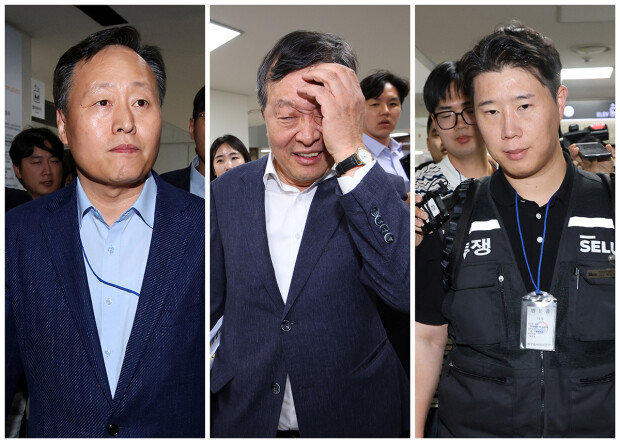
Samsung Electronics and its labor union resumed government-mediated follow-up talks on a stalled performance bonus agreement on May 18, after negotiations broke down last week. With a general strike set for May 21, both sides are now in a last-ditch two-day push to reach a deal. President Lee Jae-myung also weighed in on the dispute on X, formerly Twitter, saying that “labor should be respected as much as companies, and management rights should be respected as much as labor rights.”
At the core of the dispute is how performance bonuses should be linked to operating profit. The union is demanding that 15% of Samsung Electronics’ operating profit be distributed as bonuses without an upper limit. The business community argues the demand amounts to a de facto claim on corporate profits, noting that courts have already ruled that performance-based bonuses do not constitute wages.
Legal and industry officials say that while unions may pursue profit-sharing arrangements, using collective action to secure a fixed share of operating profit runs counter to established legal principles governing managerial discretion. The Supreme Court has previously ruled that pure performance-based bonuses cannot be considered ordinary wages
If the union’s demand were fully met, payouts would total roughly 45 trillion won, more than four times last year’s shareholder dividends. Business groups warn that such a system could sharply reduce companies’ investment capacity and weaken long-term competitiveness.
On the same day, a court partially granted Samsung Electronics’ request for an injunction against what it described as unlawful industrial action. The court ruled that even during a strike, the union must maintain essential safety and security-related operations in semiconductor production, including wafer handling, at normal operating levels.
The ruling is widely seen as acknowledging the potential economic impact of a prolonged strike and placing limits on industrial action that could disrupt production and broader industrial output. The court also rejected the union’s demand to suspend the introduction of new wafers, calling it a “complete infringement on the employer’s freedom to continue operations.”
Semiconductors account for about 37% of South Korea’s total exports, while Samsung Electronics makes up roughly 23% of the KOSPI’s market capitalization. Analysts estimate that an 18-day full strike could result in losses of up to 100 trillion won, while also affecting retail investors exposed to the company’s performance.
While the union frames the dispute around bonus fairness, critics warn that a prolonged strike could create a bottleneck in the global semiconductor supply chain and trigger wider economic disruption. As tensions build, pressure is mounting on both sides to step back from what observers describe as brinkmanship that risks lasting damage to both the company and the broader economy.



![[속보]삼성전자 노사, 20일 오전 조정 재개…파업 하루 남았다](https://dimg.donga.com/c/138/175/90/1/wps/NEWS/IMAGE/2026/05/20/133955940.1.jpg)



 About Dong-A Ilbo