

Global talent race heats up in AI era
Global talent race heats up in AI era
Posted April. 28, 2026 08:07,
Updated April. 28, 2026 08:07
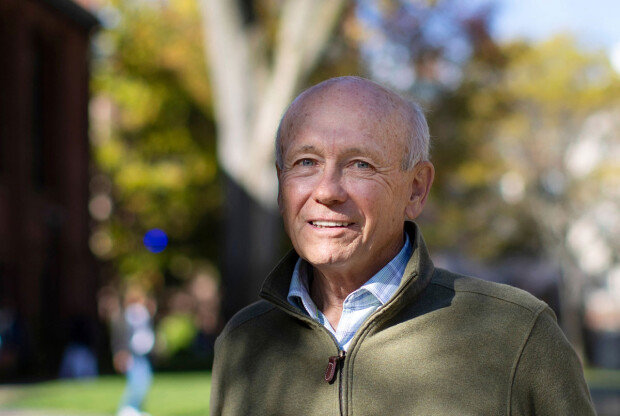
“The Trump administration is pushing talent out, creating a prime opportunity for universities and companies elsewhere to attract it.”
Peter Howitt, an emeritus professor at Brown University and last year’s Nobel laureate in economics, made the remarks in an April 15 interview. He said countries seeking to attract young innovators and sustain growth should reform their immigration and education systems.
Howitt, who is scheduled to deliver a keynote address at the Dong-A International Finance Forum in Seoul on May 14, said South Korea has strong potential to attract top-tier talent capable of leading innovation in fields such as artificial intelligence, citing companies including OpenAI and Anthropic.
Howitt pointed to Canada as a model. He said the country has long operated a structured, points-based immigration system that evaluates applicants based on education and skills. Canada has also introduced expedited work permits for high-skilled workers and researchers, often processed within two weeks, to attract talent leaving the United States. Many foreign professionals who fail to secure U.S. H-1B visas are now turning to Canada.
The United Kingdom and Germany have also stepped up efforts to attract talent moving away from the United States, rolling out programs such as the High Potential Individual visa and the Opportunity Card.
South Korea, however, has been slow to adapt. Despite rapid aging and a declining birthrate that have pushed its potential growth rate into the 1 percent range, immigration policy remains largely focused on low-wage labor. According to the Software Policy and Research Institute, the country ranked 35th in global talent attractiveness in 2024. Only 20 people have received the government’s “top-tier visa,” aimed at highly educated graduates from leading global universities working in advanced industries such as semiconductors and artificial intelligence.
The government plans to issue 350 such visas by 2030, but analysts say the pace must accelerate as global competition for talent intensifies. They call for fast-track visa processing for science and technology professionals and stronger incentives to attract graduates of top universities and overseas Korean talent in key sectors.
“Imagine living in North America 150 years ago and being told that only about 1 percent of the population would work in agriculture,” Howitt said.
He said artificial intelligence can replace some aspects of human thinking but cannot replicate creativity, empathy or leadership. New jobs and new skills will emerge, he added. Attracting global talent capable of creating those opportunities will be critical in the AI era.

![달걀 하루 몇 개까지 괜찮을까?…핵심은 ‘이것’[건강팩트체크]](https://dimg.donga.com/c/138/175/90/1/wps/NEWS/IMAGE/2026/04/27/133818891.3.jpg)
![[알립니다]만성폐쇄성폐질환과 폐고혈압](https://dimg.donga.com/c/138/175/90/1/wps/NEWS/IMAGE/2026/04/24/133800812.4.jpg)




 About Dong-A Ilbo