

Trump-era divisions carry consequences beyond borders
Trump-era divisions carry consequences beyond borders
Posted April. 27, 2026 08:02,
Updated April. 27, 2026 08:02
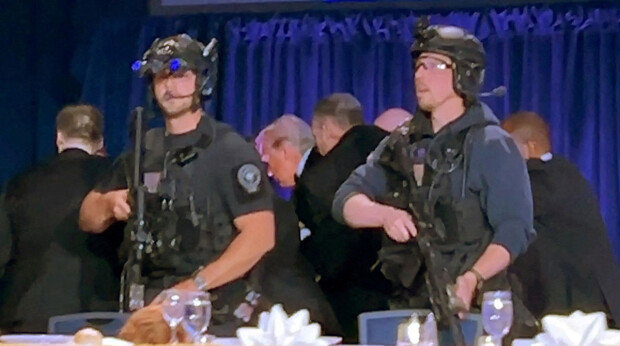
A shooting occurred at a White House Correspondents’ Association dinner on April 25, an event attended by U.S. President Donald Trump. All attendees, including Trump and his wife, were safely evacuated and remained unharmed. The suspect was taken into custody at the scene.
Authorities said the gunman, armed with a shotgun, breached an external security screening area and ran toward the venue, firing at U.S. Secret Service personnel. Trump later described the 31-year-old suspect as a “mentally troubled lone offender” and said he did not believe the attack was connected to the ongoing conflict with Iran.
While the incident appeared to be a disorganized attempt rather than a carefully planned assassination, it comes at a time of heightened tension in the United States. Under Trump’s second term, aggressive immigration enforcement and military actions involving Venezuela and Iran have fueled debate over the line between legitimate authority and the use of force. The resulting polarization has been reflected in growing anti-government and anti-war demonstrations.
Trump, however, appeared to frame the shooting in political terms. He said, “Great presidents in history have always faced situations like this,” suggesting the episode could help rally support ahead of November’s midterm elections. Over the past two years, he has faced several direct and indirect security threats involving gunfire.
Most notably, a 2024 campaign rally shooting in which he was struck near the ear and appeared on stage with blood on his face while raising his fist became one of the defining images of his campaign and reinforced his image as a political strongman.
The latest incident also comes as the conflict with Iran, now in its second month, remains unresolved. Although the United States and Iran have agreed to a temporary ceasefire, broader negotiations have stalled, including disputes linked to the Strait of Hormuz. Analysts warn the situation risks evolving into another prolonged, low-level conflict marked by maritime pressure and intermittent strikes, rather than a conventional war, echoing Washington’s long-standing concern over “endless wars.”
The implications extend beyond foreign policy. The United States, long viewed as a model democracy and a central pillar of the international order, is increasingly seen as grappling with deep internal divisions while projecting instability abroad. The repeated use of political violence has raised concerns about what some observers describe as a growing state of psychological civil strife.
Once the world’s dominant superpower, the United States now appears to be engaging in more volatile military and political actions while shifting part of the burden to its allies. For countries closely tied to the U.S., including South Korea, these developments are no longer distant or abstract concerns.


![[알립니다]만성폐쇄성폐질환과 폐고혈압](https://dimg.donga.com/c/138/175/90/1/wps/NEWS/IMAGE/2026/04/24/133800812.4.jpg)





 About Dong-A Ilbo