

K-fashion accelerates expansion into China
K-fashion accelerates expansion into China
Posted February. 03, 2026 09:09,
Updated February. 03, 2026 09:09
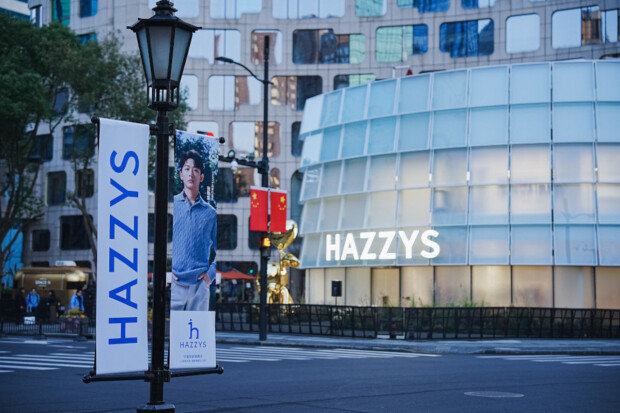
Korean fashion brands are accelerating efforts to secure new growth engines in China, the world’s second-largest fashion consumption market. As expectations grow that China may ease its informal restrictions on Korean cultural content, often referred to as the Korean Wave ban, Korean brands are gaining traction among China’s MZ generation. In response, companies are pursuing premium positioning and localization strategies to sharpen their competitiveness.
LF, formerly known as LG Fashion, said on Feb. 2 that it opened “Space H Shanghai,” the first overseas flagship store of its premium casual brand Hazzys, in Shanghai’s Xintiandi district. The store follows Space H Seoul in Myeongdong, central Seoul, making it the company’s second flagship hub. Xintiandi is a high-end commercial area known for global luxury brands and is popular with China’s MZ consumers as well as international tourists. LF has operated its China business since forming a partnership in 2007 with Baoxiniao Group, one of China’s three major menswear companies. The company currently runs about 60 stores nationwide through department stores and large shopping malls. The opening of a flagship store signals LF’s intention to strengthen Hazzys’ premium brand image in the Chinese market.
Korean fashion platform Musinsa also entered the Chinese market last December, opening its first overseas store, “Musinsa Standard Shanghai Huaihai Baisheng,” in Shanghai. It later launched its first overseas multibrand shop, “Musinsa Store Shanghai Anfu Road,” underscoring plans to expand its China business with Shanghai as a strategic base. Musinsa is providing comprehensive support to small and midsize Korean fashion brands, covering market entry, distribution, marketing and logistics, to help them establish a stable presence overseas.
Marithé François Girbaud also entered the Chinese market last July, opening its first store in Shanghai’s Xintiandi through Mistoholdings, formerly known as Fila Korea. IICOMBINED, which operates the eyewear brand Gentle Monster, began its full-scale expansion into China in 2016 and now runs about 20 stores in Beijing and Shanghai. Other brands, including Eemis and MLB, which are already well recognized among China’s MZ generation, are also expanding their retail footprints, particularly in Shanghai. Hyungji Elite, a brand with a strong presence in China’s school uniform market, signed a memorandum of understanding last month with Shanghai Zhongshuai Robot Co., a Chinese firm specializing in intelligent exoskeleton robots, to jointly develop wearable robots and further expand its presence in China.
Domestic fashion companies are increasingly turning to China as prospects for sustained growth in South Korea’s apparel market remain limited. According to the Ministry of Trade, Industry and Energy’s preliminary report on 2025 annual and December trade trends, South Korea’s textile exports to China totaled $1.37 billion from Jan. 1 to Dec. 25 last year, exceeding exports to the United States, which stood at $1.27 billion. Data from the Korea Trade-Investment Promotion Agency and other sources show that South Korea’s fashion market is expected to grow at an annual rate of about 1 percent amid weak consumer spending, while China’s market is projected to expand by more than 3 percent.
Choo Ho-jung, a professor of clothing and textiles at Seoul National University, said that as the domestic fashion market approaches its growth limits, expansion into China is a natural strategic choice given the country’s proximity and market scale. She added that Shanghai’s position as a trend-setting fashion hub makes it particularly attractive for fashion brands seeking regional and global exposure.
이소정 기자 sojee@donga.com







 About Dong-A Ilbo