

Takaichi poised for landslide in Japan election
Takaichi poised for landslide in Japan election
Posted February. 03, 2026 09:08,
Updated February. 03, 2026 09:08
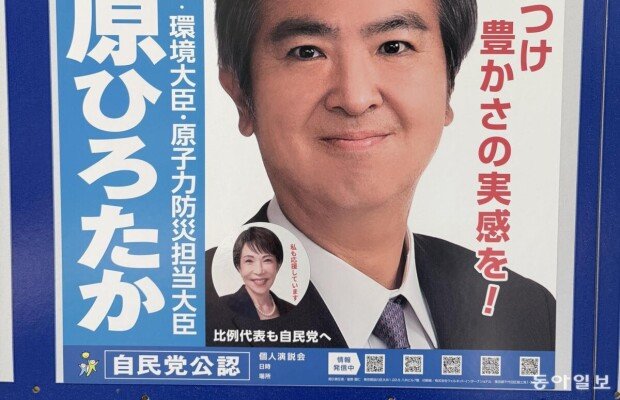
Japanese Prime Minister Sanae Takaichi is widely expected to secure a landslide victory in the House of Representatives election on Feb. 8. Some forecasts project that the combined seat total of the ruling Liberal Democratic Party and its coalition partner, the Japan Innovation Party, could surpass two-thirds of the chamber, or 310 seats.
If Takaichi’s decisive win materializes, analysts say she would gain strong momentum to pursue constitutional revision, a key pillar of her long-stated ambition to transform Japan into what she has described as a “normal country capable of war.” Some observers caution that such a shift could introduce new uncertainty into Seoul-Tokyo relations, which have recently improved as the two leaders narrowed differences through renewed shuttle diplomacy.
● Ruling bloc projected to surpass two thirds threshold
An analysis by the Asahi Shimbun, based on telephone and online surveys of about 370,000 voters conducted from Jan. 31 to Feb. 1, projects that the Liberal Democratic Party will comfortably exceed the 233 seats needed for a single-party majority in the general elections. When combined with the Japan Innovation Party, the ruling bloc could secure more than 300 seats and potentially surpass two-thirds of the 465-seat lower house, or at least 310 seats.
With the Liberal Democratic Party currently holding 199 seats and the Japan Innovation Party 34, the projection indicates the ruling parties could gain an additional 70 to 80 seats or more.
By contrast, the newly formed Centrist Reform Alliance, launched by the main opposition Constitutional Democratic Party and the third-largest opposition Komeito Party to appeal to moderate voters, is projected to win only about half of its current 167 seats.
Other surveys also point to a decisive victory for Prime Minister Sanae Takaichi. The Nikkei reported on Jan. 29 that the Liberal Democratic Party was likely to secure a single-party majority, while the Yomiuri Shimbun on the same day forecast that the ruling bloc could win at least 261 seats.
Prime Minister Takaichi has framed a ruling bloc majority as her election goal. Poll results suggest that threshold has already been cleared, shifting attention to how large the ruling parties’ final seat tally could be.
● Takaichi may push constitutional revision after landslide
If the Liberal Democratic Party secures a single-party majority, it would mark the first time in four years and three months since the October 2021 general elections under former Prime Minister Fumio Kishida, when the party won 261 seats. In that election, the ruling bloc, including coalition partner Komeito, secured a combined total of 293 seats.
If the ruling parties capture two-thirds of the lower house this time, they would gain the power to override opposition in the upper house by passing legislation through revotes in the House of Representatives. Such dominance would enable swift approval of budgets reflecting what is known as the Takaichi line of aggressive fiscal policy, along with major legislative initiatives. These could include revising the three national security documents, reconsidering the Three Non-Nuclear Principles of not possessing, producing or permitting the introduction of nuclear weapons, and tightening policies governing foreign residents.
Some analysts say such an outcome could bring Japan closer to constitutional revision, a long-held goal that even former Prime Minister Shinzo Abe failed to achieve. Prime Minister Sanae Takaichi has explicitly included constitutional revision in her campaign pledges, raising the possibility of revising Article 9. That article renounces war and the use of force and prohibits the maintenance of land, sea and air forces as well as the right of belligerency.
Under Japan’s constitution, amendments require approval by two-thirds of the full membership in both the House of Representatives and the House of Councillors, followed by a majority vote in a national referendum. Even if the ruling bloc secures a two-thirds majority in the lower house, the upper house remains under opposition control. Attention is therefore focused on whether the Liberal Democratic Party, which holds 100 seats, and the Japan Innovation Party, with 19, can build broader support. Potential partners include the centrist Democratic Party for the People, far-right groups such as Sanseito and the Japan Conservative Party, and independents, to reach the two-thirds threshold of 166 seats in the upper chamber.
If power becomes more concentrated in Prime Minister Takaichi after the election, analysts differ on the implications for future Seoul-Tokyo relations. Some say she could pursue a more proactive approach to improving ties, citing her past interest in reconciliation. Others argue she may more firmly assert her positions on historical disputes, including Dokdo, an issue on which she has so far shown restraint.
In-Chan Hwang hic@donga.com

![“고인 통장에서 장례비 꺼냈는데”…상속포기 무효될 수 있나 [상속리포트]](https://dimg.donga.com/c/138/175/90/1/wps/NEWS/IMAGE/2026/06/26/134181179.3.jpg)


![[단독]계엄때 “서강대교 넘지말라” 했던 대령도 내란수사](https://dimg.donga.com/c/138/175/90/1/wps/NEWS/IMAGE/2026/06/27/134192351.1.jpg)



 About Dong-A Ilbo