

Entertainment industry hit by illegal medical practice claims
Entertainment industry hit by illegal medical practice claims
Posted December. 20, 2025 09:09,
Updated December. 20, 2025 09:09

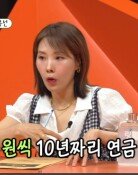
A controversy over alleged illegal medical practices linked to comedian Park Na-rae is spreading across South Korea’s entertainment industry. A prominent YouTuber who appears on the same television program as Park, Ipjjap Eun-hatnim, whose real name is Kim Mi-kyung, acknowledged Tuesday that she had received home-visit medical treatment from a woman known as “Injection Aunt” and announced a suspension of her activities. Medical experts warned that unlicensed medical practices can heighten dependence on narcotic drugs and lead to serious complications affecting the heart and kidneys.
In a post uploaded to her YouTube channel that day, Kim said she first met the woman at the center of the controversy, identified only as Ms. A, at a hospital in Seoul after being introduced by an acquaintance. Kim said she trusted the woman without suspicion and believed she was a licensed physician when she received treatment. She added that the woman later visited her home, effectively acknowledging allegations of illegal medical practices. Earlier, SHINee member Key, whose real name is Kim Ki-bum, also admitted to receiving home-visit treatment and announced a suspension of his activities.
Under current law, home-visit medical care itself is not illegal. However, it is strictly limited to emergency patients, cases recognized by the government as serving the public interest, and patients who unavoidably require in-home nursing care. Home-visit treatment is also permitted when requested by patients or their guardians, and Park and others are expected to argue that their cases fall within these legally allowed categories. During home visits, only limited procedures are permitted, including basic medical examinations, wound treatment, and the administration of injections or intravenous drips.
Home-visit medical care must be provided by individuals holding a valid medical license in South Korea. General nurses are not permitted to visit homes alone to administer injections or perform other medical procedures. However, in cases involving patients discharged after surgery or those with severe mobility limitations who receive home nursing services, a certified home care nurse may visit independently and administer medication in accordance with a physician’s instructions. Visiting nurses who meet specific qualifications may also administer injections, but only with a doctor’s prescription. The medical community widely assesses that individuals referred to as “Injection Aunt” lack such qualifications and are not licensed medical professionals.
Investigators are also examining the distribution process of drugs allegedly provided to Park and others. Park and Kim are suspected of having received an appetite suppressant containing phentermine, commonly referred to as the “butterfly drug.” Phentermine is a psychotropic medication that cannot be used without a doctor’s prescription. The Korean Medical Association said there appear to be indications that psychotropic drugs such as clonazepam, for which proxy prescriptions and telemedicine prescriptions are prohibited, as well as prescription drugs such as trazodone, were used in this case. Clonazepam is commonly prescribed for panic disorder, while trazodone is primarily used to treat depression and insomnia.
Kang Si-hyuk, a professor of cardiology at Seoul National University Bundang Hospital, warned that even intravenous drips often described as nutritional injections can cause side effects in people with heart or kidney conditions. He said dosages and ingredients must be adjusted strictly according to a doctor’s prescription, adding that narcotic drugs have strong addictive properties that can lead individuals to seek repeated and progressively higher doses.
The Gangnam Police Station in Seoul has launched an investigation after receiving a complaint calling for a probe into Park for alleged violations of the Medical Service Act, the Pharmaceutical Affairs Act, the Narcotics Control Act, and the Act on Special Measures for the Control of Public Health Crimes. The Ministry of Health and Welfare said unlicensed medical practices are primarily subject to punishment, but if a patient is found to have been aware of a violation of the Medical Service Act and actively requested such treatment, the patient may also face punishment as an accomplice.
Sung-Min Park min@donga.com





 About Dong-A Ilbo