

Shot AI: “Sports AI Technology That’s Fun for Pros and Amateurs, Customers and Business Owners Alike”
Shot AI: “Sports AI Technology That’s Fun for Pros and Amateurs, Customers and Business Owners Alike”
Posted November. 21, 2025 17:19,
Updated November. 21, 2025 17:20
- ShotAI is a Korean sports-tech startup that has developed an accessible AI-based unmanned referee system and global league platform for tennis courts, enabling quick installation and automated management for both players and facility owners.
- Unlike expensive, professional-grade systems, ShotAI’s solution uses just two cameras per court and offers features like automated tournaments, AI-generated match analysis, and a global league open to all skill levels.
- The company is rapidly expanding internationally, aiming to connect courts worldwide and create a new sports culture where anyone can compete fairly and have their skills recognized.
On weekday afternoons, tennis courts across the globe often sit empty, a stark contrast to the fully booked chaos of weekends. Even when players do hit the courts, amateur tournaments are frequently marred by heated disputes over whether a ball was "in" or "out." Meanwhile, facility managers struggle with a universal dilemma: how to reduce weekday vacancy rates and operate more efficiently.
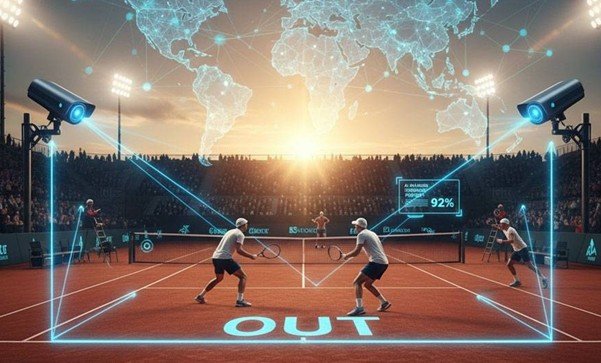
One Korean startup is tackling this inefficiency with Artificial Intelligence. ShotAI (CEO Kyung-soo Roh), a sports-tech company rapidly growing under the "Initial Startup Package Global Competence Strengthening Program" at Seoul National University of Science and Technology (SeoulTech), claims its AI-based unmanned referee system and global league platform are poised to revolutionize the sports market.
From Pro Stadiums to Public Courts
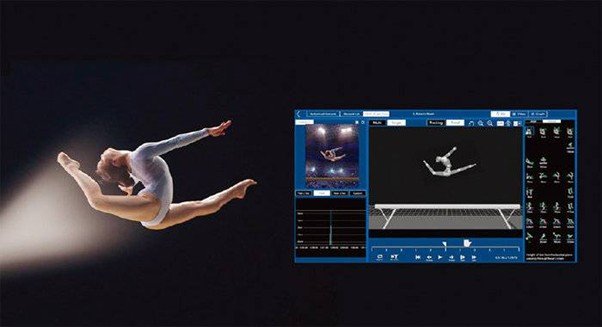
The convergence of AI and sports is already well underway in elite competitions. A prime example was the 2024 Paris Olympics, where the International Olympic Committee (IOC) fully embraced AI technology. In gymnastics, the "Judging Support System (JSS)," co-developed by Fujitsu and the IOC, automatically analyzed athletes' movements to assist scoring. Using 3D sensors and AI, the system measured body angles, rotation speeds, and landing precision in real-time, significantly enhancing the objectivity of judicial decisions.
Soccer has seen similar advancements. The "Semi-Automated Offside Technology," fully adopted since the 2022 Qatar World Cup, tracks the ball and player positions 50 times per second to determine offside calls in mere seconds. FIFA announced that this technology reduced the average Video Assistant Referee (VAR) review time from 70 seconds to 25 seconds.
Big Tech is also driving this trend. In May 2024, Google unveiled its Gemini 2.5 Flash model with drastically enhanced multimodal video analysis capabilities. Industry experts expect this model to analyze sports footage in real-time, grasping everything from detailed player movements to tactical patterns and game flow.
A 30-Minute Install: The Accessibility Breakthrough
While the global AI sports-tech market expands, ShotAI is challenging the status quo by focusing on one key differentiator: Accessibility.
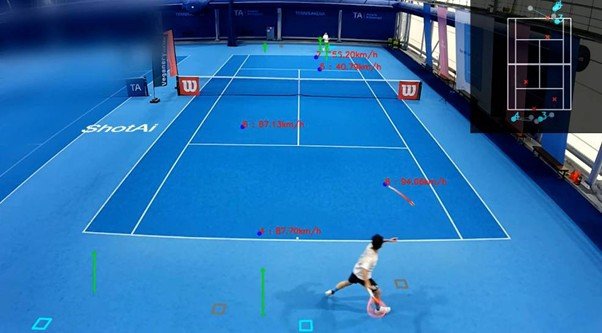
Unlike Olympic-grade systems that require millions of dollars and specialized technicians, ShotAI’s solution relies on a modular setup using just two 4K 60fps cameras per tennis court. By connecting power and the internet, installation is complete in under 30 minutes. With built-in automatic calibration, no separate technical expert is needed.
Even more notable is its business model. ShotAI doesn’t just sell a referee system; it provides an integrated platform covering court reservations, league operations, and prize distribution. This approach appeals to both players and facility owners.
Operators can manage courts without paying reservation fees (bearing only card fees and VAT) and generate additional revenue through automated weekly "unmanned tournaments."
According to ShotAI, pilot programs showed that weekday utilization rates for tennis courts jumped from 40% to over 90%. Players who previously crowded courts only on weekends and evenings began visiting during weekday afternoons to participate in league matches. The company emphasizes that the system allows for a rapid return on investment (ROI) by generating significant additional revenue.
A League for Everyone: From Pros to Weekend Warriors
ShotAI’s other competitive edge is "mass adoption." While existing solutions target professionals or top-tier amateurs, ShotAI aims for a global league system open to anyone, regardless of nationality or skill level.
Weekly online tournaments are divided into various tiers. Participants choose a league that fits their skill level and risk tolerance, competing against players worldwide. The AI unmanned referee automatically detects "in/out" calls and foot faults. Players can challenge calls using a replay feature, and unsportsmanlike conduct is managed through a claim function. Matches are played in full sets (best of three), offering the immersive tension of a professional game.
Post-match, the system automatically generates highlight reels and analysis reports. Players can review AI-analyzed data—such as ball speed, maximum rally count, and winning shots in specific zones—to improve their game.
Connecting Courts Globally: The Network Effect
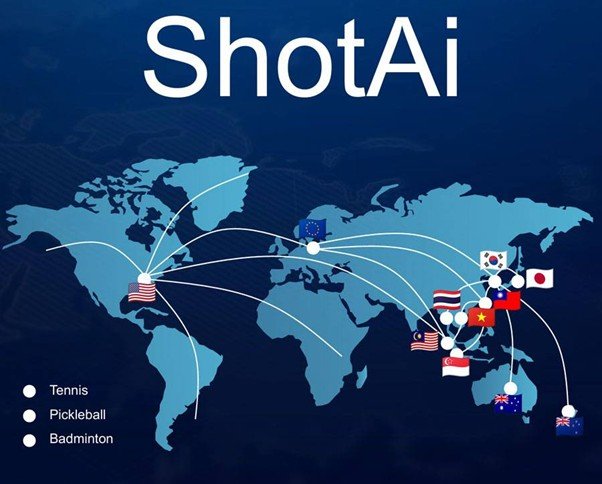
ShotAI is aggressively pursuing global expansion. Leveraging its foothold in the Korean market, the company has secured a global network for entry into Vietnam and Singapore. It is now preparing to expand into Taiwan, Japan, Europe, the U.S., Australia, New Zealand, Thailand, Indonesia, Malaysia, and the UAE, broadening its scope to include pickleball and badminton.
The company highlights the "Global Network Effect." As ShotAI partner courts worldwide connect to a single integrated platform, even a small neighborhood court becomes part of a global stadium. A player in Seoul can compete in the same league as a player in Singapore, aiming for large-scale prize tournaments via seasonal global rankings. ShotAI projects that this expanding network could create a market worth over $1.2 billion (approx. KRW 1.7 trillion).
The Future of Sports Tech: Innovating 'Experience'
The ShotAI case study signals a shift in the direction of sports technology. The focus is moving from "how accurate is it?" to "how many people benefit from it?" ShotAI’s vision is that AI should not be the exclusive domain of a few elite athletes but a tool that allows everyday enthusiasts to enjoy fair and exciting sports.
Currently, ShotAI is bolstering its global capabilities with support from SeoulTech’s Initial Startup Package program. The company states it is receiving practical assistance in global networking, overseas market strategy, and investment readiness.
A sports environment where AI referees matches and the world connects through a single league is fast becoming reality. Beyond passive spectating, AI is expected to play a pivotal role in creating a new sports culture where anyone can compete fairly and have their skills recognized.
By young-woo Kim (pengo@itdonga.com)
- Unlike expensive, professional-grade systems, ShotAI’s solution uses just two cameras per court and offers features like automated tournaments, AI-generated match analysis, and a global league open to all skill levels.
- The company is rapidly expanding internationally, aiming to connect courts worldwide and create a new sports culture where anyone can compete fairly and have their skills recognized.
On weekday afternoons, tennis courts across the globe often sit empty, a stark contrast to the fully booked chaos of weekends. Even when players do hit the courts, amateur tournaments are frequently marred by heated disputes over whether a ball was "in" or "out." Meanwhile, facility managers struggle with a universal dilemma: how to reduce weekday vacancy rates and operate more efficiently.
source=Image generated by Gemini
One Korean startup is tackling this inefficiency with Artificial Intelligence. ShotAI (CEO Kyung-soo Roh), a sports-tech company rapidly growing under the "Initial Startup Package Global Competence Strengthening Program" at Seoul National University of Science and Technology (SeoulTech), claims its AI-based unmanned referee system and global league platform are poised to revolutionize the sports market.
From Pro Stadiums to Public Courts
The convergence of AI and sports is already well underway in elite competitions. A prime example was the 2024 Paris Olympics, where the International Olympic Committee (IOC) fully embraced AI technology. In gymnastics, the "Judging Support System (JSS)," co-developed by Fujitsu and the IOC, automatically analyzed athletes' movements to assist scoring. Using 3D sensors and AI, the system measured body angles, rotation speeds, and landing precision in real-time, significantly enhancing the objectivity of judicial decisions.
JSS applied to gymnastics events at the 2024 Paris Olympics / source=Fujitsu
Soccer has seen similar advancements. The "Semi-Automated Offside Technology," fully adopted since the 2022 Qatar World Cup, tracks the ball and player positions 50 times per second to determine offside calls in mere seconds. FIFA announced that this technology reduced the average Video Assistant Referee (VAR) review time from 70 seconds to 25 seconds.
Big Tech is also driving this trend. In May 2024, Google unveiled its Gemini 2.5 Flash model with drastically enhanced multimodal video analysis capabilities. Industry experts expect this model to analyze sports footage in real-time, grasping everything from detailed player movements to tactical patterns and game flow.
A 30-Minute Install: The Accessibility Breakthrough
While the global AI sports-tech market expands, ShotAI is challenging the status quo by focusing on one key differentiator: Accessibility.
Unlike Olympic-grade systems that require millions of dollars and specialized technicians, ShotAI’s solution relies on a modular setup using just two 4K 60fps cameras per tennis court. By connecting power and the internet, installation is complete in under 30 minutes. With built-in automatic calibration, no separate technical expert is needed.
Even more notable is its business model. ShotAI doesn’t just sell a referee system; it provides an integrated platform covering court reservations, league operations, and prize distribution. This approach appeals to both players and facility owners.
Operators can manage courts without paying reservation fees (bearing only card fees and VAT) and generate additional revenue through automated weekly "unmanned tournaments."
According to ShotAI, pilot programs showed that weekday utilization rates for tennis courts jumped from 40% to over 90%. Players who previously crowded courts only on weekends and evenings began visiting during weekday afternoons to participate in league matches. The company emphasizes that the system allows for a rapid return on investment (ROI) by generating significant additional revenue.
ShotAI solution with AI unmanned judgement system / source=ShotAI
A League for Everyone: From Pros to Weekend Warriors
ShotAI’s other competitive edge is "mass adoption." While existing solutions target professionals or top-tier amateurs, ShotAI aims for a global league system open to anyone, regardless of nationality or skill level.
Weekly online tournaments are divided into various tiers. Participants choose a league that fits their skill level and risk tolerance, competing against players worldwide. The AI unmanned referee automatically detects "in/out" calls and foot faults. Players can challenge calls using a replay feature, and unsportsmanlike conduct is managed through a claim function. Matches are played in full sets (best of three), offering the immersive tension of a professional game.
Post-match, the system automatically generates highlight reels and analysis reports. Players can review AI-analyzed data—such as ball speed, maximum rally count, and winning shots in specific zones—to improve their game.
Connecting Courts Globally: The Network Effect
ShotAI is aggressively pursuing global expansion. Leveraging its foothold in the Korean market, the company has secured a global network for entry into Vietnam and Singapore. It is now preparing to expand into Taiwan, Japan, Europe, the U.S., Australia, New Zealand, Thailand, Indonesia, Malaysia, and the UAE, broadening its scope to include pickleball and badminton.
The company highlights the "Global Network Effect." As ShotAI partner courts worldwide connect to a single integrated platform, even a small neighborhood court becomes part of a global stadium. A player in Seoul can compete in the same league as a player in Singapore, aiming for large-scale prize tournaments via seasonal global rankings. ShotAI projects that this expanding network could create a market worth over $1.2 billion (approx. KRW 1.7 trillion).
ShotAI will provide global services through the network it has secured / source=ShotAT
The Future of Sports Tech: Innovating 'Experience'
The ShotAI case study signals a shift in the direction of sports technology. The focus is moving from "how accurate is it?" to "how many people benefit from it?" ShotAI’s vision is that AI should not be the exclusive domain of a few elite athletes but a tool that allows everyday enthusiasts to enjoy fair and exciting sports.
Currently, ShotAI is bolstering its global capabilities with support from SeoulTech’s Initial Startup Package program. The company states it is receiving practical assistance in global networking, overseas market strategy, and investment readiness.
A sports environment where AI referees matches and the world connects through a single league is fast becoming reality. Beyond passive spectating, AI is expected to play a pivotal role in creating a new sports culture where anyone can compete fairly and have their skills recognized.
By young-woo Kim (pengo@itdonga.com)








 About Dong-A Ilbo