

Cloudflare outage temporarily disrupts global AI services
Cloudflare outage temporarily disrupts global AI services
Posted November. 20, 2025 08:17,
Updated November. 20, 2025 08:17
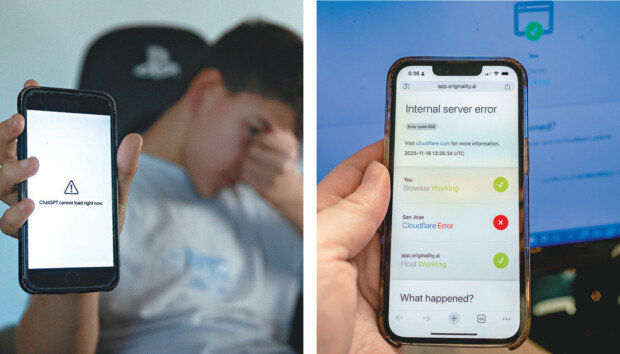
On Nov. 18, a major outage at U.S. web infrastructure company Cloudflare caused an unprecedented, simultaneous shutdown of key artificial intelligence services, including ChatGPT. As AI services have become deeply integrated into daily life worldwide, the network disruption had global repercussions.
In July last year, a Microsoft cloud outage in the United States disrupted airline operations and paralyzed major IT systems in several countries. Such incidents highlight the fear that errors at a single company can halt global operations, exposing the vulnerabilities of a hyperconnected society.
Cloudflare provides IT services that help users around the world access content quickly and securely. About one-fifth of global internet traffic passes through its network. Following the outage, reports emerged of simultaneous access failures affecting Cloudflare clients, including OpenAI’s ChatGPT, X (formerly Twitter), Spotify, Facebook, Amazon, and the online game League of Legends. The disruptions, triggered by a sudden surge in Cloudflare traffic, occurred from about 8:30 p.m. to 11:30 p.m. Korean time on Nov. 18.
Although the outage lasted only about three hours, it caused widespread disruptions for workers and students who rely heavily on AI. Kim Bo-min, a 27-year-old office worker, said, “It took me three hours to complete documents that usually take only one hour with AI. I could not finish my work after returning home, so I had to go to the office early on Nov. 19 to complete it.” On the same day, a post on a parents’ online community said, “My son, who was preparing a project, panicked when ChatGPT went down and had to scramble to finish it using search engines.” Analysts said the incident highlighted the drawbacks of a world overly dependent on AI.
The outage also revealed the structural vulnerability of global AI services that rely heavily on a few infrastructure providers. “The higher the dependence on overseas AI services, the slower the response can be when errors occur," said Lee Jae-sung, a professor in the AI department at Chung-Ang University. "It is necessary to develop domestic AI systems with distributed servers and other safeguards to diversify service supply.”
장은지기자 jej@donga.com








 About Dong-A Ilbo