

E&KOA, "We Will Be the 'First Penguin' of the Hydrogen Economy with Domestic SOFC/SOEC Stacks"
E&KOA, "We Will Be the 'First Penguin' of the Hydrogen Economy with Domestic SOFC/SOEC Stacks"
Posted November. 14, 2025 14:19,
Updated November. 14, 2025 14:20
- E&KOA, a Korean startup, is pioneering the hydrogen economy by developing advanced SOFC/SOEC stacks that can both generate electricity from hydrogen and produce hydrogen from electricity, achieving high efficiency and durability through proprietary technology.
- The company collaborates with leading domestic and international research institutions and has successfully demonstrated its technology in joint projects, notably with the German Aerospace Center.
- After bootstrapping its initial foundation and focusing on R&D, E&KOA now seeks investment to scale up production and aims to be the 'first penguin'—the leader—in Korea’s emerging hydrogen market.
As the world moves toward 'carbon neutrality'—achieving net-zero carbon emissions by balancing carbon absorption and emission reduction—hydrogen is gaining attention as a key future energy source. The International Energy Agency (IEA) forecasts that demand for clean hydrogen will increase across various sectors by 2030, including methanol production, refining, aviation, and land logistics. However, high production costs and insufficient infrastructure remain significant hurdles to commercialization.
Amid this landscape, E&KOA, a startup in Daejeon led by CEO Dr. In-sung Lee, is focusing on developing standardized 'stacks,' a core component for the hydrogen economy based on SOFC (Solid Oxide Fuel Cell) and SOEC (Solid Oxide Electrolysis Cell) technology.
E&KOA was founded in February 2020. Dr. Lee previously led SOFC research as a researcher at the Research Institute of Industrial Science & Technology (RIST), POSCO's research arm. At the time, other major conglomerates like SK Innovation and LG Chem were also entering hydrogen technology development. Dr. Lee established the company believing that despite the high technical difficulty and large initial investment required, success was possible by overcoming these challenges with superior proprietary technology.
The 'Bidirectional Stack': Producing Both Hydrogen and Electricity
E&KOA's main products are SOFC and SOEC stacks. SOFC technology generates electricity from hydrogen, while SOEC generates hydrogen from electricity. A key feature is that a single product can be switched between these two modes.
While hydrogen technology includes various methods like Alkaline Water Electrolysis (AWE) and Proton Exchange Membrane Water Electrolysis (PEMWE), SOFC/SOEC operates at high temperatures (700-900°C) and boasts a high efficiency of over 80%. E&KOA stated this is a significant advantage over other methods, which typically have efficiencies in the 50-60% range.
However, the high operating temperatures limit material selection and increase technical difficulty. This complexity is why commercialization cases remain rare.
Delivering Core Hydrogen Components with Proprietary Technology
E&KOA emphasizes its specialization in core hydrogen components, including stacks—analogous to manufacturing the engine in the automotive industry. While international companies like Bloom Energy (USA), Sunfire (Germany), Ceres Power (UK), and Topsoe (Denmark) operate in the SOFC or SOEC stack business, very few companies manufacture SOFC/SOEC stacks in South Korea.
E&KOA stated that through years of stack manufacturing experience, it has established a Quality Management System (QMS) and proprietary inspection protocols. It also secured technology for superior durability by becoming the world's first to develop and apply metal foam current collectors (CuMn Foam, CoNi Foam).
Collaborating with Domestic and International Partners
E&KOA reports it has been collaborating with foreign research institutions since its inception. Notably, it has been working on a Reversible Solid Oxide Cell (R-SOC) stack development project with the German Aerospace Center (DLR) since 2020. R-SOC technology allows a single stack to alternate between electricity production and hydrogen production. E&KOA emphasized that this collaboration validated the superiority of its stack technology.
Specifically, the project successfully operated a 60-cell standard stack in R-SOC mode for over 40 cycles. DLR published these findings in the Journal of The Electrochemical Society (JES) in 2023. E&KOA added that the project results were also presented at the European SOFC & SOEC Forum (EFCF) in 2024.
The collaboration with DLR is ongoing. The company is also engaged in technical cooperation with various other institutions, including the Jülich Research Centre (Germany), the French Alternative Energies and Atomic Energy Commission (CEA), the Catalonia Institute for Energy Research (IREC, Spain), and TNB Research (TNBR, Malaysia). Domestically, E&KOA reported joint research projects with the Korea Institute of Energy Research (KIER), the Korea Institute of Machinery and Materials (KIMM), Yonsei University, and Sejong University.
Bootstrapping an Initial Foundation, Now Seeking Investment
To date, E&KOA has not received external funding from venture capital or other sources. Instead, it built its pilot plant using its own capital.
The factory, located in Daedeok-gu, Daejeon, is reportedly equipped with 15 kW-class stack manufacturing units and numerous proprietary production and quality control facilities. This setup allows for an annual production capacity of 360kW-class SOFC and 1MW-class SOEC.
An E&KOA representative explained that the strategy thus far has been to focus on perfecting the technology before seeking investment. The company now plans to actively pursue funding to establish a full-scale mass production system. They reported that technological development for an automated production line is complete and that they plan to secure investment soon to expand production capacity.
Strengthening Marketing and Scale-Up Capabilities via SBA Program
E&KOA’s focus on R&D meant that full-scale marketing and promotion were relatively delayed. To address this, the company joined the "Super Gap Open Innovation PR Support Program" run by the Seoul Business Agency (SBA). This program helps "super gap" (deep tech) startups advance their technology and enter the market through collaboration with large corporations and public institutions.
In an interview with reporters, an E&KOA representative expressed high expectations: "Based on the technology we have completed, participating in the external PR and marketing programs provided by SBA will be a great help moving forward."
Aiming to Be the 'First Penguin' of the Hydrogen Economy
The outlook for the hydrogen economy is mixed. Proponents believe hydrogen will eventually become mainstream, much like electric vehicles. Skeptics point out that issues of economic viability and infrastructure will not be easily resolved.
In fact, a January 2024 report by the Information Technology and Innovation Foundation (ITIF) highlighted practical challenges, including the price competitiveness of clean hydrogen and the risk of leaks.
Nonetheless, demand for hydrogen technology is expected to grow, driven by tightening environmental regulations from international bodies like the International Maritime Organization (IMO) and the overall expansion of the fuel cell market.
E&KOA stated, "We will accelerate the coming hydrogen era with E&KOA's technology."
The company also likened itself to a 'first penguin'—a reference to the penguin that overcomes fear to dive off an ice cliff into the sea first, implying E&KOA aims to be the company that reaches the open ocean first.
E&KOA's task is clear: it must leverage its completed technology to attract investment, establish a mass production system, and convert its efforts into actual sales. The key question is whether it can survive and capture the market before the hydrogen economy fully materializes. Whether E&KOA’s 'first penguin' strategy, built on its confidence in its high-level technology, will succeed is worth watching.
By Young-woo Kim (pengo@itdonga.com)
- The company collaborates with leading domestic and international research institutions and has successfully demonstrated its technology in joint projects, notably with the German Aerospace Center.
- After bootstrapping its initial foundation and focusing on R&D, E&KOA now seeks investment to scale up production and aims to be the 'first penguin'—the leader—in Korea’s emerging hydrogen market.
As the world moves toward 'carbon neutrality'—achieving net-zero carbon emissions by balancing carbon absorption and emission reduction—hydrogen is gaining attention as a key future energy source. The International Energy Agency (IEA) forecasts that demand for clean hydrogen will increase across various sectors by 2030, including methanol production, refining, aviation, and land logistics. However, high production costs and insufficient infrastructure remain significant hurdles to commercialization.
Amid this landscape, E&KOA, a startup in Daejeon led by CEO Dr. In-sung Lee, is focusing on developing standardized 'stacks,' a core component for the hydrogen economy based on SOFC (Solid Oxide Fuel Cell) and SOEC (Solid Oxide Electrolysis Cell) technology.
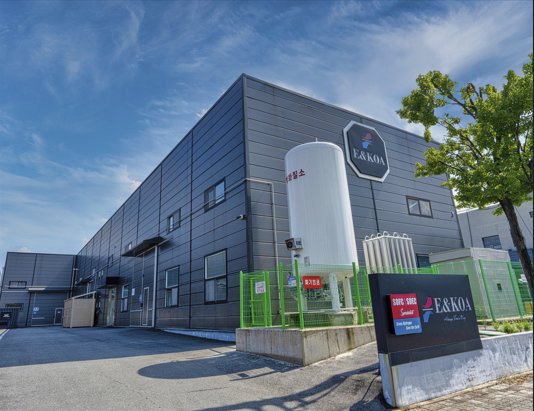
The offices of E&KOA. / source= E&KOA.
E&KOA was founded in February 2020. Dr. Lee previously led SOFC research as a researcher at the Research Institute of Industrial Science & Technology (RIST), POSCO's research arm. At the time, other major conglomerates like SK Innovation and LG Chem were also entering hydrogen technology development. Dr. Lee established the company believing that despite the high technical difficulty and large initial investment required, success was possible by overcoming these challenges with superior proprietary technology.
The 'Bidirectional Stack': Producing Both Hydrogen and Electricity
E&KOA's main products are SOFC and SOEC stacks. SOFC technology generates electricity from hydrogen, while SOEC generates hydrogen from electricity. A key feature is that a single product can be switched between these two modes.
While hydrogen technology includes various methods like Alkaline Water Electrolysis (AWE) and Proton Exchange Membrane Water Electrolysis (PEMWE), SOFC/SOEC operates at high temperatures (700-900°C) and boasts a high efficiency of over 80%. E&KOA stated this is a significant advantage over other methods, which typically have efficiencies in the 50-60% range.
However, the high operating temperatures limit material selection and increase technical difficulty. This complexity is why commercialization cases remain rare.
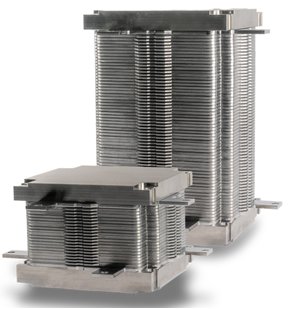
E&KOA's SOFC/SOEC stack / source=E&KOA.
Delivering Core Hydrogen Components with Proprietary Technology
E&KOA emphasizes its specialization in core hydrogen components, including stacks—analogous to manufacturing the engine in the automotive industry. While international companies like Bloom Energy (USA), Sunfire (Germany), Ceres Power (UK), and Topsoe (Denmark) operate in the SOFC or SOEC stack business, very few companies manufacture SOFC/SOEC stacks in South Korea.
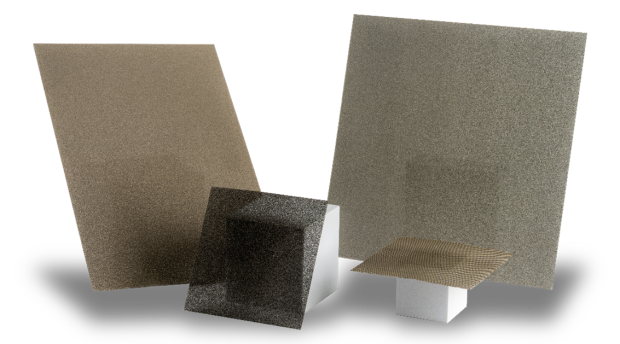
E&KOA stated that through years of stack manufacturing experience, it has established a Quality Management System (QMS) and proprietary inspection protocols. It also secured technology for superior durability by becoming the world's first to develop and apply metal foam current collectors (CuMn Foam, CoNi Foam).
E&KOA's core material component, the metal foam current collector / source=E&KOA.
Collaborating with Domestic and International Partners
E&KOA reports it has been collaborating with foreign research institutions since its inception. Notably, it has been working on a Reversible Solid Oxide Cell (R-SOC) stack development project with the German Aerospace Center (DLR) since 2020. R-SOC technology allows a single stack to alternate between electricity production and hydrogen production. E&KOA emphasized that this collaboration validated the superiority of its stack technology.
Specifically, the project successfully operated a 60-cell standard stack in R-SOC mode for over 40 cycles. DLR published these findings in the Journal of The Electrochemical Society (JES) in 2023. E&KOA added that the project results were also presented at the European SOFC & SOEC Forum (EFCF) in 2024.
The collaboration with DLR is ongoing. The company is also engaged in technical cooperation with various other institutions, including the Jülich Research Centre (Germany), the French Alternative Energies and Atomic Energy Commission (CEA), the Catalonia Institute for Energy Research (IREC, Spain), and TNB Research (TNBR, Malaysia). Domestically, E&KOA reported joint research projects with the Korea Institute of Energy Research (KIER), the Korea Institute of Machinery and Materials (KIMM), Yonsei University, and Sejong University.
Bootstrapping an Initial Foundation, Now Seeking Investment
To date, E&KOA has not received external funding from venture capital or other sources. Instead, it built its pilot plant using its own capital.
The factory, located in Daedeok-gu, Daejeon, is reportedly equipped with 15 kW-class stack manufacturing units and numerous proprietary production and quality control facilities. This setup allows for an annual production capacity of 360kW-class SOFC and 1MW-class SOEC.
An E&KOA representative explained that the strategy thus far has been to focus on perfecting the technology before seeking investment. The company now plans to actively pursue funding to establish a full-scale mass production system. They reported that technological development for an automated production line is complete and that they plan to secure investment soon to expand production capacity.
Strengthening Marketing and Scale-Up Capabilities via SBA Program
E&KOA’s focus on R&D meant that full-scale marketing and promotion were relatively delayed. To address this, the company joined the "Super Gap Open Innovation PR Support Program" run by the Seoul Business Agency (SBA). This program helps "super gap" (deep tech) startups advance their technology and enter the market through collaboration with large corporations and public institutions.
In an interview with reporters, an E&KOA representative expressed high expectations: "Based on the technology we have completed, participating in the external PR and marketing programs provided by SBA will be a great help moving forward."
Aiming to Be the 'First Penguin' of the Hydrogen Economy
The outlook for the hydrogen economy is mixed. Proponents believe hydrogen will eventually become mainstream, much like electric vehicles. Skeptics point out that issues of economic viability and infrastructure will not be easily resolved.
In fact, a January 2024 report by the Information Technology and Innovation Foundation (ITIF) highlighted practical challenges, including the price competitiveness of clean hydrogen and the risk of leaks.
Nonetheless, demand for hydrogen technology is expected to grow, driven by tightening environmental regulations from international bodies like the International Maritime Organization (IMO) and the overall expansion of the fuel cell market.
E&KOA stated, "We will accelerate the coming hydrogen era with E&KOA's technology."
The company also likened itself to a 'first penguin'—a reference to the penguin that overcomes fear to dive off an ice cliff into the sea first, implying E&KOA aims to be the company that reaches the open ocean first.
E&KOA's task is clear: it must leverage its completed technology to attract investment, establish a mass production system, and convert its efforts into actual sales. The key question is whether it can survive and capture the market before the hydrogen economy fully materializes. Whether E&KOA’s 'first penguin' strategy, built on its confidence in its high-level technology, will succeed is worth watching.
By Young-woo Kim (pengo@itdonga.com)







 About Dong-A Ilbo