

Seoul launches national scientist program, expands R&D budget
Seoul launches national scientist program, expands R&D budget
Posted November. 08, 2025 07:19,
Updated November. 08, 2025 07:19
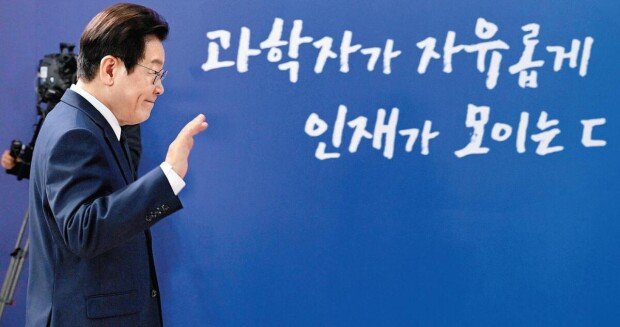
The South Korean government announced plans to launch a new “National Scientist” program and expand the national research and development budget. Modeled after China’s prestigious “Academician” system, which recognizes the country’s top scholars, the program aims to help world-renowned researchers continue their work in South Korea.
The Ministry of Science and ICT unveiled its “Strategy for Securing Scientific and Technological Talent and Innovation in the R&D Ecosystem” during a national briefing titled “Korea Dreaming Again of Scientists and Engineers,” held Thursday at the National Science Museum in Daejeon’s Yuseong District.
The National Scientist program was established to prevent the outflow of top Korean researchers and to honor the contributions of scientists and engineers. About 20 scholars will be selected each year, each receiving 100 million won in annual research funding. They will also receive privileges such as priority airport services and the authority to plan national research projects.
The government also announced measures to attract talented researchers from overseas. Focusing on key strategic technologies such as artificial intelligence, it aims to bring in 2,000 outstanding early-career researchers from abroad by 2030. To support this goal, foreign researchers entering on student visas will be allowed to stay in Korea for up to 12 months as interns. The government also plans to establish an AI Science Academy for Gifted Students to foster domestic AI talent.
Ha Jung-woo, presidential secretary for future planning in artificial intelligence, said during a briefing at the Presidential Office in Yongsan, “The new National Scientist program will serve as a model for aspiring scientists and engineers, providing them with a clear path for growth and vision. Over the next five years, about 100 scientists will receive presidential certificates, annual research grants, and various benefits, including transportation support.”
However, some in the scientific community remain concerned that the program may not be enough to stem the outflow of talent, as it lacks exceptional incentives such as lifetime tenure or high salaries offered to China’s Academicians.
Meanwhile, the government pledged to expand the R&D budget that had been reduced under the former Yoon Suk Yeol administration. President Lee Jae-myung, who attended the session, said, “We have decided to significantly increase R&D investment to a level few could have imagined, with a firm commitment to devote more national resources to science and technology.” He added, “A research environment that tolerates failure is essential for the nation’s prosperity.”
장은지 jej@donga.com





 About Dong-A Ilbo