

Korean researchers advance stem cell cure for Parkinson’s
Korean researchers advance stem cell cure for Parkinson’s
Posted October. 14, 2025 07:12,
Updated October. 14, 2025 07:12
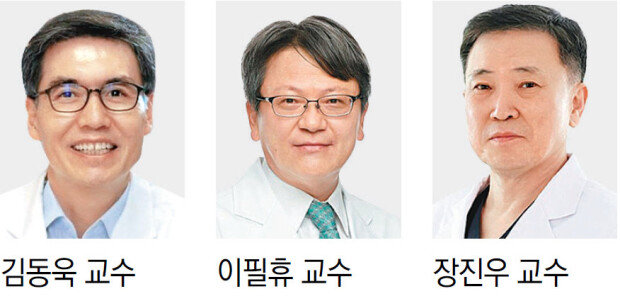
Korean researchers have confirmed the safety and effectiveness of an embryonic stem cell–based treatment for Parkinson’s disease in clinical trials, publishing their findings in the international journal Cell. The study showed that patients previously unable to walk were later able to play table tennis and badminton. South Korea is the second country, after the United States, to conduct clinical trials using embryonic stem cells for Parkinson’s treatment.
The research team, led by Professor Kim Dong-wook of Yonsei University College of Medicine, Professor Lee Pil-hyu of Severance Hospital’s Neurology Department, and Professor Jang Jin-woo of Korea University Anam Hospital’s Neurosurgery Department, published the results of phase 1 and 2 trials in the Oct. 14 issue of Cell. The journal is considered one of the world’s top three academic publications, alongside Nature and Science.
The treatment uses dopamine-producing nerve cells derived from human embryonic stem cells. Parkinson’s disease is a degenerative brain disorder caused by the loss of these dopamine-producing neurons. Symptoms, including tremors and muscle rigidity, typically appear when roughly 60 to 70 percent of the neurons are lost.
Current medications, such as levodopa, help regulate dopamine levels and ease symptoms but can cause side effects with long-term use and do not halt disease progression. In contrast, transplanting dopamine neurons derived from embryonic stem cells could provide a more fundamental treatment, as the transplanted cells continue producing dopamine in the brain.
The clinical trial involved 12 patients who had been diagnosed with Parkinson’s for more than five years and had experienced side effects from existing drug therapies. After the dopamine neurons were transplanted into their brains, patients were monitored for one year. Symptoms improved by an average of 43.1 percent in the high-dose group and 27.8 percent in the low-dose group, according to the Hoehn and Yahr scale, which measures disease severity. Brain imaging confirmed that the transplanted neurons had successfully integrated into the brain.
One participant, a former orchestra conductor who had stopped working due to Parkinson’s, was able to resume conducting after treatment.
The study was conducted at Yonsei University’s Severance Hospital with participation from S.Biomedics, where Professor Kim serves as chief technology officer. Based on these results, the researchers plan to advance to phase 3 clinical trials.
최지원 기자 jwchoi@donga.com


![레이더 비웃는 ‘하늘의 암살자’… 스텔스기가 바꾼 현대戰 양상[글로벌 포커스]](https://dimg.donga.com/c/138/175/90/1/wps/NEWS/IMAGE/2026/04/03/133673453.1.jpg)




 About Dong-A Ilbo