

Pro-autonomy bloc raises voice ahead of APEC
Pro-autonomy bloc raises voice ahead of APEC
Posted October. 02, 2025 08:11,
Updated October. 02, 2025 08:11
As South Korea prepares to host the Asia-Pacific Economic Cooperation summit in Gyeongju, North Gyeongsang Province, the pro-autonomy bloc inside the Lee Jae-myung administration is growing more assertive. With South Korea-U.S. tariff talks at an impasse, the bloc is gaining influence on core diplomatic and security issues, including inter-Korean ties, North Korea’s nuclear program and relations with Washington, by emphasizing cooperation with Pyongyang.
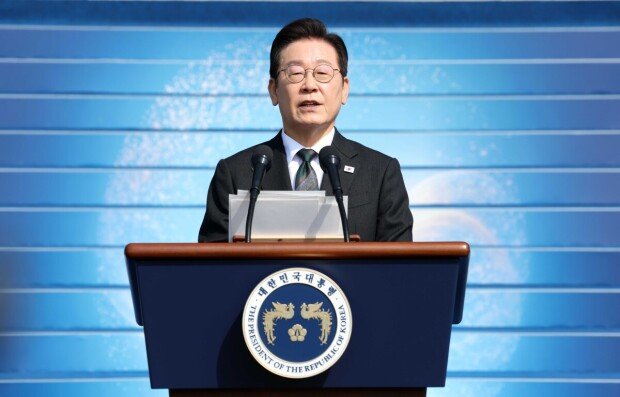
On Oct. 1, President Lee delivered his first Armed Forces Day address since taking office, arguing that South Korea must strengthen its own capabilities rather than rely on others and pledging to restore wartime operational control so Seoul can lead the combined defense posture with the United States. It was his first public mention of operational control since inauguration.
Presidential spokesman Kim Nam-jun said Lee personally changed the phrasing from a transfer of wartime operational control to a restoration. The government’s 123 national policy tasks include a goal of pursuing the transfer during the president’s term, but Lee chose stronger wording. Kim said “restore” means a return to the original state.
Lee’s emphasis on restoring operational control and on self-reliant defense comes as pro-autonomy voices, including Unification Minister Chung Dong-young, have grown louder. On Sept. 29, Chung said North Korea has effectively become one of three nations capable of striking the U.S. mainland, a remark widely read as tacit recognition of Pyongyang as a nuclear power. He also highlighted dialogue as the first step under Lee’s newly announced “END Initiative” (Exchange, Normalization, and Denuclearization), putting him at odds with alliance-focused officials such as National Security Adviser Wi Sung-lac, who have avoided placing inter-Korean exchanges on equal footing with denuclearization. The initiative was reportedly proposed by the Unification Ministry. At his confirmation hearing, Chung also argued that a fully independent nation is impossible without wartime operational control.
Experts warn the discord between the pro-autonomy bloc and the alliance bloc could add confusion as major diplomatic events approach, including the APEC summit and potential South Korea-U.S. and U.S.-China summits. Hong Min, a senior researcher at the Korea Institute for National Unification, said friction between the administration’s foreign and security lines could become more pronounced if substantive movement begins on resuming U.S.-North Korea talks.
Oh-Hyuk Kwon hyuk@donga.com


![[알립니다]만성폐쇄성폐질환과 폐고혈압](https://dimg.donga.com/c/138/175/90/1/wps/NEWS/IMAGE/2026/04/24/133800812.4.jpg)



 About Dong-A Ilbo