

Trump faces challenge as Kim rejects denuke talks
Trump faces challenge as Kim rejects denuke talks
Posted September. 23, 2025 08:18,
Updated September. 23, 2025 08:18
North Korean leader Kim Jong Un said in a Sept. 21 speech to the Supreme People’s Assembly that “if the United States abandons its obsession with denuclearization, there will be no reason we cannot meet.” After U.S. President Donald Trump confirmed his attendance at the Asia-Pacific Economic Cooperation summit in Gyeongju, South Korea at the end of October, Kim set a condition that he would meet only if North Korea is recognized as a nuclear power. President Lee Jae-myung, in a BBC interview released Sept. 22, said he could accept an agreement in which the North Korean and U.S. leaders freeze nuclear weapons production for the time being instead of eliminating them. Kim, however, rejected Lee’s three-step denuclearization proposal of “freeze, reduction and dismantlement,” declaring there would be no occasion to sit down with South Korea.
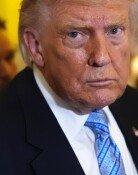
Kim’s remarks came after Trump said during last month’s South Korea-U.S. summit that he wanted to meet Kim within the year. The problem is that Kim made it clear there will “never” be denuclearization. While the U.S. government outwardly maintains its goal of a nuclear-free North Korea, Trump has referred to the North as a “nuclear state,” showing an attitude that seems to tolerate its arsenal. In pursuit of a Nobel Peace Prize, the U.S. president may be tempted to showcase his role as a peacemaker by quickly improving relations rather than embarking on the protracted process of denuclearization.
In that case, denuclearization risks being derailed from the very start. Lee has called a freeze a “realistic temporary measure” toward denuclearization, but Kim has shown he has no intention of accepting any initiative premised on it. This means that even if Pyongyang and Washington agree on a freeze, it may not serve as a gateway to denuclearization but could instead devolve into arms control talks between nuclear powers, which is what North Korea wants.
Moreover, Kim did not omit threats of nuclear attack against the South in his speech. U.S. officials, including Deputy Defense Secretary for Policy Elbridge Colby, have stressed that the priority must be addressing intercontinental ballistic missiles capable of striking the U.S. mainland. If Pyongyang and Washington strike a “small deal” limited to dismantling ICBMs, their talks may move forward, but South Korea will face the dilemma of an even greater security threat.
Lee’s peacemaker initiative is rooted in the pragmatic view that with inter-Korean dialogue at a standstill, the United States can take the lead in negotiations to resolve the nuclear issue. But no agreement between Pyongyang and Washington should signal acceptance of North Korea’s nuclear status, either to Pyongyang or to Washington. To keep Trump from falling into Kim’s strategy, Seoul and Washington must form a “one-team” approach on the nuclear issue before any U.S.-North Korea talks take place. Only if negotiations with Trump are seen as negotiations with both South Korea and the United States can dialogue between Pyongyang and Washington be kept on the path of denuclearization.






 About Dong-A Ilbo