

Trump signals higher tariffs on semiconductors, pharmaceuticals
Trump signals higher tariffs on semiconductors, pharmaceuticals
Posted September. 18, 2025 07:15,
Updated September. 18, 2025 07:15
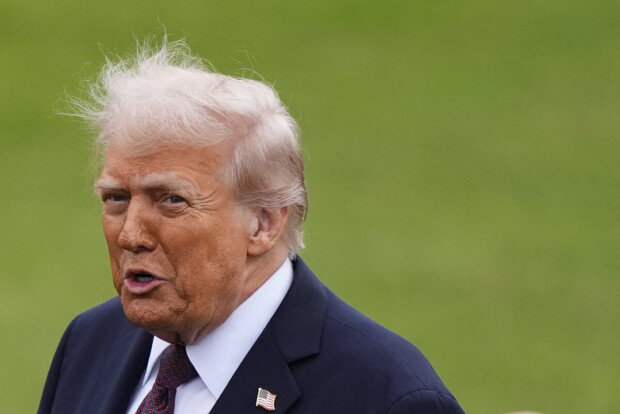
U.S. President Donald Trump said Sept. 16 that the United States could impose higher tariffs on semiconductors and pharmaceuticals, noting that their profit margins are higher than those of automobiles. On the same day, the United States began applying a 15% tariff on Japanese automobiles and auto parts, 10 percentage points lower than the 25% tariff currently applied to Korean products. In this context, Trump signaled a willingness to impose high tariffs on semiconductors, another major Korean export.
As he left the White House for a state visit to the United Kingdom, Trump was asked whether reducing auto tariffs on Japan and other countries from 25% to 15% could harm U.S. automakers. “I haven’t compromised on anything,” he replied, reaffirming his position.
If high tariffs are applied to semiconductors, Korea could face even greater economic impact, as semiconductors are the country’s second-largest export to the United States. While the U.S. has indicated that the principle of most-favored-nation treatment would apply to semiconductors and pharmaceuticals in trade negotiations with Korea, no formal agreement has yet been reached.
In addition, according to the U.S. Federal Register, the Commerce Department has initiated procedures to expand tariff coverage in the steel and aluminum sectors, which are currently subject to a 50% tariff, following consultations with domestic industry stakeholders.
Meanwhile, Woo Han-gu, head of the Trade Negotiations Bureau at South Korea’s Ministry of Trade, Industry and Energy, visited the United States for further negotiations and reportedly met with U.S. Trade Representative Katherine Tai. Sources said the two sides continue to have differences over the implementation of South Korea’s $350 billion investment commitments to the United States.
Jin-Woo Shin niceshin@donga.com



![하루 방귀 몇 번이 정상일까? 가장 많이 뀌는 시간대는…[건강팩트체크]](https://dimg.donga.com/c/138/175/90/1/wps/NEWS/IMAGE/2026/06/12/134098245.3.jpg)



 About Dong-A Ilbo