

COLOSSEUM Aims to Revolutionize Global Logistics by Digitally Connecting Warehouses.
COLOSSEUM Aims to Revolutionize Global Logistics by Digitally Connecting Warehouses.
Posted August. 21, 2025 09:58,
Updated August. 21, 2025 10:06
- COLOSSEUM Corporation is revolutionizing the logistics industry by digitally
connecting existing warehouses, transforming them into high-performance
logistics hubs.
- Since its establishment in 2019, the company has achieved significant growth,
leveraging its proprietary AI-based SaaS solution, COLO AI, to optimize logistics
processes.
- COLOSSEUM is now expanding globally, aiming to become a leading digital
transformation partner in logistics with a target IPO in 2027.
"We will create an arena where every process in the logistics industry runs as smoothly as in the ancient Roman Colosseum."
A new force is emerging in the logistics industry. Meet COLOSSEUM Corporation (COLOSSEUM), a startup transforming existing warehouses into high-performance logistics hubs by digitally connecting them, rather than building new ones from scratch.
Since its establishment in 2019, the company has maintained a singular business focus and achieved an astonishing average annual growth rate of 191%, gaining recognition as a startup specializing in digital logistics. We sat down with CEO Jin-su Park, who is leading COLOSSEUM and pioneering the digital transformation of logistics, to discuss his innovative business model and global expansion strategy.
Discovering the Growth Potential of Logistics Through On-the-Ground Experience
A graduate of Seoul National University's Business School, Park began his career at telecom KT, where he was in charge of personal marketing strategy. He later moved to ‘Daehak-naeil’, a youth-focused marketing company, where he led the consulting and new business divisions and founded the ‘20s Research Institute’, a role that connected with the younger generation and market trends.
"While working in marketing and consulting, I discovered a common thread," Park recalled. "Logistics was always a major headache in the flow of distribution and business. From clients to distribution officials, everyone pointed to logistics as their most difficult challenge. I wanted to understand the problem deeply, so I traveled to warehouses across the country. In the field, I could clearly see areas that could be dramatically improved with the integration of technology."
Influenced by his father, who worked in the logistics industry, Park had experienced warehouses and logistics sites firsthand in his youth. When he revisited them 20 years later, he was confronted with the reality that many inefficient methods persisted, and he saw a business opportunity. His work at the 20s Research Institute had shown him how quickly the lifestyles and shopping trends of the younger generation were changing, and the concurrent expansion of e-commerce platforms was a decisive factor in his decision to start a business.
In June 2019, Park founded COLOSSEUM with In-hyung Yoo (CPO) and Tae-shik Yoon (CSO), who had worked with him at KT. From the outset, COLOSSEUM chose a different path. "Instead of building new warehouses, we digitally connected scattered warehouse resources and personnel across the country," Park explained. "We determined that through an asset-light solution and an operations-centric platform model, logistics could become a strategic tool to enhance the efficiency of the entire distribution process, not just an infrastructure industry."
This differentiated approach is now yielding tangible results. Leveraging a network of 53 logistics centers worldwide, COLOSSEUM has grown more than threefold annually, achieving a cumulative revenue of 100 billion KRW in six years. The company recently succeeded in raising 27 billion KRW in a Series-B funding round, ranking third in investment attraction in the logistics and distribution sector for the first half of 2025. "This was a meaningful moment that went beyond simply securing funds," Park stated. "It validated our growth potential and global competitiveness as a technology-driven fulfillment platform."
Overcoming On-Site Inefficiencies with Digital Solutions
Under the slogan "Logistics Simplified, Success Delivered," COLOSSEUM provides comprehensive logistics services and solutions tailored to client needs. The company handles everything from initial consulting to warehousing, inventory management, shipping, and payment settlement, with its key feature being the use of technology to solve complex logistics challenges.
"Products are becoming more diverse, and consumer expectations are constantly rising. Consequently, packaging methods and delivery conditions are becoming more complex, yet we saw that traditional warehouses were lagging behind this trend, largely stuck in a simple storage-centric model," said Park. "COLOSSEUM's core mission is to integrate digital technology into the existing logistics process, redesigning it to be efficient and borderless."
COLOSSEUM differentiates itself with "COLO AI," its proprietary AI-based SaaS solution. COLO AI collects and analyzes real-time data across the entire logistics chain—including product information, sales history, inventory status, and shipping records—to automatically propose optimal, customized solutions for clients. The system is specifically designed to detect and flexibly respond to changes in customer requirements or unexpected situations.
"Logistics may look simple on the outside, but it's incredibly complex on the inside," Park noted. "Every product has different dimensions and storage requirements, and each sales channel has its own specific demands. Customer orders can surge without notice. When these situations repeat, a single small mistake can snarl the entire delivery flow. That’s why we decided to build our own system from the ground up. We digitized the entire process from receiving to shipping and returns, and we modularized 26 core processes to develop COLO AI, ensuring it can operate flexibly under any circumstances."
As a modular Warehouse Management System (WMS), COLO AI maximizes operational efficiency and accuracy through its key functional modules. It enables data-driven decision-making, from delivery forecasting to preventing stock shortages and planning for demand. Furthermore, it provides real-time monitoring for immediate response to issues and achieves customized technological integration by linking with various systems like ERP and CRM.
Technology + People: Forging a Core Competitive Edge
COLOSSEUM doesn't focus solely on technology; it places great importance on people. This is why the company concentrates on both the development of COLO AI and the cultivation of its ‘Fulfillment Directors (FDs)’, a team of logistics experts who bring the technology to life on-site. FDs play a crucial role by understanding real-time situations in the field, communicating closely with clients, and quickly resolving variables or issues that the system might miss.
"Not everything can be solved by technology alone. There are definitely areas that require quick judgment and coordination on the ground, and that's the responsibility of our FDs," Park said. "FDs are not just operations staff. They are essential expert coordinators who orchestrate the entire logistics flow between warehouse workers and clients."
Ultimately, COLOSSEUM's core competency lies in the organic synthesis of COLO AI and its FDs. "COLO AI and the FD team represent the domains of technology and people, respectively. They are the core pillars that simultaneously realize the flexibility and on-the-ground practicality of our logistics system," Park emphasized. "These two pillars work in tandem to increase the productivity of both clients and field workers, making the entire fulfillment operation much more efficient. It is vital to have technology and people cooperating organically and achieving a balance."
Park's philosophy of valuing people as much as technology is also reflected in the company's organizational culture. COLOSSEUM's core values and ideal employee traits are: Connecting (creating results that exceed expectations based on solid trust), Outstanding (securing expertise and immersing oneself to achieve overwhelming performance), Leading (initiating tasks and completing them with the team), and On the Ground (valuing and always keeping promises made in the field).
Lessons from the Global Market: Revamping COLO AI for Universal Usability
The journey to establish COLOSSEUM was filled with trial and error. From developing COLO AI in-house to implementing it in actual logistics sites, the challenges were continuous. "In the beginning, neither our clients nor our partner warehouse operators were accustomed to the system, so we went through a lot of trial and error with aspects like the UI and functionality," Park admitted.
Despite the difficulties, Park and his co-founders persisted. They continuously incorporated feedback to enhance COLO AI's features and improved its usability, enabling real-time tracking of receiving, shipping, inventory, and returns directly from web and mobile platforms. As a result, satisfaction in the field increased significantly.
"Our AI can now automatically match orders with products, and by integrating with domestic shopping mall orders in real-time via API, we have been able to dramatically increase shipping speeds," Park noted.
COLO AI has evolved into a platform capable of handling international import/export logistics seamlessly. This, too, was not easy. After establishing its U.S. corporation in 2024 and opening its own logistics center in Los Angeles, the company discovered numerous variables that were not apparent in the Korean market.
"When we went to the global front lines, we encountered a scene completely different from our expectations," Park recalled. "Many of the workers were Hispanic immigrants, and most were short-term contract workers who would leave after a short period. What was even more surprising was that quite a few were illiterate."
This experience led Park to establish a new principle for COLO AI: "Anyone should be able to understand it at a glance." Accordingly, the system was revamped. Multilingual patches were added, and text was replaced with icons to create a more intuitive and faster UI. Workflows were adjusted to be easy to follow, and the system was simplified to allow new workers to start their tasks without a complex manual. This adaptation has now become one of COLOSSEUM's key competitive advantages.
Driving Full-Scale Overseas Expansion with a 2027 IPO Target
Not content with domestic growth, COLOSSEUM is pursuing full-scale overseas expansion with the goal of becoming a global digital transformation (DX) partner in logistics. Currently, 12 of its 53 logistics centers are located in key overseas hubs, including the U.S., Japan, Taiwan, Thailand, Vietnam, and Malaysia.
Notably, since February 2022, COLOSSEUM has been jointly operating a U.S. fulfillment center through a strategic MOU with the global beauty platform CTK. This partnership supports the entry of K-beauty brands into the U.S. market, and the company is expanding its partnerships with global sellers across various other industries.
Following its U.S. expansion, COLOSSEUM is in the process of establishing a Japanese corporation and plans to set up a Singaporean corporation in the second half of 2025 to accelerate its entry into the Southeast Asian market. "We aim to more than triple our revenue by 2026. To achieve this, we are systematically working to secure 100 global logistics hubs equipped with diverse capabilities such as cold storage, specialized cosmetics handling, and custom packaging," Park said.
The company is applying the same asset-light model abroad, digitally connecting existing warehouse resources and personnel rather than building new facilities. "This is possible because our technology and data allow us to grasp the flow, and our FDs fully execute their roles," Park stressed.
COLOSSEUM has evolved beyond simple storage and shipping to become a fulfillment service optimized for e-commerce. Since last year, it has been actively acquiring clients by expanding into high-difficulty logistics areas such as food ingredients, cold chain, global shipping, and custom packaging. It is also striving to become a digital logistics platform that encompasses B2B shipments and cross-border fulfillment. "If the market and our clients want it, we try to reflect it as much as possible. That's because we value our clients," Park explained.

Building on this strategic expansion, COLOSSEUM is targeting an Initial Public Offering (IPO) in the second half of 2027. The company plans to further solidify its position in the global market by focusing on advancing its COLO AI solution, ensuring stable management, and enhancing its differentiated brand competitiveness.
COLOSSEUM's journey is presenting a new paradigm for the logistics industry. Its success in creating innovation by digitally connecting existing infrastructure is significant. The future that Park and his co-founders envision as a global logistics DX partner is one to watch with great anticipation.
By Kui-im Park (luckyim@itdonga.com)
* This article was written with support from Seoul National University of Science and Technology.
connecting existing warehouses, transforming them into high-performance
logistics hubs.
- Since its establishment in 2019, the company has achieved significant growth,
leveraging its proprietary AI-based SaaS solution, COLO AI, to optimize logistics
processes.
- COLOSSEUM is now expanding globally, aiming to become a leading digital
transformation partner in logistics with a target IPO in 2027.
"We will create an arena where every process in the logistics industry runs as smoothly as in the ancient Roman Colosseum."
A new force is emerging in the logistics industry. Meet COLOSSEUM Corporation (COLOSSEUM), a startup transforming existing warehouses into high-performance logistics hubs by digitally connecting them, rather than building new ones from scratch.
Since its establishment in 2019, the company has maintained a singular business focus and achieved an astonishing average annual growth rate of 191%, gaining recognition as a startup specializing in digital logistics. We sat down with CEO Jin-su Park, who is leading COLOSSEUM and pioneering the digital transformation of logistics, to discuss his innovative business model and global expansion strategy.
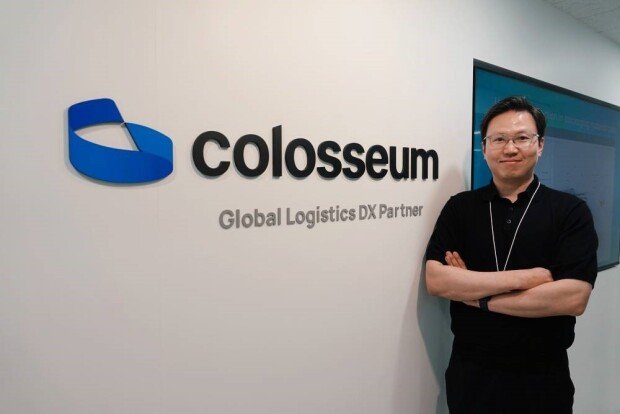
Jin-su Park, CEO of COLOSSEUM / source=IT dongA
Discovering the Growth Potential of Logistics Through On-the-Ground Experience
A graduate of Seoul National University's Business School, Park began his career at telecom KT, where he was in charge of personal marketing strategy. He later moved to ‘Daehak-naeil’, a youth-focused marketing company, where he led the consulting and new business divisions and founded the ‘20s Research Institute’, a role that connected with the younger generation and market trends.
"While working in marketing and consulting, I discovered a common thread," Park recalled. "Logistics was always a major headache in the flow of distribution and business. From clients to distribution officials, everyone pointed to logistics as their most difficult challenge. I wanted to understand the problem deeply, so I traveled to warehouses across the country. In the field, I could clearly see areas that could be dramatically improved with the integration of technology."
Influenced by his father, who worked in the logistics industry, Park had experienced warehouses and logistics sites firsthand in his youth. When he revisited them 20 years later, he was confronted with the reality that many inefficient methods persisted, and he saw a business opportunity. His work at the 20s Research Institute had shown him how quickly the lifestyles and shopping trends of the younger generation were changing, and the concurrent expansion of e-commerce platforms was a decisive factor in his decision to start a business.
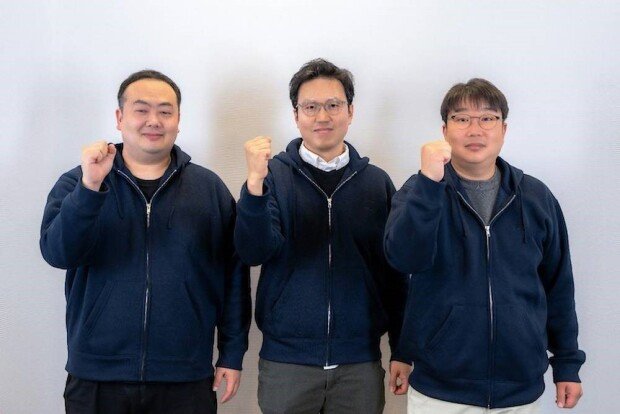
CPO In-hyung Yoo, CEO Jin-su Park, CSO Tae-shik Yoon of COLOSSEUM / source=IT dongA
In June 2019, Park founded COLOSSEUM with In-hyung Yoo (CPO) and Tae-shik Yoon (CSO), who had worked with him at KT. From the outset, COLOSSEUM chose a different path. "Instead of building new warehouses, we digitally connected scattered warehouse resources and personnel across the country," Park explained. "We determined that through an asset-light solution and an operations-centric platform model, logistics could become a strategic tool to enhance the efficiency of the entire distribution process, not just an infrastructure industry."
This differentiated approach is now yielding tangible results. Leveraging a network of 53 logistics centers worldwide, COLOSSEUM has grown more than threefold annually, achieving a cumulative revenue of 100 billion KRW in six years. The company recently succeeded in raising 27 billion KRW in a Series-B funding round, ranking third in investment attraction in the logistics and distribution sector for the first half of 2025. "This was a meaningful moment that went beyond simply securing funds," Park stated. "It validated our growth potential and global competitiveness as a technology-driven fulfillment platform."
Overcoming On-Site Inefficiencies with Digital Solutions
Under the slogan "Logistics Simplified, Success Delivered," COLOSSEUM provides comprehensive logistics services and solutions tailored to client needs. The company handles everything from initial consulting to warehousing, inventory management, shipping, and payment settlement, with its key feature being the use of technology to solve complex logistics challenges.
"Products are becoming more diverse, and consumer expectations are constantly rising. Consequently, packaging methods and delivery conditions are becoming more complex, yet we saw that traditional warehouses were lagging behind this trend, largely stuck in a simple storage-centric model," said Park. "COLOSSEUM's core mission is to integrate digital technology into the existing logistics process, redesigning it to be efficient and borderless."
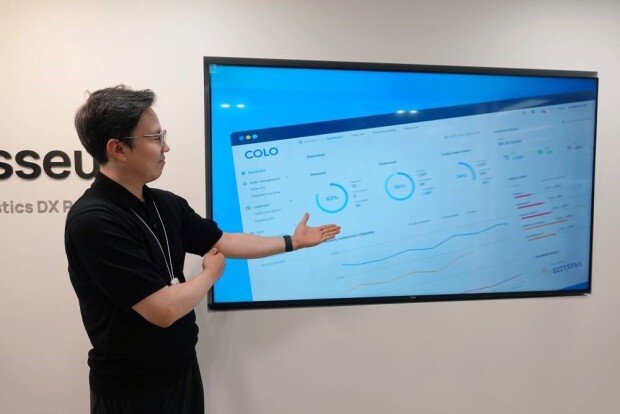
COLOSSEUM differentiates itself with "COLO AI," its proprietary AI-based SaaS solution. COLO AI collects and analyzes real-time data across the entire logistics chain—including product information, sales history, inventory status, and shipping records—to automatically propose optimal, customized solutions for clients. The system is specifically designed to detect and flexibly respond to changes in customer requirements or unexpected situations.
Park introduces ‘COLO AI’ / source=IT dongA
"Logistics may look simple on the outside, but it's incredibly complex on the inside," Park noted. "Every product has different dimensions and storage requirements, and each sales channel has its own specific demands. Customer orders can surge without notice. When these situations repeat, a single small mistake can snarl the entire delivery flow. That’s why we decided to build our own system from the ground up. We digitized the entire process from receiving to shipping and returns, and we modularized 26 core processes to develop COLO AI, ensuring it can operate flexibly under any circumstances."
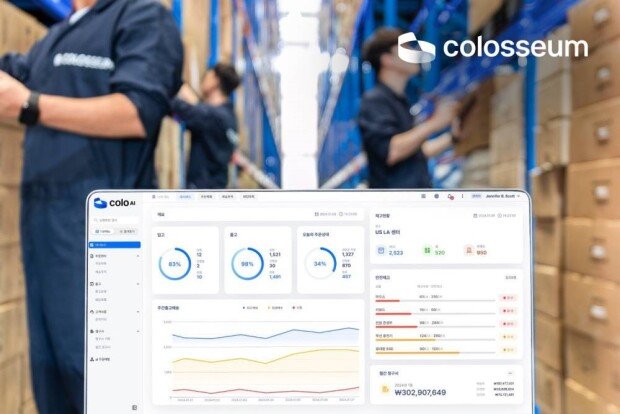
COLOSSEUM's core competency is organic synthesis of COLO AI and its FDs / source= COLOSSEUM
As a modular Warehouse Management System (WMS), COLO AI maximizes operational efficiency and accuracy through its key functional modules. It enables data-driven decision-making, from delivery forecasting to preventing stock shortages and planning for demand. Furthermore, it provides real-time monitoring for immediate response to issues and achieves customized technological integration by linking with various systems like ERP and CRM.
Technology + People: Forging a Core Competitive Edge
COLOSSEUM doesn't focus solely on technology; it places great importance on people. This is why the company concentrates on both the development of COLO AI and the cultivation of its ‘Fulfillment Directors (FDs)’, a team of logistics experts who bring the technology to life on-site. FDs play a crucial role by understanding real-time situations in the field, communicating closely with clients, and quickly resolving variables or issues that the system might miss.
"Not everything can be solved by technology alone. There are definitely areas that require quick judgment and coordination on the ground, and that's the responsibility of our FDs," Park said. "FDs are not just operations staff. They are essential expert coordinators who orchestrate the entire logistics flow between warehouse workers and clients."
Ultimately, COLOSSEUM's core competency lies in the organic synthesis of COLO AI and its FDs. "COLO AI and the FD team represent the domains of technology and people, respectively. They are the core pillars that simultaneously realize the flexibility and on-the-ground practicality of our logistics system," Park emphasized. "These two pillars work in tandem to increase the productivity of both clients and field workers, making the entire fulfillment operation much more efficient. It is vital to have technology and people cooperating organically and achieving a balance."
Park's philosophy of valuing people as much as technology is also reflected in the company's organizational culture. COLOSSEUM's core values and ideal employee traits are: Connecting (creating results that exceed expectations based on solid trust), Outstanding (securing expertise and immersing oneself to achieve overwhelming performance), Leading (initiating tasks and completing them with the team), and On the Ground (valuing and always keeping promises made in the field).
Lessons from the Global Market: Revamping COLO AI for Universal Usability
The journey to establish COLOSSEUM was filled with trial and error. From developing COLO AI in-house to implementing it in actual logistics sites, the challenges were continuous. "In the beginning, neither our clients nor our partner warehouse operators were accustomed to the system, so we went through a lot of trial and error with aspects like the UI and functionality," Park admitted.
Despite the difficulties, Park and his co-founders persisted. They continuously incorporated feedback to enhance COLO AI's features and improved its usability, enabling real-time tracking of receiving, shipping, inventory, and returns directly from web and mobile platforms. As a result, satisfaction in the field increased significantly.
"Our AI can now automatically match orders with products, and by integrating with domestic shopping mall orders in real-time via API, we have been able to dramatically increase shipping speeds," Park noted.
COLO AI has evolved into a platform capable of handling international import/export logistics seamlessly. This, too, was not easy. After establishing its U.S. corporation in 2024 and opening its own logistics center in Los Angeles, the company discovered numerous variables that were not apparent in the Korean market.
"When we went to the global front lines, we encountered a scene completely different from our expectations," Park recalled. "Many of the workers were Hispanic immigrants, and most were short-term contract workers who would leave after a short period. What was even more surprising was that quite a few were illiterate."
This experience led Park to establish a new principle for COLO AI: "Anyone should be able to understand it at a glance." Accordingly, the system was revamped. Multilingual patches were added, and text was replaced with icons to create a more intuitive and faster UI. Workflows were adjusted to be easy to follow, and the system was simplified to allow new workers to start their tasks without a complex manual. This adaptation has now become one of COLOSSEUM's key competitive advantages.
Driving Full-Scale Overseas Expansion with a 2027 IPO Target
Not content with domestic growth, COLOSSEUM is pursuing full-scale overseas expansion with the goal of becoming a global digital transformation (DX) partner in logistics. Currently, 12 of its 53 logistics centers are located in key overseas hubs, including the U.S., Japan, Taiwan, Thailand, Vietnam, and Malaysia.
Notably, since February 2022, COLOSSEUM has been jointly operating a U.S. fulfillment center through a strategic MOU with the global beauty platform CTK. This partnership supports the entry of K-beauty brands into the U.S. market, and the company is expanding its partnerships with global sellers across various other industries.
Following its U.S. expansion, COLOSSEUM is in the process of establishing a Japanese corporation and plans to set up a Singaporean corporation in the second half of 2025 to accelerate its entry into the Southeast Asian market. "We aim to more than triple our revenue by 2026. To achieve this, we are systematically working to secure 100 global logistics hubs equipped with diverse capabilities such as cold storage, specialized cosmetics handling, and custom packaging," Park said.
The company is applying the same asset-light model abroad, digitally connecting existing warehouse resources and personnel rather than building new facilities. "This is possible because our technology and data allow us to grasp the flow, and our FDs fully execute their roles," Park stressed.
COLOSSEUM has evolved beyond simple storage and shipping to become a fulfillment service optimized for e-commerce. Since last year, it has been actively acquiring clients by expanding into high-difficulty logistics areas such as food ingredients, cold chain, global shipping, and custom packaging. It is also striving to become a digital logistics platform that encompasses B2B shipments and cross-border fulfillment. "If the market and our clients want it, we try to reflect it as much as possible. That's because we value our clients," Park explained.
Park aims IPO in the second half of 2027 / source=IT dongA
Building on this strategic expansion, COLOSSEUM is targeting an Initial Public Offering (IPO) in the second half of 2027. The company plans to further solidify its position in the global market by focusing on advancing its COLO AI solution, ensuring stable management, and enhancing its differentiated brand competitiveness.
COLOSSEUM's journey is presenting a new paradigm for the logistics industry. Its success in creating innovation by digitally connecting existing infrastructure is significant. The future that Park and his co-founders envision as a global logistics DX partner is one to watch with great anticipation.
By Kui-im Park (luckyim@itdonga.com)
* This article was written with support from Seoul National University of Science and Technology.








 About Dong-A Ilbo