

Bessent signals U.S. tariff talks may continue
Bessent signals U.S. tariff talks may continue
Posted July. 23, 2025 08:29,
Updated July. 23, 2025 08:29
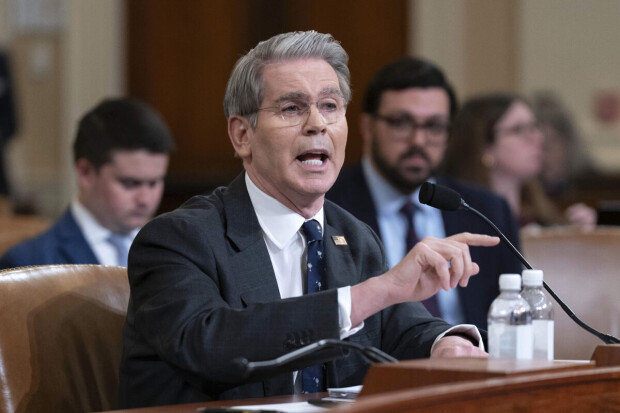
스콧 베선트 재무장관. AP뉴시스
U.S. Treasury Secretary Scott Bessent said in a July 21 interview with CNBC that he would not rush trade negotiations simply to reach an agreement. His remarks suggest the United States will not make hasty concessions under time pressure ahead of the reciprocal tariffs set to take effect on Aug. 1. Bessent also implied that the negotiations may continue past that date.
In a separate interview with CBS on July 20, U.S. Secretary of Commerce Howard Lutnick echoed this view, saying negotiations could still proceed after the new tariffs are implemented.
Regarding trade talks with Japan, which began in April and remain unresolved after their seventh round in June, Bessent stated that he would not be influenced by Japan’s domestic political calendar and would focus solely on securing the best deal for the American people. His comment is seen as a response to Japan’s reluctance to expand agricultural imports ahead of its House of Councilors election. Analysts believe Bessent was signaling that the United States will continue to press for tariffs on key items and demand market openings in politically sensitive sectors.
On trade negotiations with the European Union, Bessent said the process involves mutual back-and-forth, but stressed that the EU, with its large trade surplus with the United States, is likely to be more impacted by higher tariffs. He suggested that the EU may feel more urgency to conclude a deal quickly.
Until now, the Trump administration has pushed major trading partners, including South Korea, toward early agreements by imposing high tariffs. However, Bessent’s recent comments are widely viewed as a strategic shift aimed at gaining leverage. Some analysts say the administration is attempting to counter any perception of U.S. impatience, especially in light of financial market volatility. Diplomatic sources in Washington noted that the United States appears prepared to impose steep tariffs first and negotiate later to maximize concessions.
Some experts believe Bessent’s emphasis on negotiation quality may mean the United States will maintain tariffs on key items such as automobiles, steel, and pharmaceuticals. Others say it reflects continued U.S. pressure to open agricultural and automotive markets, particularly with Japan and South Korea.
On the same day, Bessent also highlighted Indonesia’s recent trade agreement with the United States. Under the deal, Indonesia agreed to purchase $4.5 billion worth of U.S. agricultural products and 50 Boeing aircraft. Major international media outlets described the agreement as significantly favorable to the United States.
Jin-Woo Shin niceshin@donga.com


![[김순덕 칼럼]이 대통령은 왜 ‘탄핵 가능성’을 언급했을까](https://dimg.donga.com/c/138/175/90/1/wps/NEWS/IMAGE/2026/06/17/134133459.1.jpg)
![[단독]선관위, 결재없이 55억 써도 고작 견책…‘자체 징계’ 솜방망이](https://dimg.donga.com/c/138/175/90/1/wps/NEWS/IMAGE/2026/06/19/134138827.4.jpg)


 About Dong-A Ilbo