

Korean manufacturing faces risk from export dependence
Korean manufacturing faces risk from export dependence
Posted May. 22, 2025 07:43,
Updated May. 22, 2025 07:43
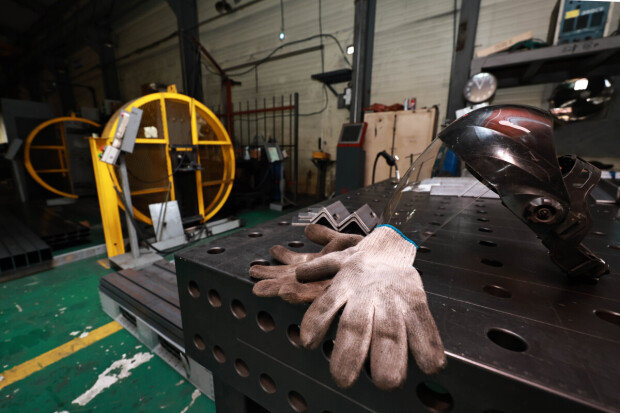
South Korea’s manufacturing sector is far more reliant on foreign demand than those of most major economies, raising concerns about the country's vulnerability to global economic disruptions. Experts are calling for stronger efforts to boost domestic consumption and diversify export destinations.
According to a report released Tuesday by the Korea Enterprises Federation, foreign demand accounted for 58.4% of South Korea’s manufacturing GDP in 2023, up 5.7 percentage points from 52.7% in 2000. That figure is well above the global average of 42.4%, underscoring the nation's heightened exposure to external shocks.
Among the countries analyzed, only South Korea and Germany (69.2%) had manufacturing sectors more dependent on overseas markets than on domestic demand. By contrast, the United States, China and Japan maintained growth models driven primarily by internal consumption, with foreign dependence below 50%.
The report also noted a sharp rise in dependence on China. In 2023, the U.S. and China accounted for 13.7% and 10.8% of Korea’s manufacturing GDP, respectively. While reliance on the U.S. declined 1.1 percentage points from 2000, dependence on China jumped 6 percentage points. Combined, the two countries represent 24.5% of Korea’s overseas manufacturing demand, significantly higher than Japan (17.5%) or Germany (15.8%).
By sector, electronics and electrical equipment, including semiconductors, showed the highest overseas reliance, at 76.6%.
“With the global trade environment deteriorating and U.S. tariffs on the rise, Korea’s high dependence on the American and Chinese markets makes our manufacturing increasingly fragile,” said Ha Sang-woo, head of KEF’s Economic Investigation Bureau. “Policy support to diversify exports and stimulate domestic demand is urgently needed.”
Jae-Hyeng Kim monami@donga.com


![“1000만원 줄 테니 나가달라”…집주인 제안, 받아도 될까 [집과법]](https://dimg.donga.com/c/138/175/90/1/wps/NEWS/IMAGE/2026/06/19/134130634.3.jpg)
![‘월급 50만원, 아파트는 4억’ 베트남…청년들 “그냥 평생 월세 살란다”[딥다이브]](https://dimg.donga.com/c/138/175/90/1/wps/NEWS/IMAGE/2026/06/19/134141662.1.png)


 About Dong-A Ilbo