

Candidates outline divergent plans for U.S. trade talks
Candidates outline divergent plans for U.S. trade talks
Posted May. 17, 2025 07:26,
Updated May. 17, 2025 07:26
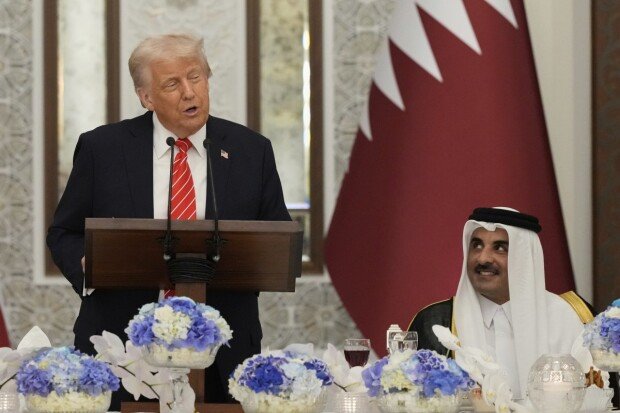
All three major South Korean presidential candidates are calling for swift U.S.-Korea trade negotiations, but their approaches and priorities differ, especially on tariffs, defense cost-sharing, and package deals involving LNG and technology.
Lee Jae-myung of the Democratic Party said Friday that South Korea’s concessions must be based on concrete and verifiable commitments from the United States, including tariff adjustments, and must follow the principle of reciprocity. “It is necessary to begin Korea-U.S. consultations as soon as possible,” Lee said in written responses to the Dong-A Ilbo. He emphasized the need to request an extension of the 90-day reciprocal tariff grace period, which expires on June 8.
On the “package deal” reportedly suggested by the Trump administration in connection with U.S. requests for South Korean participation in liquefied natural gas (LNG) development, Lee said he would “actively consider a comprehensive cooperation plan” to enhance bilateral collaboration in sectors with strategic synergy. These include shipbuilding, defense, energy, artificial intelligence, semiconductors, mobility, and intermediate goods.
However, he expressed caution about reducing South Korea’s trade surplus with the U.S. as a way to lower the current 24% tariff. “Tariff adjustments, easing of non-tariff barriers, and investment incentives must all be based on concrete and verifiable U.S. commitments and on reciprocity,” he said.
People Power Party candidate Kim Moon-soo and Reform Party candidate Lee Jun-seok both opposed asking the U.S. for an extension of the tariff grace period. “It is unrealistic to expect that the U.S. would grant an extension to South Korea alone while excluding other countries,” Kim said, referring to the government’s ongoing “July package” negotiations. He pledged to “resolve the tariff issue through an all-out trade diplomacy effort, including strengthening summit diplomacy, immediately upon taking office.”
Kim also said expanding U.S. LNG imports could be considered for energy security, though it must be preceded by “a close evaluation of profitability and careful scenario planning.” On defense cost-sharing, he said, “If the U.S. demands more, we could link it to rising demand for modern weapons systems, potentially making it a win-win for both countries.”
Lee Jun-seok said South Korea needs to prove it is a strategic partner to the U.S. amid growing global tech competition. “I will pursue bold, top-level diplomacy directly with President Trump,” he said. “If we can secure peaceful nuclear reprocessing technology from the U.S., it would bring even greater benefits.”
Notably, none of the candidates’ previously announced top 10 campaign pledges included these trade negotiation proposals.
이승우 기자 suwoong2@donga.com

![[단독]초봉 5000만원 환경미화원 ‘밀실 면접’ 논란… 81등 역전 합격도](https://dimg.donga.com/c/138/175/90/1/wps/NEWS/IMAGE/2026/06/30/134205664.1.png)



 About Dong-A Ilbo