

K-medicine saves 300 lives in Mongolia through liver transplant skill transfer
K-medicine saves 300 lives in Mongolia through liver transplant skill transfer
Posted March. 14, 2025 07:32,
Updated March. 14, 2025 07:32
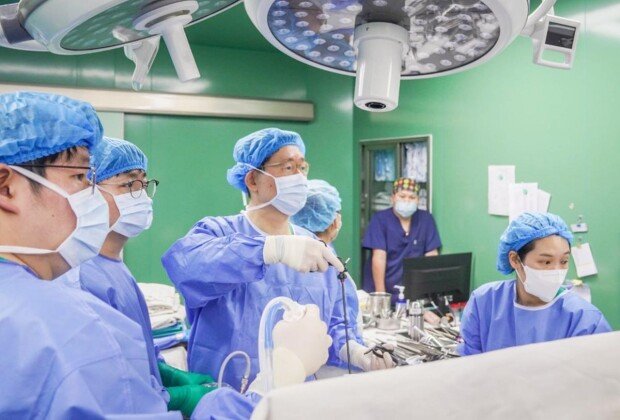
A Korean hospital has brought living-donor liver transplantation to Mongolia, which has one of the highest liver cancer death rates in the world, saving more than 300 patients over the past 15 years. Living-donor liver transplantation is a procedure in which a portion of a healthy person’s liver is surgically removed and transplanted into a patient in need of a liver transplant.
Seoul Asan Medical Center has been running a living-donor liver transplantation skill transfer project with the First Central Hospital in Ulaanbaatar, Mongolia, since 2011, and performed its 305th living-donor liver transplant on February 22, the AMC announced on Thursday. The liver of son Galbadrakh (25) was successfully transplanted to his mother, Enkhmend (41), who was suffering from cirrhosis.
According to the World Cancer Research Fund (WCRF), Mongolia ranked first in the world in 2022, with 96.1 new cases of liver cancer per 100,000 people. It also has the highest per capita liver cancer mortality rate in the world. In response, the Mongolian government established a liver transplant program team in 2009 and requested assistance from Seoul Asan Medical Center.
In September 2011, after two years of training, the liver transplant team at Asan Medical Center in Seoul successfully performed the first living-donor liver transplant in Mongolia. In 2015, Mongolian doctors performed their first liver transplant surgery independently. Over 15 years, 192 Mongolian doctors were trained in Korea, and Seoul Asan Medical Center sent 214 doctors to Mongolia to teach and collaborate with them.
The living-donor liver transplant, a part of AMC’s Asan-in-Asia project, was launched in 2009 to help developing countries achieve medical independence. Asan-in-Asia was inspired by the U.S. educational and medical aid initiative, the Minnesota Project, which laid the groundwork for modern medicine in Korea in the 1950s. Seoul Asan Medical Center covered the cost of the living-donor liver transplant in Mongolia.
“At the time of the agreement with the Mongolian government, the country lacked adequate liver transplantation technology and equipment, so patients had to rely on medical travel,” said Dr. Lee Sung-Gyu, a professor in the Division of Liver Transplantation and Hepatobiliary Surgery at AMC, who led the ‘Asan-in-Asia’ project. “More than 300 lives have been saved through liver transplantation. I am filled with emotion.” “We will spare no effort to support the local establishment of advanced medical technologies, such as donor laparoscopic liver resection,” said Professor Jung Dong-Hwan of the Division of Liver Transplantation and Hepatobiliary Surgery.
Sung-Min Park min@donga.com








 About Dong-A Ilbo