

The Awareness of Pres. Park Geun-hyes era
The Awareness of Pres. Park Geun-hyes era
Posted November. 02, 2015 11:13,
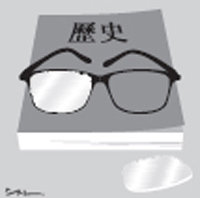
A portion of my bookshelf is filled with books that I read when I was a college student and now turned yellow. The humanities and social science books include those whose sales were banned 30 years ago because of ideology issue. From 101 books such as The Awareness of the History Before and After Koreas Liberation, and The Logic of Transition Period to books that make readers think about reality in depth. Back then, many college students, if not participants of a student movement, read such books and discussed over such topics.
The Logic of Transition Period authored by Lee Young-hee was first published in June 1974. The Awareness of the History Before and After Koreas Liberation was first released in October 1979 and The awareness of the 1950s in March 1981. These books were popular among college students under the Park Chung-hee and Chun Doo-hwan administrations because they approached modern Korean history and reality from a new perspective unlike state history textbooks. If they had been taught and covered by the media, no one would have opened their wallet to buy the books. At a time when a cup of coffee at a café near a college campus cost 200 won (0.18 US dollars), The Awareness of the History Before and After Koreas Liberation was 4,000 won (3.53 dollars).
A comment from Roh Jae-bong, then professor of the college of liberal arts and sciences of Seoul National University, was on the back cover of The Logic of a Transition Period: Here I see a way of reporting a current of dirty politics and the courage of the intellectuals. Die the former prime minister under the Roh Tae-woo administration praise for the leftist book as a scholar? Scholars like Kim Hak-joon who wrote The Awareness of the History Before and After Koreas Liberation and Han Seung-joo and Kim Dae-hwan who authored The Awareness of the 1950s would not have become senior government officials had they been ideologically biased. The books neither contained only truth nor were exceptionally outstanding. The governments censorship rather made the books special. Reading the books does not make readers completely internalize the ideology.
Although I agree with President Park Geun-hye`s claim that history textbooks are left-leaning to some extent, it is hard to accept the idea of state-issued history textbooks. When people learn history from one perspective, they want to adjust the way they see history or seek new perspectives. It is proved by the generation that was educated by the dictatorship but felt confused after reading liberal books. Isnt it natural that there will be various history perspectives about this era when President Park pushes for state textbooks based on her personal belief?
eligius@donga.com


![[김순덕 칼럼]장동혁 심판이냐, ‘공소취소’ 심판이냐](https://dimg.donga.com/c/138/175/90/1/wps/NEWS/IMAGE/2026/05/06/133874674.1.jpg)





 About Dong-A Ilbo