

Arabs Are Warmhearted People Once You Get to Know Them
Arabs Are Warmhearted People Once You Get to Know Them
Posted September. 08, 2001 08:30,
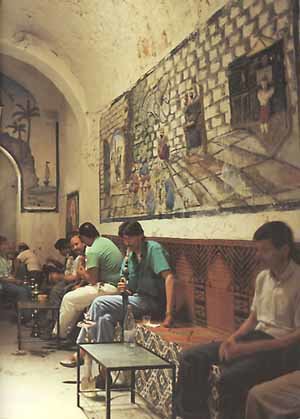
A Correct Understanding of Islamic Culture and Society – Islam
By Lee Hee-Soo and Lee Won-Sam
Chunga Book
Since UN designated this year as `The Year of Dialogue Between Cultures` there has been much interest in Islam. Newspapers and radio stations frequently air programs on Islamic culture. Yet our knowledge of Islamic culture whose vast 13 million people spread over 55 countries make up one fifth of the world`s population is scant and full of misconceptions. We also suffer the disgrace of being the country that has the weakest research on Islam among the OECD countries. Although it is at a late date, it is only natural that interest in Islam should rise in our society.
Islam is not only a religious system but has the unique value of indivisibly joining religion with daily life. This is why it very difficult to distinguish the day to day lives of Muslims and their religious observance. It is also the reason why Muslims appear to be holding the banner of Islam in every sphere of life from the economic sphere to war and negotiations. Islam is identical with life itself for Muslims. Westerners and Koreans who are accustomed to the secular division between state and religion find this the largest stumbling block to properly understanding the Islamic world. Moreover, we have understood Islam through a framework of thought and consciousness derived from central America which has dealt sharply with the Islamic world.
We finally have a book that can help us see the Islamic world in its true light. Although we have felt distressed over the distortions and biases in our perception of Islam, there has not been a book that solved our ignorance and answered our curiosity. On the one hand, a number of books were too academic or technical for the average reader to easily grasp the content. On the other hand, books translated by non-experts were dry and could not help but give the impression that their lack of knowledge actually may increase misunderstanding.
This book looks at Islam first as a cultural system rather than a religion. It deserves high praise for examining not only the Islamic teachings but the daily lives of Muslims in a broad perspective. The book introduces the fundamental principles of Islam, follows by dispelling the myth of `Sword in one hand, Koran in the other` gives the real facts about Jihad and Islamic fundamentalism, the development and resolution of the Palestine conflict, the background for the bloody conflict between ethnic minorities, the content of Islamic law, the problem of polygamy and oppression of women, cultural and artistic life, food and drinks enjoyed by Muslims, rites of passages, leaders of Islamic nations, Islamic regional world culture and heritage, and mentions almost every theme and subject related to Islam and Islamic culture.
The Middle East where Islam first sprouted is the part of the world where human beings first established civilization. Islam thrived in the Middle Eastern region where diverse ideas harmoniously emerged and promoted a peaceful coexistence based on reconciliation and forgiveness, compromise and cooperation for the past 1400 years. Yet Westerners used the label `sword in one hand, Koran in the other` without any historical basis to stereotype Islam as a belligerent religion and justified their attack on it. Especially in the 20th century, the whole Middle Eastern region fell under the colonial rule of superpower nations, and endless conflict and discord between peoples and religious sects have transpired. The book`s main message is that there may be Islamic extremists who use terrorist tactics because they do not have any other means for opposing the superpowers, but there are many simple people living in the Islamic world who have the same blood as ours and share the same humanity.
Muslims believe that a person`s birth, growth, marriage, death – the entirety of life – unfolds strictly according to God`s will. The book takes an objective perspective and tracks the life of Muslim people by examining their daily life, language, and rites of passage.
It also treats the interesting relationship between Korea and Islam by tracing the historical interactions and mutual cultural exchanges that occurred from unified Shilla period through Koryo and Choson. The book also offers narratives on how Saudi Arabia became the top mineral producers in the world and other new and interesting accounts that delights and surprises the reader.
The book was a massive writing project in which 12 leading scholars in the country participated. It contains information and vivid local narratives gathered from these experts` long time experiences in countries where they received their doctorates. This has to be the strongest point of the book. Also, the book is divided according to the subject of each contributing writer and successfully accomplished work of detailed explanation that is also clear in style and easy to read.
Although one can point out that the text flows unnaturally and falls short on narrative unity since multiple authors co-wrote the book, but such minor weak points are not significant in comparison to the overall importance of the work.
A world intimately connected to ours since unified Shilla. Islamic countries produce 70 percent of crude oil imports and constitute the most important economic partner. This book comes at a time when dialogue and cooperation between the Islamic world and East Asia is acutely felt. One hopes that it will contribute to greater objectivity in understanding the Islamic world and its relations.







 About Dong-A Ilbo