

Dilkusha
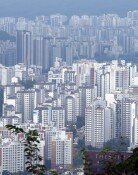
Photos showing views overseen from Mount Ansan in Seoul in the 1920s and those of a recent day are on exhibit at the lobby of the Seoul Museum of History. Among some 30 sites and buildings with labels and descriptions on the photos is Dilkusha, which is near the foot of Mount Inwang near the traditional gate of Dongnimun. Dilkusha is the name of a two-storied, American-style red-brick building built in 1923 and the home of Albert Taylor, who came to Korea in 1898 to work as a gold miner and reporter.
Working as Seoul correspondent of United Press International, or UPI, in 1919, he wrote news reports on the March 1 Pro-independence Movement and alerted the world of the historic event. He was sent to Seodaemun Prison (now Dongnim Park) for six months for his reporting and lived at Dilkusha until 1942, when he was expelled from Korea. The building is also believed to have been the headquarters of the Korean daily Daehan Maeil Shinbo, which was published jointly by Yang Gi-tak and Ernest Bethel. So the Seoul Metropolitan Government has sought to register the building as a cultural property for several years. Across the building is a giant gingko tree 420 years old that was reportedly planted by Kwon Yul, the chief commander of the Joseon (Korean) army in the Imjin War, which Japan invaded Korea in the late 16th century. This area is now the neighborhood of Haengchon-dong. Historians say the site around the gingko tree was the site of Kwon`s home.
The identity of Dilkusha was made public in 2006, when Taylor`s son Bruce visited Korea. He donated 17 photos that his father had taken to the Seoul municipal government and received honorary citizenship from the city. The old photo at the museum lobby was taken by his father. The waning Dilkusha has remained beautiful and elegant and grown significant as part of Korea`s architectural history. An official at the city`s Jongno Ward Office said, "He received approval from Dilkusha`s owner Korea Asset Management Corp. to register the building as a cultural property in April, but we face a dilemma over how to relocate more than 10 low-income households who have illegally occupied the site for decades."
Dilkusha means "utopia" in Hindi but originally meant "Peace of mind." The term for utopia differs from language to language. The Chinese call it a "place where peach flowers bloom." In Japanese, the term is "muka yunoko," or a completely natural world with nothing artificial. In Old English, it was called Camelot, the palace of King Arthur, and utopia had no term in the real world in Latin. The Spanish referred to utopia as "El Dorado (gold scent)" and promoted their existentialism. In Argentina, the term means "silver site" in Spanish. Language is a form of philosophy. Koreans should envy Indians, who consider peace of mind as utopia. Albert Taylor might have named his residence Dilkusha to express his wish that the Korean people, who were suffering from Japanese colonial rule, would eventually be blessed with peace.
Editorial Writer Heo Seung-ho (tigera@donga.com)





 About Dong-A Ilbo