

Iran reverses stance, moves to close Hormuz
Iran reverses stance, moves to close Hormuz
Posted April. 20, 2026 08:42,
Updated April. 20, 2026 08:42
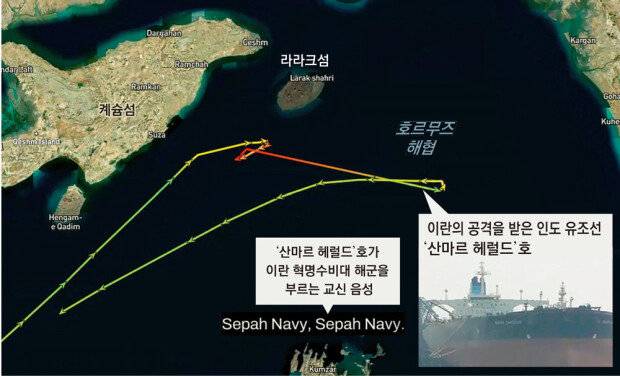
Iran said on April 18 local time it would again close the Strait of Hormuz, reversing a decision made just a day earlier to reopen the waterway. The shift appears to reflect a response to mounting U.S. pressure, including Washington’s continued maritime blockade and its warning that ships linked to Iran could be seized in international waters.
U.S. President Donald Trump convened an emergency meeting in the White House Situation Room to weigh a response. With the two-week truce between the United States and Iran set to expire on April 21 Eastern Time, tensions are rising over access to the strategic passage, alongside disputes over Iran’s highly enriched uranium program in talks aimed at ending hostilities.
Iran’s Islamic Revolutionary Guard Corps said the strait would be closed going forward, warning that any attempt to approach it would be treated as cooperation with hostile forces and that vessels involved would be targeted.
Ebrahim Zolfaqari, a spokesperson for Iran’s central military command, accused the United States of breaking its commitments and continuing what he described as coercive maritime measures under the pretext of a blockade. He said Washington’s efforts to block ships entering or leaving Iranian ports had prompted Tehran’s decision to shut the strait again. The move also underscored Iran’s anger over what it sees as a strategy to squeeze its revenue, effectively overturning an earlier announcement by Iranian Foreign Minister Abbas Araghchi that the strait would be reopened.
In a sign of its tougher stance, Iran attacked two Indian vessels attempting to pass through the strait later that day. Tehran had previously allowed limited passage for ships from friendly countries, including India. India’s Foreign Ministry summoned Iran’s ambassador to lodge a protest.
Axios reported, citing a senior U.S. official, that without a breakthrough in negotiations, hostilities could resume within days.
Still, the standoff may reflect calculated positioning ahead of another round of talks. Speaking to reporters at the White House, Trump said negotiations with Iran were progressing smoothly. Iran’s Supreme National Security Council said the United States presented a new proposal and that it was under review.
Mohammad Bagher Ghalibaf, Iran’s parliamentary speaker and chief negotiator, said in a televised address on April 19 that while some progress were made, significant differences remained.
Jin-Woo Shin niceshin@donga.com








 About Dong-A Ilbo