

Trump says Iran offered gift as talks progress
Trump says Iran offered gift as talks progress
Posted March. 26, 2026 08:52,
Updated March. 26, 2026 08:52
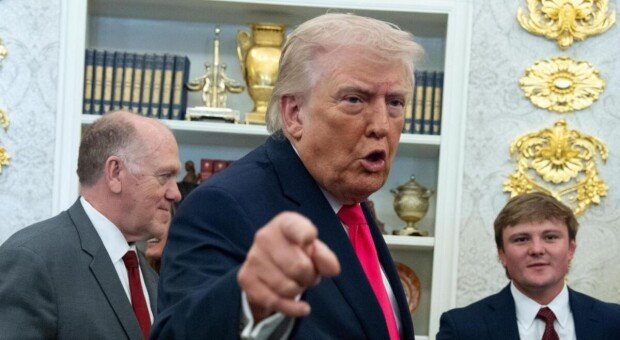
U.S. President Donald Trump said Tuesday that Iran had given the United States a “great gift,” signaling what he described as meaningful progress in negotiations with Tehran as fighting continues following the outbreak of conflict on Feb. 28.
Speaking to reporters at the White House in Washington, Trump said Iran had made “an amazing move” a day earlier and offered “a very big gift of tremendous value.” He said the matter was “not related to nuclear issues,” but instead tied to “oil, gas and the Strait of Hormuz.” He did not elaborate, but the remarks were widely interpreted as pointing to discussions over restoring navigation through the Strait of Hormuz, a critical artery for global oil shipments that has been effectively restricted since the conflict began.
Trump added that the United States was “negotiating with the right people” and said talks were underway with a group currently engaged in discussions. The comments reinforced his assertion that Washington is in contact with senior Iranian officials, despite Tehran’s repeated denials.
He also said Iran had agreed it would “never have nuclear weapons” and would not pursue uranium enrichment. The remarks appeared to underscore U.S. pressure on Tehran to abandon its nuclear and missile programs entirely. Trump further said Iran’s current leadership was “completely different” from the past and described the situation as tantamount to regime change. The statement highlighted the reported removal of key figures in Iran’s leadership at the outset of the conflict and suggested an effort to frame the situation as a strategic advantage while exploring a path toward de-escalation.
Iran, for its part, reiterated Tuesday, following a similar statement the previous day, that it had held no negotiations or dialogue with the United States. However, the Financial Times reported that Iran had sent a letter to member states of the International Maritime Organization indicating it would allow passage through the Strait of Hormuz for “non-hostile” vessels that had coordinated in advance with Iranian authorities. The move has fueled speculation that Tehran may be engaging in indirect or behind-the-scenes contacts with Washington through third parties, even as it publicly denies formal talks.
The Washington Post reported that Steve Witkoff, the White House special envoy for the Middle East, and Iranian Foreign Minister Abbas Araghchi were conducting indirect communications through intermediaries. CNN reported that Iran prefers Vice President J.D. Vance as a negotiating counterpart over Steve Witkoff and Jared Kushner, Trump’s son-in-law and former White House adviser who represented the U.S. in earlier nuclear talks this year.
Israel’s Channel 12 reported that the United States is considering a one-month ceasefire with Iran to facilitate discussions on a set of 15 agenda items. Trump said Monday that the two sides had reached agreement on 15 points, including Iran’s abandonment of its nuclear program.
Jin-Woo Shin niceshin@donga.com



![소변 실수하는 노모 폭행해 숨지게한 남매…존속살해 무죄 왜?[더뎁스]](https://dimg.donga.com/c/138/175/90/1/wps/NEWS/IMAGE/2026/05/19/133930957.1.jpg)




 About Dong-A Ilbo