

RAVEN Materials Dreams of Unicorn Status with Black Titanium Dioxide, a Visible Light Photocatalyst for Pollution Cleanup
RAVEN Materials Dreams of Unicorn Status with Black Titanium Dioxide, a Visible Light Photocatalyst for Pollution Cleanup
Posted December. 02, 2025 13:57,
Updated December. 02, 2025 13:59
- RAVEN Materials has developed Black Titanium Dioxide (Black TiO₂), a visible light photocatalyst that enables eco-friendly air and water purification, self-cleaning surfaces, and advanced industrial applications, while significantly reducing energy consumption and costs.
- The company’s proprietary manufacturing process delivers Black TiO₂ at a purity over 99%, making it 1,300 times more cost-effective than competitors, and is currently undergoing technical validation with 26 global corporations.
- RAVEN Materials aims to scale up production, achieve full commercialization next year, and become Korea’s first chemical or materials Unicorn by expanding into global markets and diversifying applications.
Energy-based purification technologies, such as those used in air purifiers and water filtration systems, are widely utilized. However, they face limitations due to high power consumption and the potential for secondary contamination. In the fields of air and water purification, the importance of eco-friendly materials that can operate stably for long periods while minimizing environmental impact is increasingly highlighted.
Amid this shift, Black Titanium Dioxide (Black TiO₂), first reported in academia in 2011, is gaining significant attention. This material is not only used as a next-generation black pigment (a black particulate colorant insoluble in water or oil) but also as a photocatalyst (a substance that reacts to light, breaking down harmful materials) by absorbing visible light from indoor lighting or sunlight. With functionalities including air and water purification, hydrogen production, and self-cleaning, it is a cutting-edge new material with applications across various advanced industries such as solar cells, displays, semiconductors, batteries, and defense.
RAVEN Materials is a chemical materials deep-tech startup dedicated to developing Black TiO₂ manufacturing technology. CEO Tae-jun Kim commercialized the material after discovering it during his time gaining experience in overseas sales. Starting with R&D on catalytic materials for air purification, the company has continuously refined its technology, culminating in the current development of powdered Black TiO₂ products.
Strong Self-Cleaning Catalytic Function with Visible Light Absorption
The application market for Black TiO₂ is broadly divided into two areas.
The first is the black pigment market, capitalizing on its property of absorbing visible light. This material is particularly garnering interest in the defense sector for stealth military equipment, like missiles, where absorbing light is crucial to evade radar detection. It is also used as a black material for OLED displays.
• RAVEN Materials is currently validating the performance of its black material for OLED displays with a major German chemical conglomerate company, and a Korean electronics giant company
• Simultaneously, it is undergoing testing with Finland’s company as a next-generation black pigment for defense applications.
The second area is the visible light photocatalyst market. When exposed to visible light, Black TiO₂ generates active oxygen species (hydroxyl radicals) on its surface, which decompose organic matter, bacteria, and other contaminants. This characteristic makes it valuable for air and water purification, hydrogen production, and improving solar cell efficiency.
Furthermore, the material possesses strong superhydrophilic properties (a high affinity for water), allowing surface contaminants to be easily washed away by mere rainwater or humidity.
This enables the creation of self-cleaning exterior materials—coatings applied to building glass facades or architectural finishes that remain pristine simply through exposure to sunlight.
It is also applicable to automobile window films, solar panels, and ship or yacht hulls. RAVEN Materials applied the material to internal filters of a building ventilation unit for a Korean construction firm, Company H, demonstrating its ability to remove over 90% of nitrogen oxides (NOx), sulfur oxides (SOx), bacteria, and viruses using only visible light LED illumination.
In the photocatalyst domain, Black TiO₂ is hailed as an innovative alternative for the ESG era, where environmental regulations are tightening. Conventional air purification technologies—such as UV, plasma, ozone, and general photocatalysts—suffer from high power consumption, high import dependency on core materials, or substantial costs. Kim emphasizes, "The high efficiency of the visible light photocatalyst, which utilizes sunlight and indoor lighting, allows us to reduce power loss by about 40 times and lower the necessary material cost by approximately 41 times."
1,300 Times More Cost-Effective Than Competitors
RAVEN Materials' greatest differentiator lies in its economic feasibility. Kim stated, "Currently, Black TiO₂ is produced by only two companies globally—Japan's Mitsubishi and the US-based ACS Materials—but they were limited to selling small quantities at a high price due to the lack of commercialization technology."
He proudly added, "RAVEN Materials has achieved production cost savings through proprietary process development, delivering a purity of over 99% at a price 1,300 times cheaper than our competitors."
Kim revealed that this achievement was the result of three years of persistent research. "RAVEN Materials secured over 3,000 research data points, precisely controlling 33 variables across the pre-treatment, heat treatment, and post-treatment stages," he explained.
"These variables are intricately intertwined; even a slight deviation in one can prevent the material from turning black. The success factor was our ability, as a startup, to focus solely on mastering this technology." The company's early experience in developing air quality monitoring software also proved beneficial, allowing for precise analysis based on data acquired while monitoring experimental conditions.
Furthermore, RAVEN Materials holds proprietary technology to precisely control the degree of oxygen defects during the synthesis of Black TiO₂. Building on this, the company is pursuing the development of various colored titanium oxides. Kim noted, "Depending on the oxygen defect concentration, we can manufacture powders in various colors, including black, gray, and blue. Our goal is to expand applications by utilizing the different functionalities each color provides."
Simultaneous Technical Validation with 26 Global Corporations
Established in 2020, RAVEN Materials is leveraging the Black TiO₂ developed over three years to aggressively target the global market.
• The company is currently undergoing technical validation for commercialization with 26 global companies across 6-7 countries, including Japan, Luxembourg, the United States, France, and Spain.
• To transition its product from a Technology Readiness Level (TRL) 7 to the TRL 9 commercialization stage, it is navigating country-specific regulatory and certification procedures with local partners.
The firm plans to establish its production system by June of next year, aiming for full-scale commercialization in the second half of the year and targeting 5 billion Korean Won (approximately $3.8$ million USD) in revenue for the next year.
A key technical goal for RAVEN Materials is to maximize material reliability by securing 99% reproducibility (the ability to consistently manufacture under the same conditions) and boosting purity from the current 99% to 99.9% by next year. Kim stressed, "In the chemical and materials sectors, even impurities less than 1% can critically impact performance. Therefore, increasing purity by $0.9$ percentage points is a crucial task, akin to craftsmanship, that earns recognition."
RAVEN Materials' growth has been supported by the Seoul Center for Creative Economy & Innovation (CCEI). Through Seoul CCEI's network, the company participated in the 'ILS (Innovation Leadership Summit) Tokyo,' Asia's largest corporate and CVC summit. It was selected as one of the Global Top 100 companies and is simultaneously being reviewed by major Japanese investors. Kim expressed his gratitude, saying, "The opportunities provided through Seoul CCEI's business guidance have led to great results."
Scaling Up with Automated Continuous Process, Targeting 2029 IPO
RAVEN Materials is planning for mid-to-long-term growth, aiming for an Initial Public Offering (IPO) in 2029. The immediate strategy is to diversify its business across various application industries. Kim estimates the annual global visible light photocatalyst and black pigment market to be about 13 million tons. He articulated a vision to supply 10% of this, 1.3 million tons, through mass production process investment.

"The biggest challenge for this is scale-up," said Kim. "We need to significantly increase the expected monthly production volume of 2.2 tons starting in 2026." He projected, "We plan to achieve 24-hour continuous operation by introducing AI and robotics. Robotic automation equipment is already partially implemented in the pre-treatment process, and we aim to establish a fully automated production process within five years. This will enable mass production."
Finally, he concluded, "I believe there are currently no chemical or materials Unicorns (unlisted companies valued over $1 billion) in Korea. We aim to become a new materials Unicorn that dominates global production and distribution, moving beyond the domestic market."
By Ye-ji Kim (yj@itdonga.com)
- The company’s proprietary manufacturing process delivers Black TiO₂ at a purity over 99%, making it 1,300 times more cost-effective than competitors, and is currently undergoing technical validation with 26 global corporations.
- RAVEN Materials aims to scale up production, achieve full commercialization next year, and become Korea’s first chemical or materials Unicorn by expanding into global markets and diversifying applications.
Energy-based purification technologies, such as those used in air purifiers and water filtration systems, are widely utilized. However, they face limitations due to high power consumption and the potential for secondary contamination. In the fields of air and water purification, the importance of eco-friendly materials that can operate stably for long periods while minimizing environmental impact is increasingly highlighted.
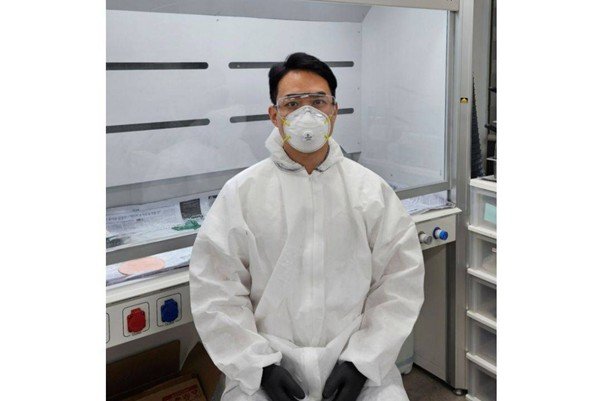
Tae-jun Kim, CEO of RAVEN Materials / source= RAVEN Materials
Amid this shift, Black Titanium Dioxide (Black TiO₂), first reported in academia in 2011, is gaining significant attention. This material is not only used as a next-generation black pigment (a black particulate colorant insoluble in water or oil) but also as a photocatalyst (a substance that reacts to light, breaking down harmful materials) by absorbing visible light from indoor lighting or sunlight. With functionalities including air and water purification, hydrogen production, and self-cleaning, it is a cutting-edge new material with applications across various advanced industries such as solar cells, displays, semiconductors, batteries, and defense.
RAVEN Materials is a chemical materials deep-tech startup dedicated to developing Black TiO₂ manufacturing technology. CEO Tae-jun Kim commercialized the material after discovering it during his time gaining experience in overseas sales. Starting with R&D on catalytic materials for air purification, the company has continuously refined its technology, culminating in the current development of powdered Black TiO₂ products.
Strong Self-Cleaning Catalytic Function with Visible Light Absorption
The application market for Black TiO₂ is broadly divided into two areas.
The first is the black pigment market, capitalizing on its property of absorbing visible light. This material is particularly garnering interest in the defense sector for stealth military equipment, like missiles, where absorbing light is crucial to evade radar detection. It is also used as a black material for OLED displays.
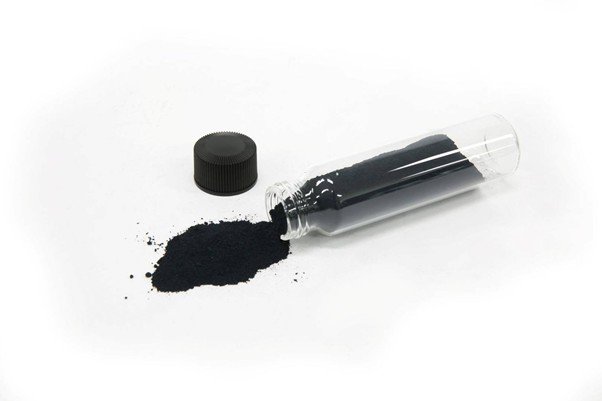
Black TiO₂ / source=RAVEN Materials
• RAVEN Materials is currently validating the performance of its black material for OLED displays with a major German chemical conglomerate company, and a Korean electronics giant company
• Simultaneously, it is undergoing testing with Finland’s company as a next-generation black pigment for defense applications.
The second area is the visible light photocatalyst market. When exposed to visible light, Black TiO₂ generates active oxygen species (hydroxyl radicals) on its surface, which decompose organic matter, bacteria, and other contaminants. This characteristic makes it valuable for air and water purification, hydrogen production, and improving solar cell efficiency.
Furthermore, the material possesses strong superhydrophilic properties (a high affinity for water), allowing surface contaminants to be easily washed away by mere rainwater or humidity.
This enables the creation of self-cleaning exterior materials—coatings applied to building glass facades or architectural finishes that remain pristine simply through exposure to sunlight.
It is also applicable to automobile window films, solar panels, and ship or yacht hulls. RAVEN Materials applied the material to internal filters of a building ventilation unit for a Korean construction firm, Company H, demonstrating its ability to remove over 90% of nitrogen oxides (NOx), sulfur oxides (SOx), bacteria, and viruses using only visible light LED illumination.
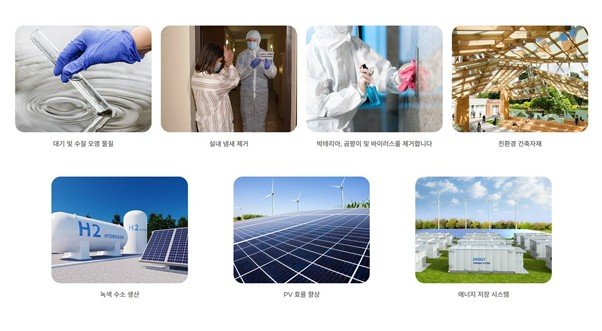
Black TiO₂ enables the implementation of self-cleaning exterior materials by coating surfaces like glass curtain walls and architectural finishes / source=RAVEN Materials
In the photocatalyst domain, Black TiO₂ is hailed as an innovative alternative for the ESG era, where environmental regulations are tightening. Conventional air purification technologies—such as UV, plasma, ozone, and general photocatalysts—suffer from high power consumption, high import dependency on core materials, or substantial costs. Kim emphasizes, "The high efficiency of the visible light photocatalyst, which utilizes sunlight and indoor lighting, allows us to reduce power loss by about 40 times and lower the necessary material cost by approximately 41 times."
1,300 Times More Cost-Effective Than Competitors
RAVEN Materials' greatest differentiator lies in its economic feasibility. Kim stated, "Currently, Black TiO₂ is produced by only two companies globally—Japan's Mitsubishi and the US-based ACS Materials—but they were limited to selling small quantities at a high price due to the lack of commercialization technology."
He proudly added, "RAVEN Materials has achieved production cost savings through proprietary process development, delivering a purity of over 99% at a price 1,300 times cheaper than our competitors."
Kim revealed that this achievement was the result of three years of persistent research. "RAVEN Materials secured over 3,000 research data points, precisely controlling 33 variables across the pre-treatment, heat treatment, and post-treatment stages," he explained.
"These variables are intricately intertwined; even a slight deviation in one can prevent the material from turning black. The success factor was our ability, as a startup, to focus solely on mastering this technology." The company's early experience in developing air quality monitoring software also proved beneficial, allowing for precise analysis based on data acquired while monitoring experimental conditions.
Furthermore, RAVEN Materials holds proprietary technology to precisely control the degree of oxygen defects during the synthesis of Black TiO₂. Building on this, the company is pursuing the development of various colored titanium oxides. Kim noted, "Depending on the oxygen defect concentration, we can manufacture powders in various colors, including black, gray, and blue. Our goal is to expand applications by utilizing the different functionalities each color provides."
Simultaneous Technical Validation with 26 Global Corporations
Established in 2020, RAVEN Materials is leveraging the Black TiO₂ developed over three years to aggressively target the global market.
• The company is currently undergoing technical validation for commercialization with 26 global companies across 6-7 countries, including Japan, Luxembourg, the United States, France, and Spain.
• To transition its product from a Technology Readiness Level (TRL) 7 to the TRL 9 commercialization stage, it is navigating country-specific regulatory and certification procedures with local partners.
The firm plans to establish its production system by June of next year, aiming for full-scale commercialization in the second half of the year and targeting 5 billion Korean Won (approximately $3.8$ million USD) in revenue for the next year.
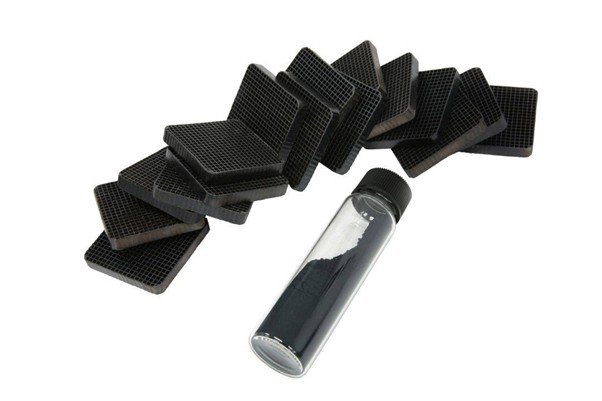
Black TiO₂ / source=RAVEN Materials
A key technical goal for RAVEN Materials is to maximize material reliability by securing 99% reproducibility (the ability to consistently manufacture under the same conditions) and boosting purity from the current 99% to 99.9% by next year. Kim stressed, "In the chemical and materials sectors, even impurities less than 1% can critically impact performance. Therefore, increasing purity by $0.9$ percentage points is a crucial task, akin to craftsmanship, that earns recognition."
RAVEN Materials' growth has been supported by the Seoul Center for Creative Economy & Innovation (CCEI). Through Seoul CCEI's network, the company participated in the 'ILS (Innovation Leadership Summit) Tokyo,' Asia's largest corporate and CVC summit. It was selected as one of the Global Top 100 companies and is simultaneously being reviewed by major Japanese investors. Kim expressed his gratitude, saying, "The opportunities provided through Seoul CCEI's business guidance have led to great results."
Scaling Up with Automated Continuous Process, Targeting 2029 IPO
RAVEN Materials is planning for mid-to-long-term growth, aiming for an Initial Public Offering (IPO) in 2029. The immediate strategy is to diversify its business across various application industries. Kim estimates the annual global visible light photocatalyst and black pigment market to be about 13 million tons. He articulated a vision to supply 10% of this, 1.3 million tons, through mass production process investment.
source=RAVEN Materials
"The biggest challenge for this is scale-up," said Kim. "We need to significantly increase the expected monthly production volume of 2.2 tons starting in 2026." He projected, "We plan to achieve 24-hour continuous operation by introducing AI and robotics. Robotic automation equipment is already partially implemented in the pre-treatment process, and we aim to establish a fully automated production process within five years. This will enable mass production."
Finally, he concluded, "I believe there are currently no chemical or materials Unicorns (unlisted companies valued over $1 billion) in Korea. We aim to become a new materials Unicorn that dominates global production and distribution, moving beyond the domestic market."
By Ye-ji Kim (yj@itdonga.com)








 About Dong-A Ilbo