

Court rulings hinder recovery of Daejang-dong funds
Court rulings hinder recovery of Daejang-dong funds
Posted November. 18, 2025 08:34,
Updated November. 18, 2025 08:34
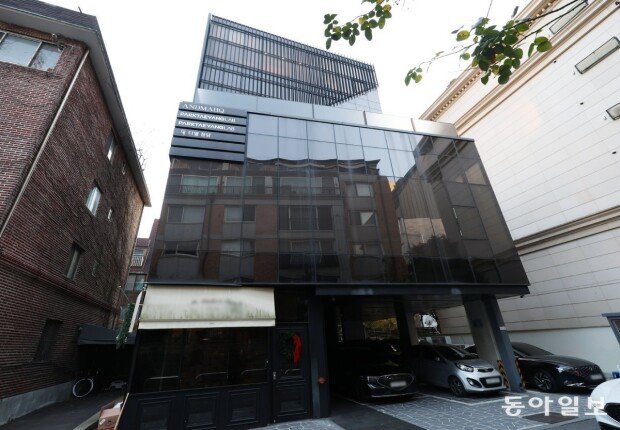
Nam Wook, a lawyer and a key defendant in the Daejang-dong development favoritism scandal, recently listed a plot of land he effectively owns in Yeoksam-dong, Gangnam District, Seoul, for about 50 billion won. Prosecutors had requested a confiscation preservation order on the property three years ago, but the court initially rejected it.
According to legal sources on Nov. 17, prosecutors filed the preservation request in December 2021 to prevent Nam from selling the Yeoksam-dong land, which they suspected had been acquired with criminal proceeds. Confiscation preservation is a measure that prevents property suspected of being obtained illegally from being sold or otherwise disposed of. The court initially dismissed the request, citing ownership issues, including Nam’s use of a trust company to purchase the land. Prosecutors later filed a new request to preserve the trust rights between Nam and the trust company, which was approved in 2022. While the land itself is not under a preservation order, the trust rights tied to the property are restricted by the state, making it impossible for Nam to sell or dispose of the land immediately.
Recently, Nam requested the lifting of a preservation order on a building he owns in Cheongdam-dong, Gangnam District. If he files a similar request for the trust rights on the Yeoksam-dong property, it may be difficult to block. Prosecutors had previously sought a total confiscation of 781.4 billion won from Nam and other members of the Daejang-dong group, including 101 billion won from Nam. However, the first-instance court set Nam’s confiscation at zero, and prosecutors later withdrew their appeal, effectively making confiscation impossible.
Under South Korea’s criminal procedure law, higher penalties or confiscation cannot be imposed after a lower court ruling, in line with the principle of prohibiting disadvantageous changes. Prosecutors are now reviewing whether confiscation of Nam is permanently impossible and whether the preservation order on his property should be lifted. Legal observers say there is little prosecutors can do to block Nam’s request, given that the appeal was abandoned.
The concern is that Nam’s efforts to lift the preservation order could prompt other defendants to liquidate criminal proceeds. If that occurs, recovering more than 700 billion won in illicit profits would become even more difficult. Prosecutors estimate that if the defendants sell assets immediately after the preservation order is lifted, seizing the roughly 740 billion won in criminal gains would be practically impossible.
Cheonhwa-dong 1 to 3, companies controlled by the family of Kim Man-bae, the major shareholder of Hwacheon Daeyu Asset Management, are reported to have purchased several properties. These include a townhouse in Bundang, Seongnam, Gyeonggi Province, valued at about 6.2 billion won; the former residence of President Yoon Suk-yeol’s father in Seodaemun District, Seoul, valued at about 1.9 billion won; a building in Jungnang District, Seoul, valued at about 9 billion won; and a detached house in Yangcheon District, Seoul, valued at about 2.3 billion won. Prosecutors had sought approximately 611.1 billion won in confiscation for Kim, but the first-instance court ordered only about 42.8 billion won.
Jeong Yeong-hak, an accountant and owner of Cheonhwa-dong 5, purchased a building in Sinsa-dong in 2020 for about 17.3 billion won. Prosecutors had sought approximately 64.6 billion won in confiscation from Jeong, but the first-instance court set the amount at zero.
최미송기자 cms@donga.com


![[단독]조부 살해 20대女 “피 엄청 많이…빨리 와주세요” 119 신고](https://dimg.donga.com/c/138/175/90/1/wps/NEWS/IMAGE/2026/05/22/133978390.1.jpg)





 About Dong-A Ilbo