

Ancient Gaya sword reveals insights into political era
Ancient Gaya sword reveals insights into political era
Posted November. 18, 2025 08:33,
Updated November. 18, 2025 08:33
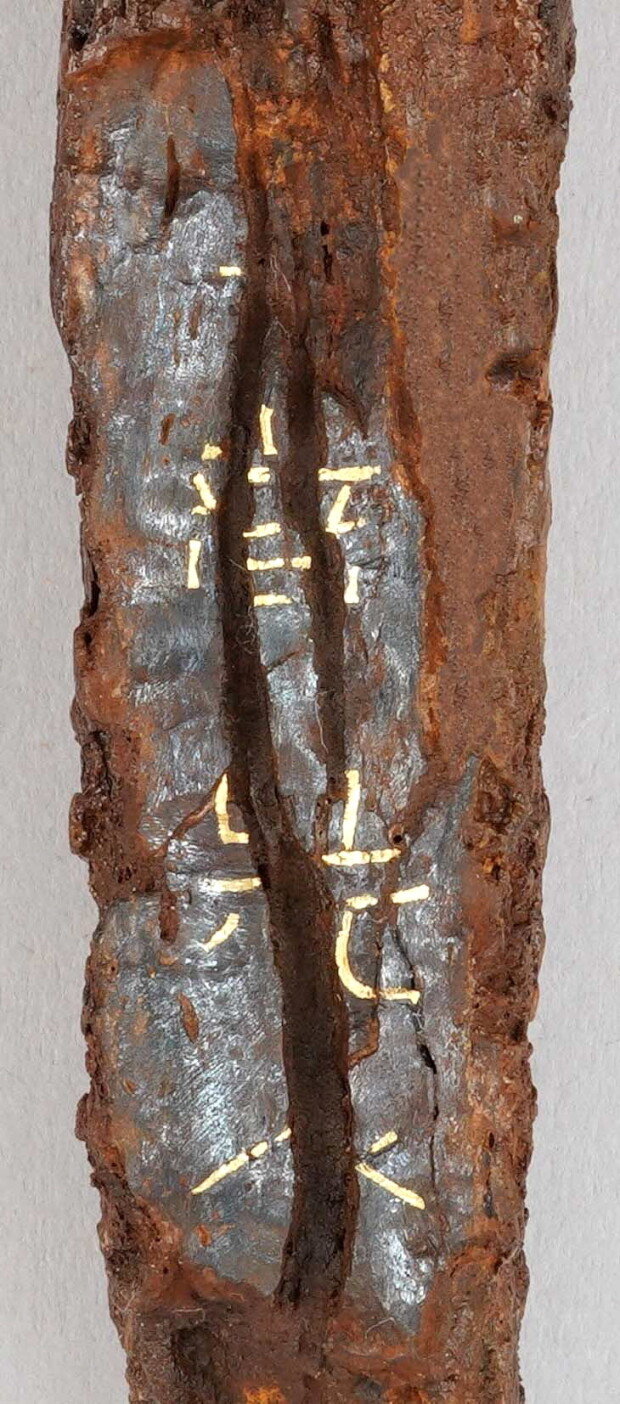
Characters engraved on a large sword unearthed from a 5th- to 6th-century tomb of the Gaya ruling class have been newly revealed through computed tomography scanning.
The Gimhae National Museum said on Nov. 17 that a reexamination of the inlaid inscription sword, or sanggam-myeongmun-daedo, recovered from Tomb No. 11 in Gyodong, Changnyeong, South Gyeongsang Province, confirmed that the gold-thread inscription reads “上[部]先人貴常刀,” pronounced “Sangbu Seonin Gwisang Do.” The sword’s surface features grooves filled with thread to form the characters.
This marks the first clear reading of the sword’s inscription since its initial examination in 1990, 35 years ago. The characters, measuring 5 to 8 millimeters, were intricately carved, and significant portions had deteriorated over time, prompting long-standing debates over their meaning.
The museum said the first character is confirmed as “上,” while the sixth character is likely “常.” Analysis suggests the second character was originally “部,” though part of it has been lost. Jeon Hyo-su, a museum curator, said the inscription could be interpreted as indicating the sword belonged to a person named Gwisang, who held the rank of Seonin under the jurisdiction of Sangbu in the Goguryeo region. He added that the sword may offer insights into the political circumstances of the fifth century, when King Gwanggaeto of Goguryeo launched campaigns in the southern Korean Peninsula.
Only three inlaid-inscription swords from the Three Kingdoms period, including this one, are known to survive today.
이지윤기자 leemail@donga.com








 About Dong-A Ilbo