

Studio Popcorn Innovates the animation production process with AI technology.
Studio Popcorn Innovates the animation production process with AI technology.
Posted November. 13, 2025 16:26,
- Studio Popcorn is revolutionizing 2D animation production by integrating generative AI, which automates labor-intensive tasks and significantly shortens production time, allowing creators to focus more on storytelling and direction.
- The company has formed a technical collaboration with to utilize advanced AI tools, aiming to build an AI-driven animation ecosystem and expand into education and international markets.
- Despite challenges in technology refinement and investment, is accelerating its business with original AI-based IPs and leveraging government support to grow into a leading 'AI content tech' company.
Generative Artificial Intelligence (AI) technology has transformed the content development landscape. It automates repetitive tasks such as background generation and motion correction, and assists in story creation. Where 3D CG technology once dramatically increased content production efficiency, generative AI has now taken its place. This allows creators to dedicate more time to creative tasks like storytelling and direction.
The animation industry has been active in its adoption of AI. This is due to its key advantage: completing tasks that once required hundreds of people working for months with a small team in a fraction of the time. "Twins Hinahima," which aired on Japanese terrestrial television in March 2025, garnered attention for utilizing AI in 95% of its entire production process. Global animation studios, including Pixar and Disney, are also investing heavily in AI technology development.
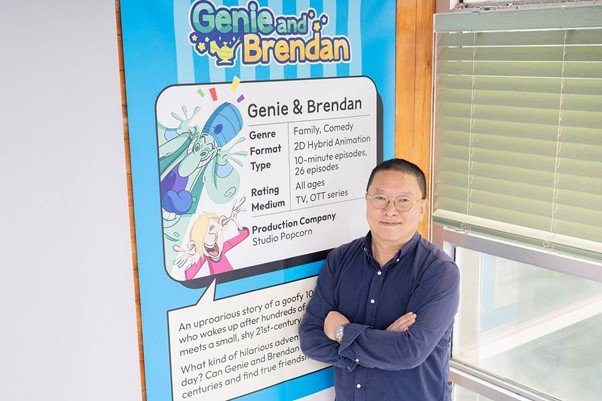
Content startup ‘Studio Popcorn’ has integrated generative AI into its animation development process. The plan is to enhance both production efficiency and artistic quality by combining traditional production methods with generative AI. We met with Studio Popcorn CEO Juno Hwang to discuss the future of AI in animation.
A 25-Year Veteran Adds AI Wings to Deep Know-How
"In the past, creating a single 20-minute 2D animation, like 'Tom and Jerry,' required 30,000 to 40,000 drawings," said Hwang. "The production period alone took a minimum of 15 to 20 weeks, and it could take up to five years from planning to broadcast. While this process inevitably demands significant time and manpower, it is ill-suited to the Korean market, which typically operates on limited budgets. I founded Studio Popcorn believing that introducing AI for repetitive tasks could revolutionize the production environment."
For 25 years, Hwang has battled the inefficiencies of the 2D animation industry. The solution he focused on was 'digital transformation.' He first attempted a digital transformation in animation production in 2012, but the endeavor was not smooth; it was too far ahead of its time. While he foresaw the future, the industry was still drawing on paper.
The opportunity arrived with the COVID-19 pandemic. As social distancing made remote work mandatory, the traditional paper-based methods naturally shifted to digital. "In the past, animation was produced by drawing on paper, frame by frame," Hwang stated. "The pandemic universalized the digital method of working from home with tablets. Currently, over 80-90% of the domestic industry operates in a paperless environment."
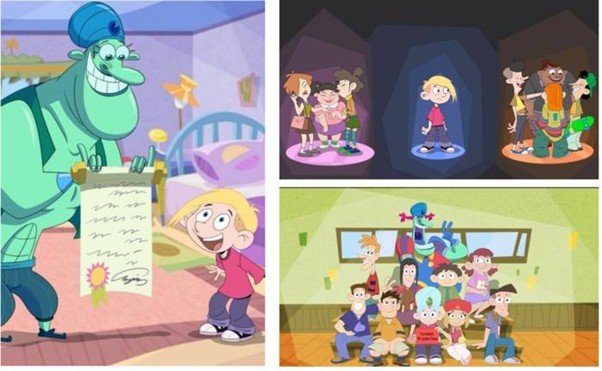
Studio Popcorn's core technology is the 'cut-out' production method, where a character's joints are moved to create action. It is a 2D animation technique, similar to a paper-puppet show, where a 'skeleton' is embedded in each joint (a process called 'rigging') and then manipulated with a mouse. "Most Disney and other cartoon animations use this method," Hwang explained. "Work that used to be done by multiple teams, from layout to coloring, can now be handled by one person. The advantage is that while production staff is reduced, the production period is shortened to just five to eight weeks."
Studio Popcorn combined this cut-out animation technology with AI. A particularly labor-intensive task in animation is drawing the intermediate motions between keyframes, known as 'interpolation' or 'in-betweening.' This is simple to implement in 3D animation but notoriously tricky in 2D. Studio Popcorn automated this process using AI, further reducing the production period.
Hwang stated that since 2024, they have been building a library of prompts necessary to implement interpolation through AI learning. "While it still requires a stabilization process, this shortens the 2D animation production period by an average of two-thirds," he noted. This also allows for the optimization of production staff.
Forging Alliances: The 'Expert User' Strategy
"In the era of generative AI, a small to mid-sized production company like Studio Popcorn cannot realistically develop its own large-scale model, like OpenAI's Sora," Hwang said. "Our strategy is not to be a developer, but to become an 'Expert User'—someone who utilizes existing AI tools better than anyone else."
While establishing its initial AI development environment, Studio Popcorn tested various domestic and international animation tools. However, they proved difficult to use in practice due to limitations in image quality and file size. During this period of trial and error, they encountered the AI tools from Mopic, a company that creates content creation tools for animation and live-action. Studio Popcorn expanded its use of Mopic after comprehensively evaluating its user-friendliness and the quality of its output.
By May 2025, the relationship between Studio Popcorn and Mopic had evolved into a full-fledged technical collaboration. "We contacted Mopic directly to propose a collaboration," said Hwang. "I predicted we could create great synergy if Studio Popcorn handled planning and post-production while Mopic supported the AI tool technology." This close technical collaboration led to business expansion: Studio Popcorn secured the domestic distribution license for Mopic's AI tools.
Leveraging the Mopic distribution license, Studio Popcorn is now working to build an AI animation development ecosystem. Discussions are underway to introduce Mopic's tools into the regular curriculum of university animation departments, including those at Dongyang University and Honam University. "The goal is for animation students to create their own works using Mopic's AI tools," Hwang stated. "We also plan to host university collaborations and animation contests."
Challenges: Technology Refinement and Securing Investment
For Studio Popcorn, which aims to become a leading AI content tech company, the main challenges are technology refinement and securing investment.
First, technological refinement involves perfecting the interpolation technology. Based on the fact that an image is a collection of pixels (dots), they are concentrating on developing AI that can track the movement of these pixels. Once completed, this technology is expected to become Studio Popcorn's core differentiator.
However, technology refinement requires capital. The problem is that securing investment in the animation sector is difficult. "Frankly, investments in small-scale animation companies in Korea are almost non-existent," Hwang said. "I believe this is because investors need to recoup their costs long-term, and with animation, that timeline is often unclear and protracted."
To solve these challenges, Studio Popcorn has adopted a two-pronged strategy. First, secure a stable cash flow through traditional outsourcing, taking on projects from the United States and Japan. Second, develop its own AI-based intellectual property (IP).
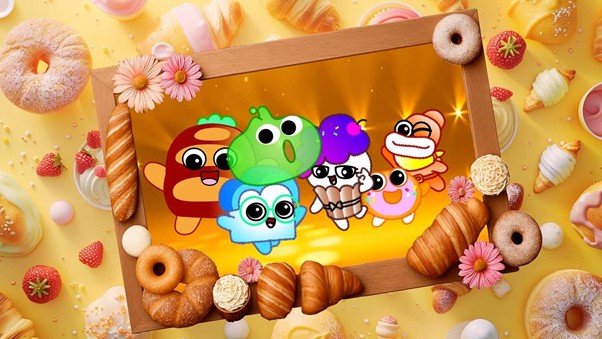
Studio Popcorn is accelerating business related to its AI-developed animation, "Mongle Mongle Bakery." They are producing various merchandise featuring the characters, such as keychains, MagSafe accessories, and stickers. Crowdfunding is also in preparation. The company plans to link a Naver Smart Store with its YouTube channel to drive sales. Hwang explained that they are building character recognition by exposing the public to short-form videos.
Additionally, the company plans to solve R&D cost issues by establishing a branch in the AI Innovation City promoted by Gwangju Metropolitan City, utilizing its data center infrastructure and linking up with government initiatives like the AI Voucher Program.
Growing into an 'AI Content Tech' Company
Studio Popcorn plans to achieve tangible results with its AI-based TV animation, "Mongle Mongle Bakery." An original IP, it tells the story of a bakery that is ordinary by day, but at night, 'yeast spirits' emerge to bake bread. It is a 5-minute animation, but over 80% of it—including backgrounds, music, and sound effects, excluding the characters and scenario—was produced with AI. Studio Popcorn aims to release two works by the end of 2025, with the goal of airing a 26-episode series in 2026.
In November 2025, they will participate in the Content IP Market at COEX to promote "Mongle Mongle Bakery" and their AI animation production technology. They also plan to enter overseas markets, including Singapore, Vietnam, and Beijing, to explore collaboration with local companies.
Behind Studio Popcorn's relentless challenges was the support of the Seoul National University of Science and Technology (SeoulTech) Startup Support Group. Studio Popcorn, a beneficiary of the Early Stage Startup Package, participated in various programs including overseas IR (Investor Relations) pitching, networking with related companies, and investment mentoring. The Dubai IR program, coordinated by SeoulTech and the Korea Institute of Startup & Entrepreneurship Development (KISED), was a turning point for growth. At this event, Studio Popcorn met with a Pakistani company and Uzbekistan government officials to discuss market entry.
"'SeoulTech's Early Stage Startup Package was a tremendous help to our company's growth,' said Hwang. 'I also remember their meticulous attention. I requested to meet investors who understood the animation industry, and they didn't just brush it off—they actually arranged a meeting with a relevant firm. Thanks to this detailed support, Studio Popcorn was able to achieve stable growth.'"
"There are many projects we couldn't release in the past due to cost issues," Hwang said. "Now that we have gained the powerful weapon of AI, we will open a new chapter in the K-Animation market with our own planning and stories."
Studio Popcorn dreams of expanding from an animation production house into an 'AI content tech' company. This signifies a leap forward to becoming a company capable of original planning and production, all based on AI animation technology. To achieve this, Hwang is launching projects to commercialize student ideas and developing animation targeted at niche markets.
"We will strive to make Studio Popcorn a leading 2D animation technology company that expertly utilizes AI," Hwang concluded.
By Hyung-seok Kang (redbk@itdonga.com)
- The company has formed a technical collaboration with to utilize advanced AI tools, aiming to build an AI-driven animation ecosystem and expand into education and international markets.
- Despite challenges in technology refinement and investment, is accelerating its business with original AI-based IPs and leveraging government support to grow into a leading 'AI content tech' company.
Generative Artificial Intelligence (AI) technology has transformed the content development landscape. It automates repetitive tasks such as background generation and motion correction, and assists in story creation. Where 3D CG technology once dramatically increased content production efficiency, generative AI has now taken its place. This allows creators to dedicate more time to creative tasks like storytelling and direction.
The animation industry has been active in its adoption of AI. This is due to its key advantage: completing tasks that once required hundreds of people working for months with a small team in a fraction of the time. "Twins Hinahima," which aired on Japanese terrestrial television in March 2025, garnered attention for utilizing AI in 95% of its entire production process. Global animation studios, including Pixar and Disney, are also investing heavily in AI technology development.
Juno Hwang, CEO of Studio Popcorn / source=IT dongaA
Content startup ‘Studio Popcorn’ has integrated generative AI into its animation development process. The plan is to enhance both production efficiency and artistic quality by combining traditional production methods with generative AI. We met with Studio Popcorn CEO Juno Hwang to discuss the future of AI in animation.
A 25-Year Veteran Adds AI Wings to Deep Know-How
"In the past, creating a single 20-minute 2D animation, like 'Tom and Jerry,' required 30,000 to 40,000 drawings," said Hwang. "The production period alone took a minimum of 15 to 20 weeks, and it could take up to five years from planning to broadcast. While this process inevitably demands significant time and manpower, it is ill-suited to the Korean market, which typically operates on limited budgets. I founded Studio Popcorn believing that introducing AI for repetitive tasks could revolutionize the production environment."
For 25 years, Hwang has battled the inefficiencies of the 2D animation industry. The solution he focused on was 'digital transformation.' He first attempted a digital transformation in animation production in 2012, but the endeavor was not smooth; it was too far ahead of its time. While he foresaw the future, the industry was still drawing on paper.
The opportunity arrived with the COVID-19 pandemic. As social distancing made remote work mandatory, the traditional paper-based methods naturally shifted to digital. "In the past, animation was produced by drawing on paper, frame by frame," Hwang stated. "The pandemic universalized the digital method of working from home with tablets. Currently, over 80-90% of the domestic industry operates in a paperless environment."
Studio Popcorn introduced generative AI into the animation production process. The image is ‘Genie and Brenden’, produced by Studio Popcorn / source=Studio Popcorn
Studio Popcorn's core technology is the 'cut-out' production method, where a character's joints are moved to create action. It is a 2D animation technique, similar to a paper-puppet show, where a 'skeleton' is embedded in each joint (a process called 'rigging') and then manipulated with a mouse. "Most Disney and other cartoon animations use this method," Hwang explained. "Work that used to be done by multiple teams, from layout to coloring, can now be handled by one person. The advantage is that while production staff is reduced, the production period is shortened to just five to eight weeks."
Studio Popcorn combined this cut-out animation technology with AI. A particularly labor-intensive task in animation is drawing the intermediate motions between keyframes, known as 'interpolation' or 'in-betweening.' This is simple to implement in 3D animation but notoriously tricky in 2D. Studio Popcorn automated this process using AI, further reducing the production period.
Hwang stated that since 2024, they have been building a library of prompts necessary to implement interpolation through AI learning. "While it still requires a stabilization process, this shortens the 2D animation production period by an average of two-thirds," he noted. This also allows for the optimization of production staff.
Forging Alliances: The 'Expert User' Strategy
"In the era of generative AI, a small to mid-sized production company like Studio Popcorn cannot realistically develop its own large-scale model, like OpenAI's Sora," Hwang said. "Our strategy is not to be a developer, but to become an 'Expert User'—someone who utilizes existing AI tools better than anyone else."
While establishing its initial AI development environment, Studio Popcorn tested various domestic and international animation tools. However, they proved difficult to use in practice due to limitations in image quality and file size. During this period of trial and error, they encountered the AI tools from Mopic, a company that creates content creation tools for animation and live-action. Studio Popcorn expanded its use of Mopic after comprehensively evaluating its user-friendliness and the quality of its output.
By May 2025, the relationship between Studio Popcorn and Mopic had evolved into a full-fledged technical collaboration. "We contacted Mopic directly to propose a collaboration," said Hwang. "I predicted we could create great synergy if Studio Popcorn handled planning and post-production while Mopic supported the AI tool technology." This close technical collaboration led to business expansion: Studio Popcorn secured the domestic distribution license for Mopic's AI tools.
Leveraging the Mopic distribution license, Studio Popcorn is now working to build an AI animation development ecosystem. Discussions are underway to introduce Mopic's tools into the regular curriculum of university animation departments, including those at Dongyang University and Honam University. "The goal is for animation students to create their own works using Mopic's AI tools," Hwang stated. "We also plan to host university collaborations and animation contests."
Challenges: Technology Refinement and Securing Investment
For Studio Popcorn, which aims to become a leading AI content tech company, the main challenges are technology refinement and securing investment.
First, technological refinement involves perfecting the interpolation technology. Based on the fact that an image is a collection of pixels (dots), they are concentrating on developing AI that can track the movement of these pixels. Once completed, this technology is expected to become Studio Popcorn's core differentiator.
However, technology refinement requires capital. The problem is that securing investment in the animation sector is difficult. "Frankly, investments in small-scale animation companies in Korea are almost non-existent," Hwang said. "I believe this is because investors need to recoup their costs long-term, and with animation, that timeline is often unclear and protracted."
To solve these challenges, Studio Popcorn has adopted a two-pronged strategy. First, secure a stable cash flow through traditional outsourcing, taking on projects from the United States and Japan. Second, develop its own AI-based intellectual property (IP).
Studio Popcorn is accelerating business related to its AI-developed animation, "Mongle Mongle Bakery." They are producing various merchandise featuring the characters, such as keychains, MagSafe accessories, and stickers. Crowdfunding is also in preparation. The company plans to link a Naver Smart Store with its YouTube channel to drive sales. Hwang explained that they are building character recognition by exposing the public to short-form videos.
Anime developed by Studio Popcorn with AI, ‘Mongle Mongle Bakery’ / source=Studio Popcorn
Additionally, the company plans to solve R&D cost issues by establishing a branch in the AI Innovation City promoted by Gwangju Metropolitan City, utilizing its data center infrastructure and linking up with government initiatives like the AI Voucher Program.
Growing into an 'AI Content Tech' Company
Studio Popcorn plans to achieve tangible results with its AI-based TV animation, "Mongle Mongle Bakery." An original IP, it tells the story of a bakery that is ordinary by day, but at night, 'yeast spirits' emerge to bake bread. It is a 5-minute animation, but over 80% of it—including backgrounds, music, and sound effects, excluding the characters and scenario—was produced with AI. Studio Popcorn aims to release two works by the end of 2025, with the goal of airing a 26-episode series in 2026.
In November 2025, they will participate in the Content IP Market at COEX to promote "Mongle Mongle Bakery" and their AI animation production technology. They also plan to enter overseas markets, including Singapore, Vietnam, and Beijing, to explore collaboration with local companies.
Behind Studio Popcorn's relentless challenges was the support of the Seoul National University of Science and Technology (SeoulTech) Startup Support Group. Studio Popcorn, a beneficiary of the Early Stage Startup Package, participated in various programs including overseas IR (Investor Relations) pitching, networking with related companies, and investment mentoring. The Dubai IR program, coordinated by SeoulTech and the Korea Institute of Startup & Entrepreneurship Development (KISED), was a turning point for growth. At this event, Studio Popcorn met with a Pakistani company and Uzbekistan government officials to discuss market entry.
"'SeoulTech's Early Stage Startup Package was a tremendous help to our company's growth,' said Hwang. 'I also remember their meticulous attention. I requested to meet investors who understood the animation industry, and they didn't just brush it off—they actually arranged a meeting with a relevant firm. Thanks to this detailed support, Studio Popcorn was able to achieve stable growth.'"
"There are many projects we couldn't release in the past due to cost issues," Hwang said. "Now that we have gained the powerful weapon of AI, we will open a new chapter in the K-Animation market with our own planning and stories."
Studio Popcorn dreams of expanding from an animation production house into an 'AI content tech' company. This signifies a leap forward to becoming a company capable of original planning and production, all based on AI animation technology. To achieve this, Hwang is launching projects to commercialize student ideas and developing animation targeted at niche markets.
"We will strive to make Studio Popcorn a leading 2D animation technology company that expertly utilizes AI," Hwang concluded.
By Hyung-seok Kang (redbk@itdonga.com)


![[단독]조부 살해 20대女 “피 엄청 많이…빨리 와주세요” 119 신고](https://dimg.donga.com/c/138/175/90/1/wps/NEWS/IMAGE/2026/05/22/133978390.1.jpg)





 About Dong-A Ilbo