

Manufacturing Job Cuts Threaten Regional Economies in Korea
Manufacturing Job Cuts Threaten Regional Economies in Korea
Posted September. 05, 2025 07:05,
Updated September. 05, 2025 07:05
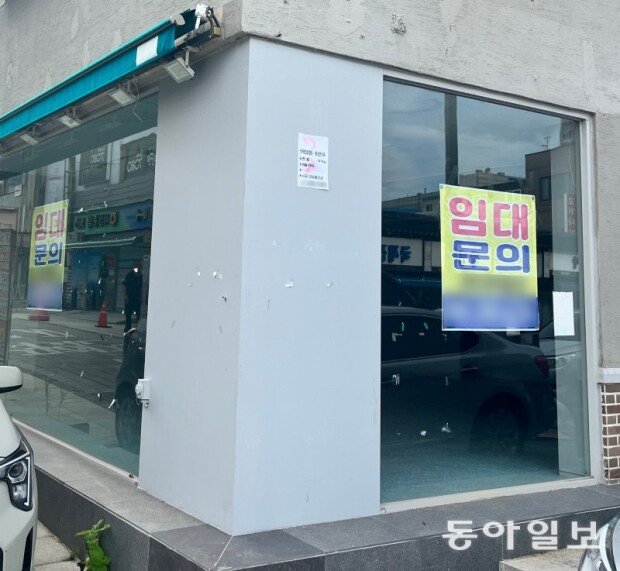
Jobs in South Korea’s traditional manufacturing sector, which has long contributed significantly to domestic employment, are disappearing at a rapid pace. The decline in manufacturing jobs inevitably threatens the regional economies where these production facilities are located. Recently, crises in the petrochemical, display, and steel industries have contributed to prolonged stagnation in regions such as Seosan in South Chungcheong, Yeosu in South Jeolla, and Pohang in North Gyeongsang. Experts warn that measures are needed to prevent these areas from becoming a “Korean Rust Belt,” echoing the decline of the United States’ former industrial heartlands.
An analysis by The Dong-A Ilbo of financial disclosures and sustainability reports, from 2022 through June 2025, from 10 major companies in the petrochemical, display, and steel sectors shows that their combined workforce fell by about 6,185 employees, or 6.2 percent, over that period. In 2022, when business conditions were favorable, these 10 companies collectively employed 99,492 people, but that number had fallen to 93,307 by the end of June this year.
The companies analyzed include five leading petrochemical firms (LG Chem, Lotte Chemical, Hanwha Solutions, SK Geocentric, and Yeochun NCC), two display manufacturers (Samsung Display and LG Display), and three steelmakers (POSCO, Hyundai Steel, and Dongkuk Steel). These firms were selected based on revenue rankings provided by their respective industry associations. Petrochemical, display, and steel are currently among the sectors facing potential restructuring. In September 2023, Korea Ratings identified these industries as the most vulnerable to market shifts caused by China’s rising self-sufficiency.
When major companies reduce production staff, jobs at their secondary and tertiary suppliers inevitably decline even faster. “Increasing corporate taxes, the Yellow Envelope Act [amendments to the Labor Union and Labor Relations Adjustment Act], and revisions to the Commercial Act are gradually creating an environment that is increasingly challenging for businesses," said Seok Byung-hoon, a professor of economics at Ewha Womans University. "If South Korean companies also move their production facilities to the United States, it could accelerate the hollowing out of domestic manufacturing and increase the likelihood of creating a Korean Rust Belt.”
이민아 omg@donga.com

![‘대포통장 공장’ 통째로 날린 英… 잔가지만 치는 韓[히어로콘텐츠/히든④-上]](https://dimg.donga.com/c/138/175/90/1/wps/NEWS/IMAGE/2026/06/25/134175409.1.jpg)

![“李대통령 만들어줬는데 말 안 듣는다는 게 문조털래유 생각”[정치를 부탁해]](https://dimg.donga.com/c/138/175/90/1/wps/NEWS/IMAGE/2026/06/24/134175928.1.jpg)
![[단독]광주-전남 반도체 단지에… SK, 신재생 투자도 검토](https://dimg.donga.com/c/138/175/90/1/wps/NEWS/IMAGE/2026/06/23/134162317.1.jpg)



 About Dong-A Ilbo