

Phyxup is using AI to set a new standard for remote physical therapy in the U.S.
Phyxup is using AI to set a new standard for remote physical therapy in the U.S.
Posted August. 11, 2025 10:31,
Updated August. 13, 2025 11:08
- Phyxup Health, a Korean startup, is revolutionizing remote physical therapy in
the U.S. with its AI-powered B2B SaaS platform that automates and
personalizes treatment plans.
- The platform addresses the limitations of conventional remote care by analyzing
patient data and recommending optimal treatments, while also easing the
administrative burden on clinicians.
- Since its launch, Phyxup Health has secured partnerships with 16 U.S. clinics
and is continuously refining its AI model to enhance its effectiveness.
The U.S. remote therapy market, valued at $81 billion in 2024 and projected to hit $94.3 billion by 2025 according to Global Market Insights, has become a fierce battleground for innovation. Spurred by a 766% surge in telehealth use since the pandemic, a Korean startup, Phyxup Health, is making a bold entrance with a new paradigm for remote rehabilitation.
Phyxup Health has developed a B2B SaaS platform that uses AI to automate and personalize the physical therapy process. The software precisely analyzes patient data and recommends optimal treatment plans to clinicians, aiming to solve the limitations of conventional remote care.
The idea was born from firsthand experience. Sang-won Lim, CEO of Phyxup Health, witnessed the struggles of patients while working as a physical therapist at a Harvard Medical School-affiliated hospital.
“Rehabilitation therapy often requires patients to visit a clinic once or twice a week,” Lim explained. “But it’s incredibly difficult for someone in pain to drive 30 minutes or more to a hospital. I saw a clear opportunity to bridge the gap between clinics and patients.”
Lim identified a critical flaw in the system: in-person visits were a physical burden, while video-conferencing platforms lacked therapeutic efficacy. A major hurdle was that remote services were often not covered by private insurance.
The landscape shifted dramatically in 2022 when the U.S. Centers for Medicare & Medicaid Services (CMS) established new reimbursement codes for Remote Therapeutic Monitoring (RTM). This opened the door for private insurance coverage and created a viable market for startups like Phyxup Health, which had previously struggled with a clear revenue model.
AI-Powered Insights Beyond Raw Data
Phyxup Health’s platform allows clinicians to send customized exercise plans and educational materials to their patients. It then collects a range of data, including pain level changes, step counts, and walking speed.
“Typical RTM services just provide raw data,” Lim noted. “But our AI technology is designed to analyze a patient’s condition, predict their prognosis three months out, and even recommend the most effective course of treatment.”
A key differentiator for Phyxup Health is its ability to automate the administrative burden. The platform automatically organizes treatment data and prepares the necessary documentation for CPT code billing, managing complex requirements such as tracking 16 days of data or 20 minutes of monitoring time. This frees up clinicians to focus on patient care.
The prediction and recommendation model was built upon Lim’s expertise in epidemiology from his time at the Harvard T.H. Chan School of Public Health. The company is continuously refining its proprietary AI model, with the long-term goal of creating a hyper-personalized system that learns each clinician's treatment preferences and patterns.
Gaining Traction and Building Trust
Despite the market's growth, Lim acknowledges that awareness of remote therapy as a formal medical service is still low among U.S. patients. To overcome this and acquire high-quality data for its AI, Phyxup Health is aggressively pursuing partnerships and clients.
After launching its Minimum Viable Product (MVP) in August of last year and going commercial that November, the company has secured 16 U.S. clinics as clients in just eight months. Among them is the prestigious Hebrew Senior Life, a Harvard Medical School affiliate. Through these clients, the company has already secured data from about 700 patients. A crucial research partnership with the Marcus Institute for Aging Research, also part of Harvard, is set to further enhance the AI's sophistication.
Additionally, Phyxup Health is in talks with four U.S.-based Electronic Medical Record (EMR) software companies to integrate its solution. In Korea, the company is finalizing its seed investment round and has been selected for the Tech Incubator Program for startup Korea (TIPS) program, a government initiative to support promising startups.
“The hardest part of building a health-tech startup is acquiring your first customers,” Lim said. “My experience and network from the Harvard-affiliated hospital were instrumental. The research partnership with Hebrew Senior Life, in particular, gave us the clinical data and credibility we needed to get off the ground.”
Phyxup Health is also receiving support from the ‘AWS Jungle’ Program, a joint initiative by Seoul National University of Science and Technology (SeoulTech) and Amazon Web Services. The program provided a variety of resources, including professional investment mentoring and workshops. A dedicated technical support manager was also assigned to help them effectively navigate the AWS ecosystem.
"As a cloud-based service that handles patient health data, security is crucial, so we were determined to work with AWS," said Lim. "We were fortunate to be selected for the SeoulTech support program. I am confident that the operational and technical insights we've gained through these various support programs will serve as the foundation for our growth."
With a clear goal to ‘set a new standard for the U.S. rehabilitation monitoring market, Phyxup Health is poised for growth. “Our long-term goal is to capture 50% of the U.S. remote therapeutic monitoring market,” Lim stated. “Beyond that, we also want to work to bring these advanced medical services to patients back here in Korea.”
By Hyung-seok Kang (redbk@itdonga.com)
* This article was written with support from Seoul National University of Science and Technology.
the U.S. with its AI-powered B2B SaaS platform that automates and
personalizes treatment plans.
- The platform addresses the limitations of conventional remote care by analyzing
patient data and recommending optimal treatments, while also easing the
administrative burden on clinicians.
- Since its launch, Phyxup Health has secured partnerships with 16 U.S. clinics
and is continuously refining its AI model to enhance its effectiveness.
The U.S. remote therapy market, valued at $81 billion in 2024 and projected to hit $94.3 billion by 2025 according to Global Market Insights, has become a fierce battleground for innovation. Spurred by a 766% surge in telehealth use since the pandemic, a Korean startup, Phyxup Health, is making a bold entrance with a new paradigm for remote rehabilitation.
Phyxup Health has developed a B2B SaaS platform that uses AI to automate and personalize the physical therapy process. The software precisely analyzes patient data and recommends optimal treatment plans to clinicians, aiming to solve the limitations of conventional remote care.
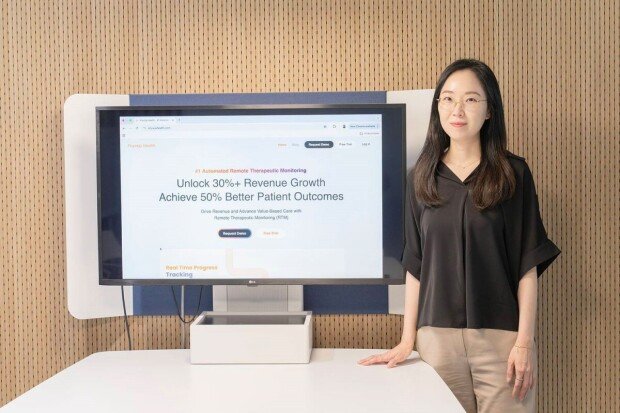
Sang-won Lim, CEO of Phyxup Health / source=IT dongA
The idea was born from firsthand experience. Sang-won Lim, CEO of Phyxup Health, witnessed the struggles of patients while working as a physical therapist at a Harvard Medical School-affiliated hospital.
“Rehabilitation therapy often requires patients to visit a clinic once or twice a week,” Lim explained. “But it’s incredibly difficult for someone in pain to drive 30 minutes or more to a hospital. I saw a clear opportunity to bridge the gap between clinics and patients.”
Lim identified a critical flaw in the system: in-person visits were a physical burden, while video-conferencing platforms lacked therapeutic efficacy. A major hurdle was that remote services were often not covered by private insurance.
The landscape shifted dramatically in 2022 when the U.S. Centers for Medicare & Medicaid Services (CMS) established new reimbursement codes for Remote Therapeutic Monitoring (RTM). This opened the door for private insurance coverage and created a viable market for startups like Phyxup Health, which had previously struggled with a clear revenue model.
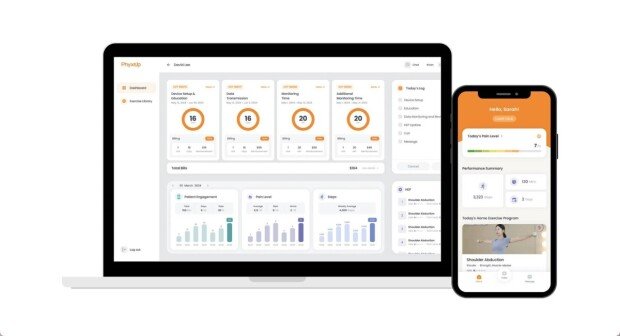
Phyxup Health analyzes the patient's rehabilitation process and helps clinicians make an accurate diagnosis / source= Phyxup Health
AI-Powered Insights Beyond Raw Data
Phyxup Health’s platform allows clinicians to send customized exercise plans and educational materials to their patients. It then collects a range of data, including pain level changes, step counts, and walking speed.
“Typical RTM services just provide raw data,” Lim noted. “But our AI technology is designed to analyze a patient’s condition, predict their prognosis three months out, and even recommend the most effective course of treatment.”
A key differentiator for Phyxup Health is its ability to automate the administrative burden. The platform automatically organizes treatment data and prepares the necessary documentation for CPT code billing, managing complex requirements such as tracking 16 days of data or 20 minutes of monitoring time. This frees up clinicians to focus on patient care.
The prediction and recommendation model was built upon Lim’s expertise in epidemiology from his time at the Harvard T.H. Chan School of Public Health. The company is continuously refining its proprietary AI model, with the long-term goal of creating a hyper-personalized system that learns each clinician's treatment preferences and patterns.
Gaining Traction and Building Trust
Despite the market's growth, Lim acknowledges that awareness of remote therapy as a formal medical service is still low among U.S. patients. To overcome this and acquire high-quality data for its AI, Phyxup Health is aggressively pursuing partnerships and clients.
After launching its Minimum Viable Product (MVP) in August of last year and going commercial that November, the company has secured 16 U.S. clinics as clients in just eight months. Among them is the prestigious Hebrew Senior Life, a Harvard Medical School affiliate. Through these clients, the company has already secured data from about 700 patients. A crucial research partnership with the Marcus Institute for Aging Research, also part of Harvard, is set to further enhance the AI's sophistication.
Additionally, Phyxup Health is in talks with four U.S.-based Electronic Medical Record (EMR) software companies to integrate its solution. In Korea, the company is finalizing its seed investment round and has been selected for the Tech Incubator Program for startup Korea (TIPS) program, a government initiative to support promising startups.
“The hardest part of building a health-tech startup is acquiring your first customers,” Lim said. “My experience and network from the Harvard-affiliated hospital were instrumental. The research partnership with Hebrew Senior Life, in particular, gave us the clinical data and credibility we needed to get off the ground.”
Phyxup Health is also receiving support from the ‘AWS Jungle’ Program, a joint initiative by Seoul National University of Science and Technology (SeoulTech) and Amazon Web Services. The program provided a variety of resources, including professional investment mentoring and workshops. A dedicated technical support manager was also assigned to help them effectively navigate the AWS ecosystem.
"As a cloud-based service that handles patient health data, security is crucial, so we were determined to work with AWS," said Lim. "We were fortunate to be selected for the SeoulTech support program. I am confident that the operational and technical insights we've gained through these various support programs will serve as the foundation for our growth."
With a clear goal to ‘set a new standard for the U.S. rehabilitation monitoring market, Phyxup Health is poised for growth. “Our long-term goal is to capture 50% of the U.S. remote therapeutic monitoring market,” Lim stated. “Beyond that, we also want to work to bring these advanced medical services to patients back here in Korea.”
By Hyung-seok Kang (redbk@itdonga.com)
* This article was written with support from Seoul National University of Science and Technology.



![[단독]양정원 남편에 룸살롱 접대받은 강남서 수사팀장 “자네 부인 잘 끝날거야”](https://dimg.donga.com/c/138/175/90/1/wps/NEWS/IMAGE/2026/06/05/134060265.1.jpg)




 About Dong-A Ilbo