

Busan to host next UNESCO heritage meeting
Busan to host next UNESCO heritage meeting
Posted July. 17, 2025 07:41,
Updated July. 17, 2025 07:41
“Global enthusiasm for Korean content has significantly enhanced the country’s image, which seems to have played an important role in this selection,” said Choi Jae-heon, professor of World Heritage Studies at Konkuk University.
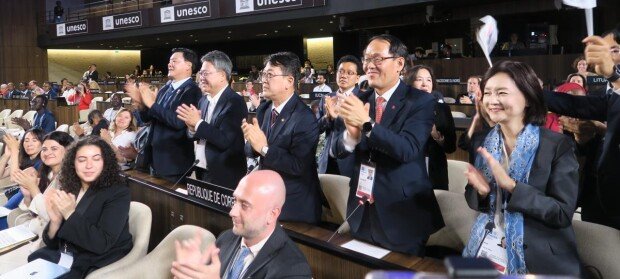
Busan has been officially chosen to host the 48th session of the UNESCO World Heritage Committee in July next year. It will mark the first time South Korea hosts the event since joining the World Heritage Convention in 1988.
The decision was announced on July 15 during a meeting at UNESCO headquarters in Paris, France. The World Heritage Committee’s annual session is the most prominent event in global cultural heritage governance. Representatives from 21 member states, elected from among the 196 parties to the 1972 World Heritage Convention, gather to decide matters such as inscriptions and protection of heritage sites. The host country leads the entire session, coordinates the agenda, and holds the right to speak during deliberations.
South Korea’s most recent World Heritage inscription, the Bangudae Petroglyphs in Ulsan, was finalized at the 47th session of the World Heritage Committee meeting on July 12 in Paris. In Asia, past host cities include Phuket (Thailand, 1994), Kyoto (Japan, 1998), and Suzhou (China, 2004).
According to those in attendance, a general consensus emerged at the Paris meeting not to compete with Busan’s bid. Since last year, several countries have expressed support for Korea, and some, including Vietnam, reportedly withdrew their candidacies in deference to Korea’s interests.
Song In-heon, director of the World Heritage Policy Division at the Cultural Heritage Administration, noted, “Korea’s advanced infrastructure and accessibility for international events received high praise.” He added that UNESCO Director-General Audrey Azoulay personally visited the Korean delegation three days prior to express her support and expectations for the Busan event.
The selection process weighs a country’s heritage profile and its practical ability to host. Because the event attracts around 3,000 participants, including representatives from NGOs and academic experts, it requires significant funding and expertise. For reference, this year’s original host, Bulgaria, withdrew due to budget issues, prompting UNESCO to relocate the session to its Paris headquarters.
One heritage sector official remarked, “Hosting the committee meeting typically costs at least 10 billion won. Korea has had limited opportunities due to late committee membership compared to China and Japan, and challenges in securing funding.”
Beyond cultural matters, hosting the World Heritage Committee also signals international credibility and leadership. Kim Ji-hyun of the Korean National Commission for UNESCO explained, “There have been past hosts with inadequate capacity or facilities, so national credibility is a crucial factor. Korea’s active engagement with UNESCO helped build trust, which contributed to the warm reception of Busan’s bid.”
이지윤 기자 leemail@donga.com



![가장 흔한 ‘무릎 수술’, 하지마라?… 10년 추적 결과 “오히려 더 악화” [노화설계]](https://dimg.donga.com/c/138/175/90/1/wps/NEWS/IMAGE/2026/04/30/133840141.3.jpg)



 About Dong-A Ilbo