

Korean air traffic controllers leave for better pay
Korean air traffic controllers leave for better pay
Posted July. 16, 2025 07:40,
Updated July. 16, 2025 07:40
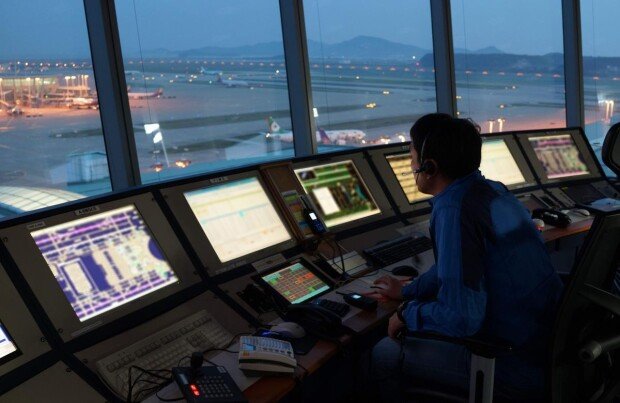
Mr. A, a Korean air traffic controller with 20 years of experience, left his post at an airport in the Seoul metropolitan area in 2024 to take a job in Abu Dhabi in early 2025. He said his annual salary has doubled, helping him better support his children studying in Canada.
Mr. B, another Korean controller, also resigned earlier this year to work in Hong Kong. With his employer covering high housing costs, he estimates his total compensation has increased fivefold.
Air traffic controllers, often regarded as the last line of defense in aviation safety, guide aircraft from control towers, directing takeoffs and landings while preventing collisions and abnormal approaches. In a shift that experts say is highly unusual, more Korean controllers are now leaving for jobs abroad.
According to the labor union of the Ministry of Land, Infrastructure and Transport, at least three to four Korean air traffic controllers have already moved to the UAE or Hong Kong this year. While it has long been common for Korean pilots to join foreign airlines in search of higher pay, it remains rare for controllers, who are national civil servants, to do the same.
Those who have left say the benefits extend beyond financial compensation. Mr. A said he is no longer worried about life after retirement because controllers in Abu Dhabi face no mandatory retirement age. As long as they pass required aviation medical exams, they can work beyond age 60.
Mr. B praised Hong Kong’s advanced training system, which provides support for controllers seeking additional roles, such as aircraft accident investigation. He expressed hope these opportunities will help broaden his career.
Growing interest from Middle Eastern countries, including Saudi Arabia, is adding to the momentum. During the pandemic, many of these countries drastically reduced staffing. Now, with travel demand rebounding, they are rushing to hire experienced controllers who can start immediately. The surge in demand has also lowered English proficiency requirements, making the positions more accessible. Korean controllers, in particular, are attracted to airports in the region similar in scale to Incheon International Airport, which handles about 1,200 flights per day.
Industry officials warn that a significant outflow of Korean controllers could threaten aviation safety at home. According to the Aviation Special Committee under the Korean ministry, the International Civil Aviation Organization (ICAO) recommends a minimum of 550 air traffic controllers for Korea based on its airport network and air traffic volume. However, the current workforce stands at only about 400, well below the recommended level.
Won-Joo Lee takeoff@donga.com


![[단독]노태악, 선관위서 수당 4년간 1.8억 받아…3배 ‘셀프 증액’도](https://dimg.donga.com/c/138/175/90/1/wps/NEWS/IMAGE/2026/06/19/134144622.1.jpg)



 About Dong-A Ilbo