

Lebanon evacuation heightens fears of Iran conflict
Lebanon evacuation heightens fears of Iran conflict
Posted February. 25, 2026 08:12,
Updated February. 25, 2026 08:12
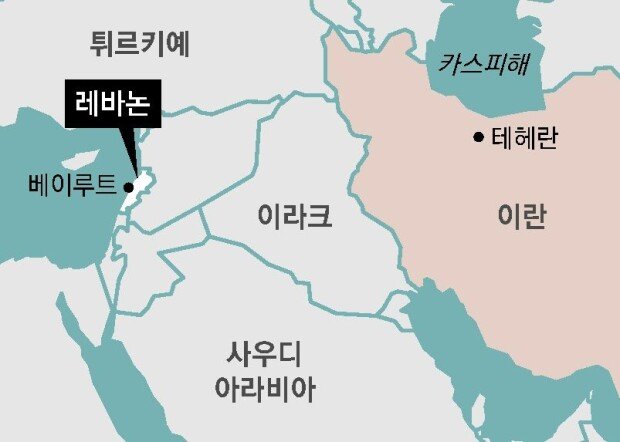
On Feb. 23, the United States ordered the evacuation of diplomats from its embassy in Lebanon, a step that has intensified speculation that U.S. airstrikes on Iran could be imminent. Lebanon is home to the Iran-backed Shiite militant group Hezbollah. Washington issued similar evacuation orders to its embassies in Lebanon and Iraq in June last year ahead of strikes on Iranian nuclear facilities.
According to The Associated Press and The Guardian, the U.S. State Department directed nonessential personnel and their family members at the U.S. Embassy in Beirut to depart the country. An estimated 30 to 50 staff members have already left, while essential personnel remain at their posts.
Lebanon shares a border with Israel, Washington’s closest ally in the Middle East, and the region has seen intermittent military clashes tied to Iran and Hezbollah. Hezbollah is widely blamed for the 1983 bombing of the U.S. Marine barracks in Beirut and the 1984 bombing of a U.S. Embassy annex.
Iran has long provided extensive backing to Hezbollah and other proxy forces across the Middle East. Analysts say that if the United States launches strikes on Iran, Tehran’s regional allies, including Hezbollah in Lebanon, Yemen’s Houthi rebels and the Palestinian militant group Hamas, could retaliate against U.S. military bases and diplomatic missions throughout the region.
The United States has also begun withdrawing troops from northeastern Syria, a move seen in part as an effort to reposition forces in anticipation of potential Iranian retaliation. Reuters reported that U.S. Secretary of State Marco Rubio may postpone a planned visit to Israel this weekend.
Meanwhile, U.S. President Donald Trump dismissed as “fake news” media reports that senior U.S. military officials had voiced caution about a possible strike on Iran. Writing on Truth Social, Trump asserted that the decision-maker is him. He also said that contrary to some reports, Dan Caine, chairman of the Joint Chiefs of Staff, had never indicated he would refuse to carry out a strike on Iran. Trump added that if ordered to proceed, Caine would lead U.S. forces from the front.
By contrast, The Washington Post reported that Caine had repeatedly expressed concern about attacking Iran. The New York Times also reported that while Caine assessed last month that an operation to detain Venezuelan President Nicolás Maduro had a high likelihood of success, he has taken a more cautious view on launching military action against Iran, a significant regional military power.
Trump warned that although he would prefer Iran to reach an agreement in nuclear negotiations with the United States, failure to do so would bring “a very bad day” for the Iranian people.
Keun-Hyung Yoo noel@donga.com








 About Dong-A Ilbo