

South Korea launches global drive for AI talent
South Korea launches global drive for AI talent
Posted June. 16, 2025 07:38,
Updated June. 16, 2025 07:38
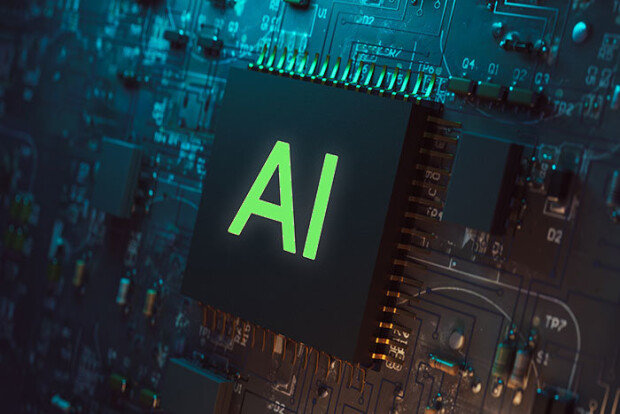
As major global powers compete to secure top artificial intelligence (AI) talent, the South Korean government plans to invest 300 billion won over the next five years to recruit 400 domestic and international postdoctoral researchers in AI convergence fields. The initiative also aims to bring back researchers who have left the United States—many in response to research budget cuts under the Trump administration—by turning this trend into an opportunity to reshore science and technology talent to Korea.
Japan has launched a similar effort, recently allocating 100 billion yen (about 950 billion won) in emergency funding to attract researchers exiting the U.S.
On June 15, the Ministry of Science and ICT and South Korea’s four major institutes of science and technology—KAIST, UNIST, DGIST, and GIST—announced the selection of eight “InnoCore” research teams in AI convergence and a plan to recruit 400 postdoctoral researchers from Korea and abroad.
The goal is to nurture promising young scientists and help them integrate into Korea’s academic, industrial, and research ecosystems through collaborative, team-based research. In response to the urgency of the issue, the government has already secured 30 billion won through a supplementary budget this year, and will invest a total of 300 billion won over the next five years.
Each postdoctoral researcher selected through the program will receive an annual salary of 90 million won and 60 million won in research funding. To offer better support than comparable positions overseas, the government also plans to encourage corporate partnerships and matching with other funded projects.
The government views postdoctoral researchers as vital to cutting-edge technology development, a perspective reinforced by what officials describe as the “DeepSeek shock.” This term refers to the surprising pace of China’s AI progress, with key algorithm developers at DeepSeek reportedly achieving major breakthroughs in their late 20s to early 30s, just two to three years after completing their PhDs. A ministry official noted that “In Korea, postdocs are still often seen as temporary workers, which has led to a lack of institutional support.”
At the Massachusetts Institute of Technology (MIT), postdoctoral researchers outnumber tenured faculty by a ratio of 1.4 to 1 and play a central role in advanced research. By contrast, Korea’s four major science and technology institutes employ postdocs at only about half the level of tenured faculty. In addition, the average postdoc salary at these institutions is just 41 percent of MIT’s, and many Korean PhD holders choose to work abroad, especially in the U.S.
To reverse this brain drain, the four institutes will hold in-person recruitment sessions for postdoctoral researchers starting June 18 in Boston—home to Harvard and MIT—followed by events in New York on June 20 and Silicon Valley on June 23. The initiative will be promoted through leading academic journals such as Nature and Science, as well as on platforms like LinkedIn. The institutes will also work with overseas partner institutions, the Korean Scientists and Engineers Network (KOSEN), the Korean-American Scientists and Engineers Association, and Korean student associations abroad.
장은지 기자 jej@donga.com


![[김순덕 칼럼]이 대통령은 왜 ‘탄핵 가능성’을 언급했을까](https://dimg.donga.com/c/138/175/90/1/wps/NEWS/IMAGE/2026/06/17/134133459.1.jpg)
![[단독]선관위, 결재없이 55억 써도 고작 견책…‘자체 징계’ 솜방망이](https://dimg.donga.com/c/138/175/90/1/wps/NEWS/IMAGE/2026/06/19/134138827.4.jpg)



 About Dong-A Ilbo