

Synerex embraces the era of autonomous driving with its 'ultra-precise satellite navigation device’.
Synerex embraces the era of autonomous driving with its 'ultra-precise satellite navigation device’.
Posted April. 22, 2025 10:07,
Updated April. 22, 2025 15:32
- Ultra-precise satellite navigation devices have excellent scalability
- Synerex developed a device that offers ultra-precise location information
- focusing on strengthening the durability of ultra-precise satellite navigation devices
"For an autonomous vehicle to navigate to a designated location without error, an ultra-precise satellite navigation system is essential. Ultra-precise satellite navigation systems are also necessary for precision farming machinery, drones, robots, and the management of underground facilities. We will enhance the durability of this highly scalable ultra-precise satellite navigation system to develop a robust product capable of withstanding the harsh conditions of deserts and tropical rainforests."
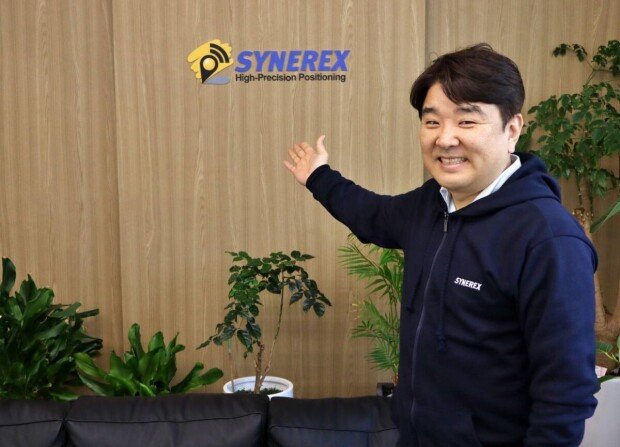
This goal of Park Jae-deok, CEO of Synerex, a developer of ultra-precise satellite navigation devices. Since its establishment in 2016, Synerex has been consistently researching and developing ultra-precise satellite navigation systems and is now focused on broadening its product supply ahead of the imminent era of autonomous driving. The demand for these ultra-precise satellite navigation devices, which are crucial for various autonomous vehicles to navigate accurately to designated locations, is rapidly increasing. To ensure that products perform optimally in any environment, enhancing durability is essential.
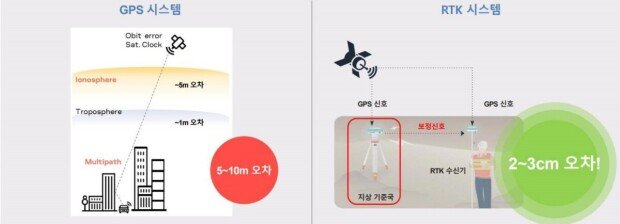
The Global Positioning System (GPS) is used to provide location information by measuring distances based on signals transmitted by multiple satellites orbiting the Earth. However, during the process of the satellite signals reaching the receiver, various radio interferences and refractions can occur, resulting in errors of up to 10 meters. Synerex has developed a device that offers ultra-precise location information within an error range of 2 to 3 centimeters by correcting satellite signal errors based on ground reference stations. They have introduced products that domestic technology into the global navigation device market, which is predominantly filled with foreign devices.
Park said, "For example, in order for autonomous vehicles to operate safely, they must be able to distinguish lanes. However, the navigation systems we currently use can differentiate roads but not lanes, which necessitates the development of components that can fulfill this requirement. In the case of autonomous vehicles, any malfunction is directly linked to safety, so an ultra-precision positioning system is essential." and stated, "Currently, the ultra-precision satellite navigation market is dominated by expensive foreign products, but since our establishment in 2016, we have focused exclusively on researching and developing ultra-precision satellite navigation devices. As a result, we can offer our products at less than one-third the price of our competitors in the U.S. and Europe. This has allowed us to secure over 250 clients, including Hyundai Motor Company, Doosan Mobility, Autonomous A2G, and 42dot."
He said, "Ultra-precision satellite navigation devices are essential components not only for autonomous vehicles but also for drones, robots, and unmanned ships that operate based on precise location information. In particular, ultra-precision satellite navigation devices are increasingly necessary for the rapidly expanding markets of autonomous driving and precision agricultural machinery. For instance, one of Japanese company, recognized as the top 5 global companies, has begun supplying its products to rice transplanters and tractors sold in Korea."
He also mentioned that ultra-precision satellite navigation devices are needed for managing underground facilities. Due to the aging of underground infrastructure such as communication tunnels, heat transport pipes, and urban gas pipelines, incidents like explosions during maintenance or replacement work have become frequent. In November 2018, a fire in the underground tunnel of KT's Ahyeon branch in Seoul, resulted in casualties and a disruption of communications in the surrounding area. By utilizing ultra-precision satellite navigation devices, it is possible to accurately identify the locations of underground facilities without the need for excavation. Additionally, using AR(Augmented Reality), the identified locations of these underground facilities can be visualized.”
Synerex is also accelerating its efforts to penetrate global markets. Park stated, "Currently, we have exhibited our products in various countries, including Japan, the United States, Europe, and Southeast Asia, and have established partnerships. In particular, we have signed contracts with two official distributors in Japan and began exporting last year, primarily focusing on the drone sector. We are exporting ultra-precise satellite navigation devices and a training system for drone pilot licensing. In the future, we plan to supply a range of products that integrate remote control and monitoring functions for drones to the Japanese market."
He continued, "We have also established a partnership with the European location correction information infrastructure company, ONOKOI, to integrate our ultra-precision satellite navigation devices with their infrastructure. We are utilizing our technology to provide precise location information in Europe. Additionally, we are collaborating with China's LimX Dynamics to introduce bipedal walking robots in Korea. Notably, the Tron1 model is being supplied as a research platform to research institutes and universities aiming to develop humanoid robots in Korea. In the future, both companies will discuss business models that incorporate ultra-precision satellite navigation devices."
Park also expressed his regret over the slow pace of expansion in the domestic autonomous driving market. "It is unfortunate that the market for unmanned mobility, including autonomous vehicles, drones, and robots, is not gaining traction. It is disheartening to see autonomous driving technology companies giving up because they cannot find opportunities to supply their products, despite investing heavily in research and development. Since the unmanned mobility market is still primarily driven by the government, it is indeed challenging to survive if government subsidies are withdrawn. I hope that regulations related to autonomous driving will be relaxed and that government-led support initiatives will be consistently maintained to foster the growth of the domestic autonomous driving technology market."
Synerex is dedicated to enhancing the durability of ultra-precise satellite navigation devices. Most autonomous driving robots, primarily used in construction, agriculture, and forestry, operate outdoors and must perform reliably while withstanding rapid temperature changes, shocks, and vibrations. In particular, these autonomous robots are equipped with numerous sensors, and if they fail to achieve resilience due to the electromagnetic sensitivity of these sensors, it can lead to critical malfunctions of the machinery. This is why the government is spearheading the development of electromagnetic wave-resistant sensors for autonomous robots.
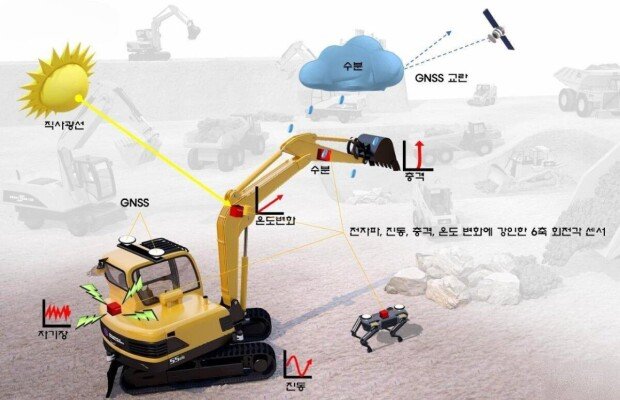 Park stated, "Since last year, the KEIT(Korea Planning&Evaluation Institute of Industrial Technology) has been leading a project to develop a small, high-resolution 6-axis rotational angle measurement sensor that is resistant to electromagnetic waves. We are responsible for developing sensors that can withstand electromagnetic interference, leveraging our expertise in ultra-precision satellite navigation systems." and "Robots designed for autonomous operation in challenging environments must function normally without human intervention, regardless of shocks or harsh weather conditions. For the machine to perform its designated functions accurately at the required locations, ultra-precision satellite navigation technology and sensors equipped with electromagnetic resistance are essential. Drawing on the technology we have developed thus far, we are committed to ensuring that autonomous robots can be utilized in areas facing labor shortages or in hazardous environments where human intervention is difficult."
He said, "This year, we aim to actively pursue sales expansion. Our key objectives include achieving substantial sales growth not only in the field of autonomous driving but also in the management of precision agricultural machinery, underground facilities, drones, and robotics. Furthermore, we anticipate significant growth in sales within the Japanese market this year. As we are currently engaged in government projects, we will focus on expanding the applications of ultra-precise satellite navigation systems into the construction machinery sector, developing robust products capable of withstanding harsh environments such as deserts and tropical forests. We aim to create products that can achieve centimeter-level precision positioning in both indoor and outdoor environments, thereby broadening its applications."
By Dong-Jin Kim (kdj@itdonga.com)
- Synerex developed a device that offers ultra-precise location information
- focusing on strengthening the durability of ultra-precise satellite navigation devices
"For an autonomous vehicle to navigate to a designated location without error, an ultra-precise satellite navigation system is essential. Ultra-precise satellite navigation systems are also necessary for precision farming machinery, drones, robots, and the management of underground facilities. We will enhance the durability of this highly scalable ultra-precise satellite navigation system to develop a robust product capable of withstanding the harsh conditions of deserts and tropical rainforests."
Park Jae-deok, CEO of Synerex / source=IT DongA
This goal of Park Jae-deok, CEO of Synerex, a developer of ultra-precise satellite navigation devices. Since its establishment in 2016, Synerex has been consistently researching and developing ultra-precise satellite navigation systems and is now focused on broadening its product supply ahead of the imminent era of autonomous driving. The demand for these ultra-precise satellite navigation devices, which are crucial for various autonomous vehicles to navigate accurately to designated locations, is rapidly increasing. To ensure that products perform optimally in any environment, enhancing durability is essential.
Technology Overview of Ultra-precise Satellite Navigation Device by GPS Signal Calibration / source=Synerex
The Global Positioning System (GPS) is used to provide location information by measuring distances based on signals transmitted by multiple satellites orbiting the Earth. However, during the process of the satellite signals reaching the receiver, various radio interferences and refractions can occur, resulting in errors of up to 10 meters. Synerex has developed a device that offers ultra-precise location information within an error range of 2 to 3 centimeters by correcting satellite signal errors based on ground reference stations. They have introduced products that domestic technology into the global navigation device market, which is predominantly filled with foreign devices.
Park said, "For example, in order for autonomous vehicles to operate safely, they must be able to distinguish lanes. However, the navigation systems we currently use can differentiate roads but not lanes, which necessitates the development of components that can fulfill this requirement. In the case of autonomous vehicles, any malfunction is directly linked to safety, so an ultra-precision positioning system is essential." and stated, "Currently, the ultra-precision satellite navigation market is dominated by expensive foreign products, but since our establishment in 2016, we have focused exclusively on researching and developing ultra-precision satellite navigation devices. As a result, we can offer our products at less than one-third the price of our competitors in the U.S. and Europe. This has allowed us to secure over 250 clients, including Hyundai Motor Company, Doosan Mobility, Autonomous A2G, and 42dot."
He said, "Ultra-precision satellite navigation devices are essential components not only for autonomous vehicles but also for drones, robots, and unmanned ships that operate based on precise location information. In particular, ultra-precision satellite navigation devices are increasingly necessary for the rapidly expanding markets of autonomous driving and precision agricultural machinery. For instance, one of Japanese company, recognized as the top 5 global companies, has begun supplying its products to rice transplanters and tractors sold in Korea."
He also mentioned that ultra-precision satellite navigation devices are needed for managing underground facilities. Due to the aging of underground infrastructure such as communication tunnels, heat transport pipes, and urban gas pipelines, incidents like explosions during maintenance or replacement work have become frequent. In November 2018, a fire in the underground tunnel of KT's Ahyeon branch in Seoul, resulted in casualties and a disruption of communications in the surrounding area. By utilizing ultra-precision satellite navigation devices, it is possible to accurately identify the locations of underground facilities without the need for excavation. Additionally, using AR(Augmented Reality), the identified locations of these underground facilities can be visualized.”
Synerex is also accelerating its efforts to penetrate global markets. Park stated, "Currently, we have exhibited our products in various countries, including Japan, the United States, Europe, and Southeast Asia, and have established partnerships. In particular, we have signed contracts with two official distributors in Japan and began exporting last year, primarily focusing on the drone sector. We are exporting ultra-precise satellite navigation devices and a training system for drone pilot licensing. In the future, we plan to supply a range of products that integrate remote control and monitoring functions for drones to the Japanese market."
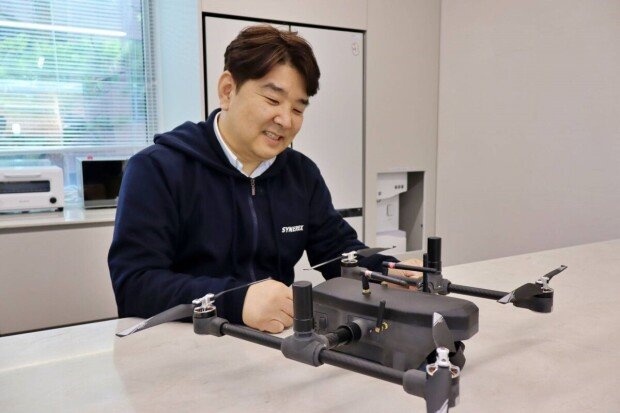
Park is introducing a drone equipped with a Synerex drone remote control function / source=IT DongA
He continued, "We have also established a partnership with the European location correction information infrastructure company, ONOKOI, to integrate our ultra-precision satellite navigation devices with their infrastructure. We are utilizing our technology to provide precise location information in Europe. Additionally, we are collaborating with China's LimX Dynamics to introduce bipedal walking robots in Korea. Notably, the Tron1 model is being supplied as a research platform to research institutes and universities aiming to develop humanoid robots in Korea. In the future, both companies will discuss business models that incorporate ultra-precision satellite navigation devices."
Park also expressed his regret over the slow pace of expansion in the domestic autonomous driving market. "It is unfortunate that the market for unmanned mobility, including autonomous vehicles, drones, and robots, is not gaining traction. It is disheartening to see autonomous driving technology companies giving up because they cannot find opportunities to supply their products, despite investing heavily in research and development. Since the unmanned mobility market is still primarily driven by the government, it is indeed challenging to survive if government subsidies are withdrawn. I hope that regulations related to autonomous driving will be relaxed and that government-led support initiatives will be consistently maintained to foster the growth of the domestic autonomous driving technology market."
Synerex is dedicated to enhancing the durability of ultra-precise satellite navigation devices. Most autonomous driving robots, primarily used in construction, agriculture, and forestry, operate outdoors and must perform reliably while withstanding rapid temperature changes, shocks, and vibrations. In particular, these autonomous robots are equipped with numerous sensors, and if they fail to achieve resilience due to the electromagnetic sensitivity of these sensors, it can lead to critical malfunctions of the machinery. This is why the government is spearheading the development of electromagnetic wave-resistant sensors for autonomous robots.
Project Overview of Electromagnetic Resistance Small High-Resolution 6-axis Rotation Angle Measurement Sensor / source=Synerex
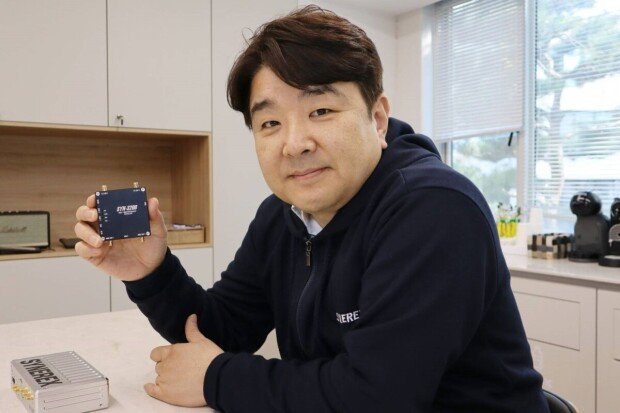
Synerex's latest ultra-precise satellite navigation device, SYN-3200 / source=IT DongA
He said, "This year, we aim to actively pursue sales expansion. Our key objectives include achieving substantial sales growth not only in the field of autonomous driving but also in the management of precision agricultural machinery, underground facilities, drones, and robotics. Furthermore, we anticipate significant growth in sales within the Japanese market this year. As we are currently engaged in government projects, we will focus on expanding the applications of ultra-precise satellite navigation systems into the construction machinery sector, developing robust products capable of withstanding harsh environments such as deserts and tropical forests. We aim to create products that can achieve centimeter-level precision positioning in both indoor and outdoor environments, thereby broadening its applications."
By Dong-Jin Kim (kdj@itdonga.com)






 About Dong-A Ilbo