

Matisse’s ‘Icarus’ captures the beauty and tragedy of a fall
Matisse’s ‘Icarus’ captures the beauty and tragedy of a fall
Posted April. 10, 2025 07:32,
Updated April. 10, 2025 07:32
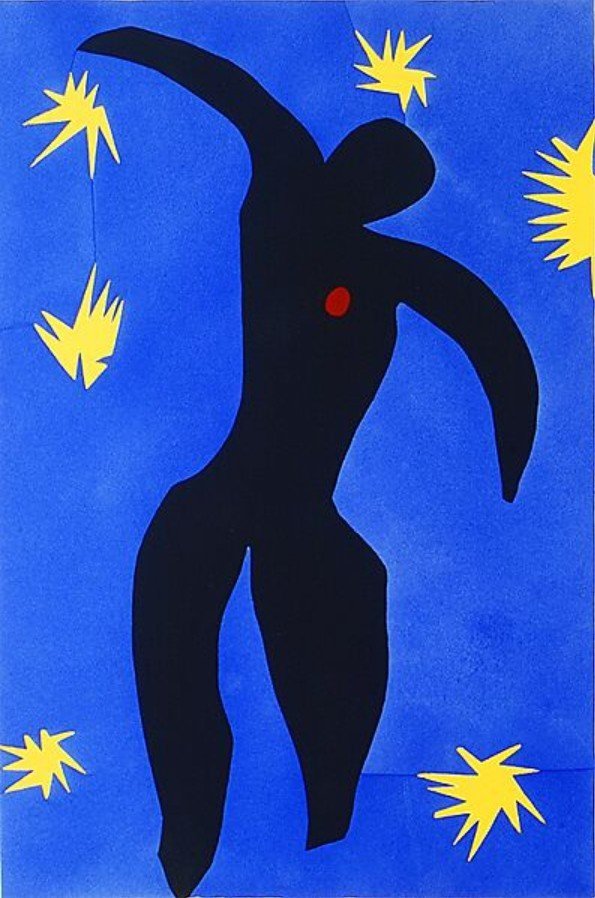
A black silhouette of a man floats in midair, a crimson dot glowing on his chest. Yellow shapes—like sparks or flames—flicker beside him. Is he rising, or is he falling?
When Henri Matisse could no longer paint due to declining health, he developed a new technique using cut paper. He painted sheets with gouache, cut them into shapes, and arranged them into bold compositions. In 1947, he published Jazz, a book of 20 such images. Among them, the most iconic is “Icarus.”
In Greek mythology, Icarus was the son of Daedalus, a master craftsman. Trapped in the labyrinth on Crete, Daedalus built wings from feathers and wax so they could escape. He warned his son not to fly too high, or the sun would melt the wax. But Icarus, exhilarated by flight, soared upward. The wax melted. The wings failed. He fell to his death.
Matisse captured that moment of descent with striking simplicity. The red dot on Icarus' chest may symbolize passion—or hubris. Rendered in silhouette, the figure’s direction is unclear at first glance. But the lack of wings suggests this is the instant after his flight has ended.
The yellow shapes could be fragments of ambition, now in free fall. Matisse offers no redemption, no hint of recovery. There are no wings in a fall.








 About Dong-A Ilbo